



Time to end this nonsense talk we call ‘brand safety’
Opinion
The brand safety debate is the industry’s equivalent of arguing about which cigarettes are safer, writes Omar Oakes.
Brand safety. What does this weasly, disingenuous, pathetic phrase even mean when held up to the light?
Nobody asked whether a Coronation Street spot was safe for a car brand. Nobody demanded a verification audit before buying a page in the Sunday Times. Even when the content was politically charged, morally uncomfortable, or explicitly adult, the implicit understanding was the same: a professional organisation with a reputation to protect was responsible for what appeared.
“Brand safety” entered our industry vocabulary when platforms began monetising content produced by anyone with a login. It described the consequence of a specific decision: to call troll-farm content inventory, and sell it like it was the same thing as a Guardian front page.
The wrong conversation
What is actually happening when a Twix ad gets banned by the ASA for showing irresponsible driving in its opening seconds, or a crypto company cannot make light of the financial risks it poses?
These are the rules that apply when professionally produced advertising runs in a professionally regulated environment. The accountability is structural; the people behind the ad have reputations to lose. The regulator only really has teeth because the regulated have something to protect.
Meta is not that. Meta is a system that monetises content produced by anyone with a login, regulated by no one in particular, and carries ads placed by an automated process that cannot distinguish a news article from a troll farm.
Asking it to behave more like a regulated media owner is not a reform. It is a category error: treating two fundamentally different things as if they belong in the same framework, and then expressing disappointment when one of them fails to comply.
And so we’re subjected to the same inane argument. The platforms are not doing enough. Verification rates are too low. Scam ads are too prevalent. The certification systems are not sufficiently enforced.
Meta admits that a meaningful percentage of its revenue comes from fraudulent advertisers. That is unacceptable. The industry must demand better.
All of that is true. But it completely misses the point.
We hired a locksmith to fix a door we left open
A report published this month by The Media Trust found that programmatic advertising overtook email as the primary channel for malware delivery in 2025, accounting for over 60% of all observed malware and phishing campaigns. Malvertising incidents grew 45% year on year.
Forty five percent! The infrastructure built to distribute online advertising has also become the internet’s most efficient way of forcing rubbish into our smartphones and laptops.
This is what happens when you open an automated, real-time marketplace to anyone willing to pay.
The scale of the programmatic ecosystem — over $740bn in global digital ad spend in 2025 — doesn’t make it safer. It just makes it a more attractive target.
The industry’s response has been to build a verification layer on top of the problem and call it progress. And progress of a kind it certainly is — the IAB’s Gold Standard certification now covers ad fraud reduction, brand safety, scam ad prevention, and consumer experience.
And, as you know, Meta was recently awarded this gold star. The same Meta that, according to a Reuters investigation, internally projected that roughly 10% of its 2024 revenue — around $16bn — would come from ads for scams and banned goods, while its platforms exposed users to an estimated 15bn higher-risk scam ads every single day.
Ridiculous? Yes. But this is exactly where the logic of “brand safety” leads you.
The hotel that forgot it owned a building
Look at what happened to hotels when they listed on Booking.com and Expedia.
In the early 2000s, hoteliers welcomed online travel agencies as distribution partners. More reach, better occupancy, incremental revenue. What nobody fully accounted for was that listing a differentiated product on a price-sorted grid alongside thousands of others means the grid’s logic — not the product’s — determines its value.
Algorithmic ranking replaced brand reputation as the thing that decided whether anyone found you at all. As one hospitality analyst put it, hotels helped create their own monster.
Media owners are living the same story. The brand safety and verification industry — IAS, DoubleVerify, and the rest — are the rate consultants. Sophisticated, expensive, and completely beside the point. Every pound spent on brand safety compliance is a pound spent proving you belong on a grid. But that belonging is the problem.
The smarter hotels eventually realised the answer wasn’t a better Booking.com listing. It was deciding which grids, if any, they were willing to sit on — and building the direct relationships that let them price on their own terms.
Media owners haven’t started having that conversation. They need to.
We’ve been here before
In a victory for common sense, a Los Angeles jury has found that Meta and YouTube deliberately designed their platforms to be addictive, and that their executives knew it.
Meta was found 70% responsible for the harm, but the jury also ruled that both companies had acted with malice. The case, as argued by the lawyers, has been compared to the legal crusade against Big Tobacco in the 1990s.
It’s amazing to think that in the 1970s, around half of British adults smoked.
Tobacco companies advertised freely, and doctors even appeared in cigarette ads. The idea that smoking would eventually become a minority habit would have been unthinkable, but by 2023, only around 11% of British adults smoked.
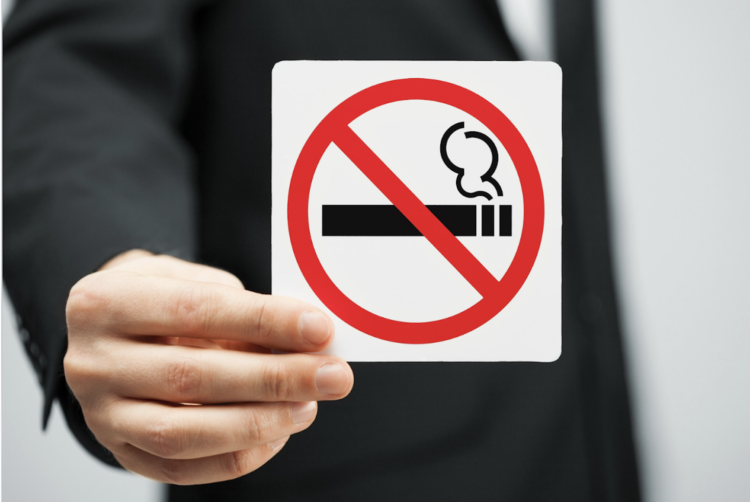
The brand safety debate is the industry’s equivalent of arguing about which cigarettes are safer. The more important question — whether the product should be advertised at all — is the one nobody in the room wants to ask, because too much revenue depends on not asking it.
A California jury just answered it anyway. Not for advertisers. Not yet. But the direction of travel is now a matter of legal record, not just public concern.
In other words, these platforms are not brand safe by design. And nor is the vast sea of sludge known as the open web.
The definition already exists
At an RTL event in London last week, Kelly Williams, managing director of commercial at ITV, made the case for what legitimate inventory actually looks like: professionally produced, regulated, independently measured, viewed by a human. Those four criteria build trust, which is what advertising actually buys when it works.
Most of what trades in programmatic markets fails that test. Not because the pipes are broken. Because the content was never fit to carry advertising in the first place.
The smarter question isn’t how to pass the brand safety audit. It’s why you’re still sitting the exam.
 Omar Oakes was the founding editor of The Media Leader and continues to write a column as a freelance journalist and communications consultant for advertising and media companies. He has reported on advertising and media for 10 years.