



From Cassette Futurism to Friction Maxing: Why we want tactile media experiences again
Opinion
In the digital age, physicality still counts. We need to remind ourselves that we live in a physical world by designing for senses such as texture, sound and resistance. It’s what youth generations crave.
Two years ago, director Fede Alvarez delivered a sequel to Ridley Scott’s 1979 sci-fi masterpiece, Alien.
As Alien: Romulus was set within the same fictional ‘era’ as the original, Alvarez was faced with one key creative decision:
For filmic continuity, do you use the now-outdated, anachronistic technology of the ‘70s original – buzzing green screen monitors, clacking keyboards, tiny electronic bleeps and, best of all, the physical clanking of a computer churning through its commands – even though that is a future that can now never be?
Or do you update the tech depicted to reflect the modern era’s view on how the 22nd Century will unfold?
Basically, do you go with old chunky keyboards or sleek modern touchscreens?
Wisely, Alvarez knew people had bought into the 1979 world and all its retro-future codes and went ‘old school’. It didn’t matter that this tech had long been superseded. This was about revisiting a future envisioned in the past.
There’s something intriguing at work here.
Cassette Futurism
Outside of Alien: Romulus, there’s a name for this aesthetic. It’s called Cassette Futurism.
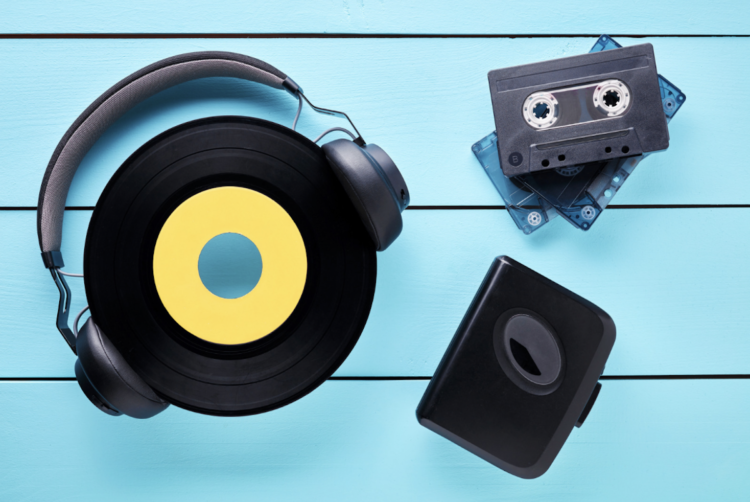
It’s a longing for the tactile, physical technology of the 70s and 80s. It can mean an obsession with vinyl, tape, games that load from disk, chunky buttons and ASCII computer characters.
I’m a child of the late 70s, and for me, Cassette Futurism invokes pure nostalgia. A memory of when tech was ‘harder’ and more robust, and devices felt like they were mechanical in their operations.
But this love of ageing physical tech has recently been reborn and repackaged. Not for Gen Xers like me, but for Gen Z and Gen Alpha.
Now it’s called Friction Maxing. And it’s not about a love of the past. It’s about proof of the ‘real’.
Friction Maxing
Unlike the once-future tech of Alien, over the last few decades, our interfaces have become smooth and glass-like. We don’t click as much any more. Instead, we swipe.
We download and stream through the air, and share our location with a digital pin. We record and send voice notes by holding our thumb over a part of the screen designated as a ‘button’. With our eyes closed, we would never find it.
But for today’s younger generations, this digital frictionlessness, this dematerialisation, this ‘texture-lessness’ has its downsides. It means things can sometimes feel a little ‘unreal’.
Consequently, Gen Z and Gen Alpha are Friction Maxing. It’s the act of intentionally downgrading an interaction, or seeking out a less efficient, less sophisticated alternative.
Examples of Friction Maxing might include:
● Buying vinyl records, CDs, or DVDs to “own” the art.
● Reading physical books instead of doomscrolling or short-form video
● Carrying physical cash to feel the weight of spending.
● Using film cameras, where you must wait for development
Why? To have proof of effort. To be rewarded for ‘solving’ its workings. To feel it happening. To make it real.
Flawed by design
Whilst we know that older media formats come with limitations, for Friction Maxers, those operational flaws almost become part of the experience. A flavour note. A sensory augmentation.
I’m reminded of the first time my dad ever played me his Dark Side Of The Moon vinyl record. He slid it out of the gatefold album cover, removed the paper wrapper, and placed it on the turntable.
The warm hiss of the needle lowering and hitting the LP’s groove, and then the sample of the human heartbeat that opens Breathe effectively became one integrated sound. I can’t imagine hearing it any other way. Vinyl has a ‘warmth’ that’s difficult to convey.
Gen Z and Gen Alpha are now actively seeking out these same quirks and imperfections. They want that record needle ‘warmth’ or equivalent, so that media experiences work harder to deliver their payload.
It’s proof that the media exists in the physical world. And media that exists can’t be deleted or turned off.
What can we understand about human behaviour from this phenomenon?
The haptics of marketing
We’re a tactile species. Humans and their progenitors could touch long before we could speak. Cassette Futurism and Friction Maxing are tapping into a deeply sensorial need.
For brands, there is a takeout here: in the digital age, physicality still counts.
We’ve all attempted quizzes that ask us to identify a brand from its colour palette. But how many products could we recognise blindfolded by touch alone?
Could we distinguish between chocolate bars? Could we tell what type of smartphone we were holding? Could we identify the training shoe from the moulded heel? Would we know one steering wheel and gear stick from another?
Before you say “Yes. But we don’t drive blindfolded, that’s not the point. I’m saying: in a sea of digitised texturelessness, can your product’s hard surfaces also communicate build quality, expertise, or even sumptuousness?
In our marketing material, too, as digital takes up a bigger wedge of spend, should we be making sure we don’t lose sight of physical media – outdoor special builds, sampling, packaging, merchandise?
Can we design for the senses beyond sight — weight, texture, sound and resistance? Can we give audiences something they will want to own, not just access? Can we bring back small rituals: stamps, tickets, receipts, inserts, samples, labels, printed guides?
This is not to denigrate digital. It’s to remind us we have a body and live in a physical world. Because that’s what Gen Z and A seek.
Let’s get physical
The age of seamlessness may be making us strangely numb. In a world of endless swipes, streams and simulations, friction is becoming a feature, not a bug.
For Gen Z and Gen Alpha, Friction Maxing offers reassurance about the real. For Gen X, Cassette Futurism is a reminder of a more physical era.
The brands that win next may not be the ones that remove every obstacle, but the ones that restore a sense of weight, ritual and reality.
 Phil Rowley is head of futures at Omnicom Media Group UK and author of Hit the Switch: The Future of Sustainable Business. He writes for The Media Leader about the future of media.