



The Future 100 recaps The Future of Brands: Culture vs cringe, performance vs branding, AI vs the human touch
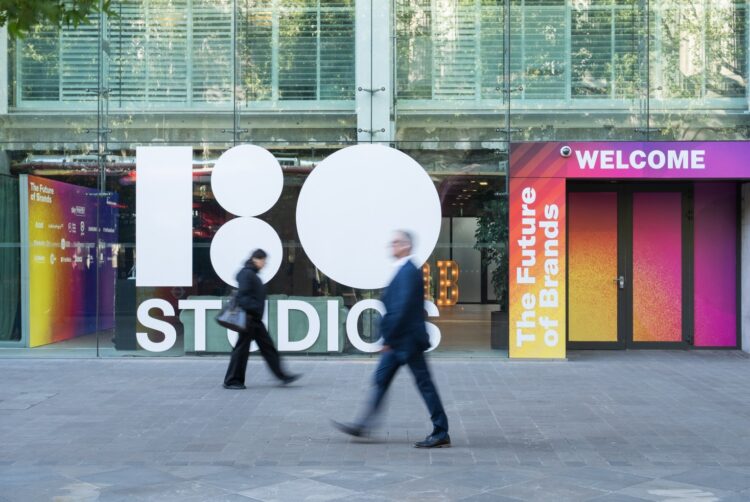
The Future of Brands
With over 800 guests and 100 speakers, The Future of Brands 2026 was an educational extravaganza for modern marketers. We invited members of our Future 100 Club to a post-event virtual roundtable to reflect on the day’s key themes and discussions.
This is the first of a new series of Future 100 virtual roundtables. The Future 100 Club unites a diverse range of professionals from all corners of the media realm. Setting itself apart from other groups or lists of emerging talents, there are no age, industry tenure, or job title restrictions. Click here to learn more.
How brands can authentically contribute to community and culture
“Brands should be selective about where they show up. Marketers do not need to present a point of view on every cultural moment,” according to Lee Mabey, founder of Possibility Consulting. “Take last year’s Ibiza Final Boss as an example. Many of the brand reactions felt uncomfortably inauthentic, appearing to be the corporate embodiment of the ‘how do you do, fellow kids?’ meme.”
Mabey instead advises: “Step away from the spreadsheets and slides. Invest time in exploring your audience beyond planning tools. Understand the language of fandoms and listen to the conversations around big events. Identify where you can show up seamlessly within communities, being additive to the conversation without detracting from the fan experience. Remember, no one likes a try-hard.”
So how can brands make their cultural input feel effortless? For Hannah Dempsey, business director at School of Social, it’s all about stepping into the shoes of a community and building content for them rather than being an outsider looking in: “Essentially, stop trying to outsmart the algorithm and start giving your community something worth their time.”
She continues: “Jordan Peters from Netflix shared a great stat: Brands that create for cultural relevance grow six times faster than the ones that stay on the sidelines. His advice was to ‘think like a writer, judge like a fan.’”
John Duku, global account director at Wavemaker, follows the principles of filmmaker Jim Jarmusch: “authenticity is invaluable, originality is non-existent,” drawing a distinction between the humility of contributing to culture versus the potential hubris of trying to force a cultural moment.
The BBC is no stranger to cultural contributions. Dilki Weerakoon, head of client strategy UK at Talon, spoke with its marketing team at Future of Brands, about how they impressively leveraged both brand and location by projecting ‘The time for chalk is almost over’ on the iconic White Cliffs of Dover ahead of the finale of The Celebrity Traitors: “A great example of how a short-lived, physical OOH campaign can create huge cultural impact when the timing is right.”
Takeaways from the Future of Brands 2026: AI, culture and measurement take centre stage
Balancing measurable outcomes with long-term awareness building
Karishma Singapuri, global brand director at Dentsu, believes brands shouldn’t treat short-term outcomes and brand building as an either/or, though being able to understand the interplay between them requires a sophisticated and holistic approach to measurement.
“Not everything that drives value shows up immediately in performance metrics. Brand building works cumulatively, across multiple touchpoints, over time,” says Singapuri. “The job of measurement isn’t to over-simplify that, but to understand how different levers contribute across the full journey, from immediate conversion to longer-term brand effects. The opportunity is to design systems that don’t force a choice between performance and brand, but recognise that long-term growth is built through consistent, compounding impact.”
For Oliver Thomas, marketing lead, audience measurement at IPSOS, tensions between branding and performance stem from internal translation barriers, where marketers and finance teams are often speaking different languages: “Reckitt’s Gordana Buccisano makes the point sharply, ‘[CFOs] want decision logic. They don’t want storytelling.’”
Thomas gave a shout out to three working models shared at The Future of Brands that can help CFOs and marketers get on the same page:
- Wise treats payback as a shared metric across marketing and finance, with both brand and performance assessed in a similar framework.
- Tesco’s breakthrough came from opening up MMM analyst-to-analyst, letting finance run their own numbers and arrive at the same conclusions.
- Reckitt reframed brand investment as risk mitigation; in tough times, strong brands hold margins and resist trade-down.
Using AI to multiply rather than dilute marketers’ best qualities
“The Spice Girls once sang, ‘Stop right now, thank you very much, I need somebody with a human touch.’ Ok, it was about relationships, but hear me out,” says Naz Erten, marketing manager at Thinkbox.
“At the altar of speed and technology, we can lose so much of our human input and our thinking minds. Unique campaigns are the result of our diverse collection of knowledge, lived experiences, and different understandings of the world.
“Marketers should remember who their key assets are, and train teams to lead with a human-first touch. Following AI blindly risks diluting knowledge and creating homogenised outputs. You are the lead singer, so take a deep breath and don’t forget… gotta slow it down, baby, gotta have some fun.”
Meanwhile, Rohan Premnath, business development director, agencies & adtech, EMEA at Audiostack recommends AI models that are deeply integrated into company workflows and data over generalised tools that result in generic output.
“For example, when creative is connected to real performance signals, teams can automate and adapt personalised content at speed without losing strategic control,” says Premnath. “The role of marketing is not to create more for the sake of it, but to orchestrate meaningful, data-driven experiences. The teams that win treat AI as a long-term capability, one that compounds differentiation by aligning creative, data, and execution into a single, intelligent system.”
How brands can win authority in LLMs – with Havas, Heineken and Publicis
For Louise Twycross-Lewis, head of insight at PHD UK, a recurrent theme was the need for a human-centric approach within these intelligent systems: “Ensuring that AI use is rooted in and centred on the human experience, all the way from the mitigation of data biases to thorough human oversight and interrogation of AI prompts and outputs across all platforms is essential.”
From an OOH perspective, Colin Horan, strategic partner, FMCC at Bauer Media Outdoor, comments on how he frequently advises marketers to adhere to creative best practices before “getting seduced by AI efficiencies.”
“Where AI can genuinely play an enhanced role is in rapidly delivering real-time context,” says Horan. “Adapting creative around everyday moments, cultural conversations, and live events in a seamless way, whilst maintaining a level of consistency that stays true to the brand platform.”
What the Future 100 believes the industry must focus on next
“Across multiple sessions, a consistent issue emerged: teams are overwhelmed by data but lack alignment,” says Dave Randall, vice president, commercial at Influx Data. “The immediate action required is simplification. Organisations should agree on a core set of metrics that connect to real business outcomes and use them consistently across teams and partners.”
Randall’s advice would certainly address some of the tensions between CFOs and marketers discussed above.
“My key takeaway for the industry is simple,” says Sophie Gale-Evans, client partner at DCM. “Step back and make sure you’re clear on your brand strategy, and that your tactics are genuinely aligned to delivering it.”
To achieve this, Gale-Evans believes brands should question whether digital touchpoints are always the best bet for brand building: “These platforms offer scale and easy measurement and are relatively inexpensive, but that doesn’t automatically translate into meaningful brand impact. Building a brand that people remember demands the right mix of channels, thoughtful investment, and, crucially, creative that leaves a lasting impression.”