



The industry’s top 10 OOH campaigns
Week in Focus
To conclude The Media Leader‘s special Future of OOH week, the team asked industry experts what their favourite and most memorable OOH campaigns of all time are.
Here are 10 of the best according to the industry.
Contributors include:
- Dara Nasr, managing director – commercial outdoor at Global
- Cheryl Crilley, business director – OOH at WPP Media
- Thanh Catachanas, collaboration and acquisition director at JCDecaux UK
- Emma Rowson, marketing communications manager at JCDecaux UK
- David Tait, group creative director at Ocean Outdoor
- Jonathan Acton, head of creative solutions at Bauer Media Outdoor UK
- Hannah Ainsworth, chief marketing officer at i-media
- Pannie Hopper, head of OOH investments at Publicis Media
- Tim Lumb, director of Outsmart
- Nick Manning, co-founder of Manning Gottlieb Media (now MG OMD), and owner of Encyclomedia.
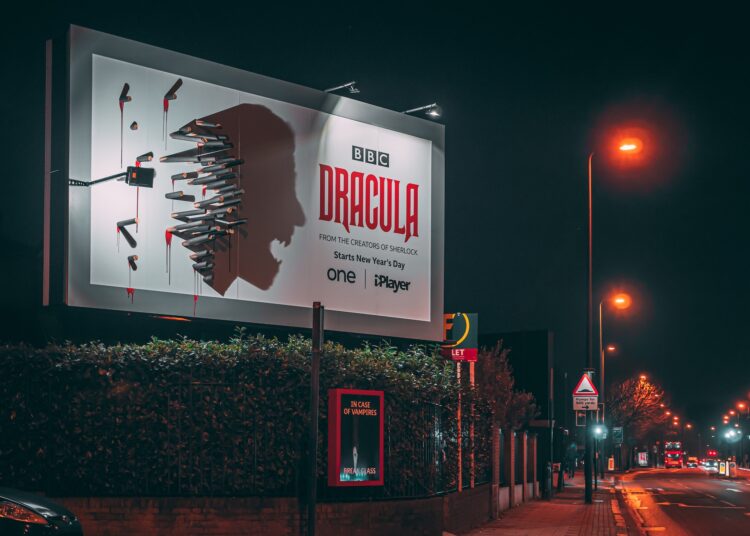
Jonathan Acton, Bauer Media Outdoor UK: “BBC’s Dracula special build, installed in London in 2020, remains one of my favourite posters.
“What makes it so memorable is that it perfectly demonstrates one of the things great outdoor advertising does best: using the physical environment as part of the idea itself. By day, the installation looked like a simple poster pierced with a series of wooden stakes. But after dark, strategically placed lighting transformed those stakes into something altogether different, casting a shadow art silhouette of the face of Transylvania’s most notorious legend across the billboard.
“We all know Vampires only come out at night, and this excellent idea from the team at BBC Creative, took that universal truth and supercharged it with the clever use of light and shadow.
“The execution didn’t stop there either. Extending the idea further, a faux “break in case of vampires” box containing a wooden stake was mounted underneath the billboard, adding to the theatrics of the campaign. Time-lapse filming of the billboard’s transformation at sunset created social media content, fuelling online conversations and driving viewers to the show.
“For me, it remains a brilliant example of OOH storytelling at its most inventive: simple, surprising and completely inseparable from the space it occupies. It proves that some of the most powerful outdoor ideas don’t rely on technology or scale alone – just a smart insight, exceptional craft and an understanding of how people experience the world around them.”
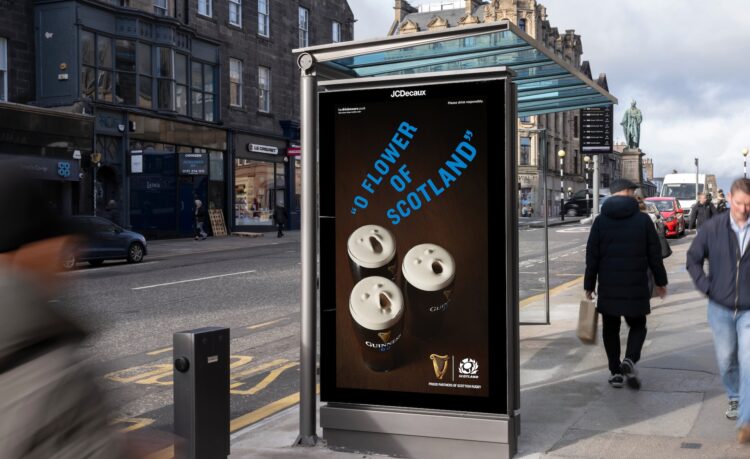
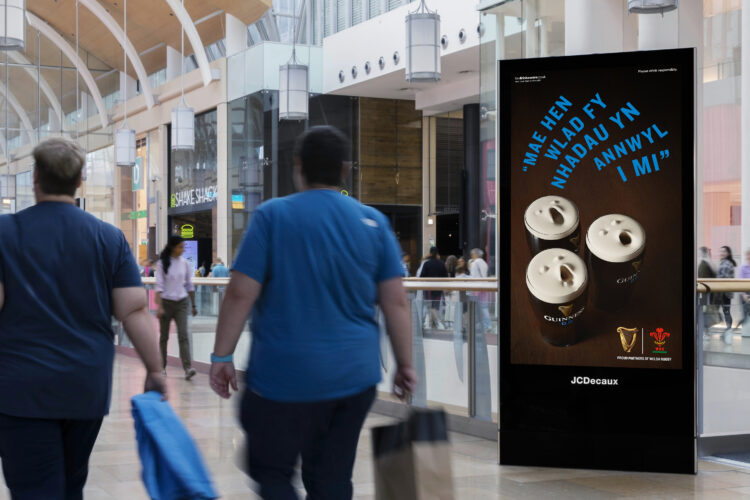
Emma Rowson, JCDecaux UK: “I lived in Edinburgh for four years and it’s still my home-from-home – so this campaign on Edinburgh bus shelters for Guinness 0.0 singing pints singing “O Flower of Scotland” for the Six Nations is a favourite. A version ran in Cardiff with pints singing the opening line to the Welsh National anthem. It’s a clever example of OOH using cultural context and visual storytelling to reach rugby fans.
“Mike Cheetham from Diageo came on our Digital Changemakers podcast recently and spoke about embracing OOH as a channel that connects with consumers and amplifies reach across digital and social platforms. This campaign does exactly that, combining cultural relevance and creativity in a way that feels authentic and memorable.”
David Tait, Ocean Outdoor: “I’d have to pick the unmissable 30-second Versace ad which caught everyone’s eye back in 2022.
“Although it wasn’t the first 3D DeepScreen we’d worked on, working directly with the creative team at Versace on the idea, and having final approval from Donatella herself, really helped cement in our minds that DeepScreen and Ocean Studio was going to be a success – and when Versace shared the video on their Instagram, only furthered this.”
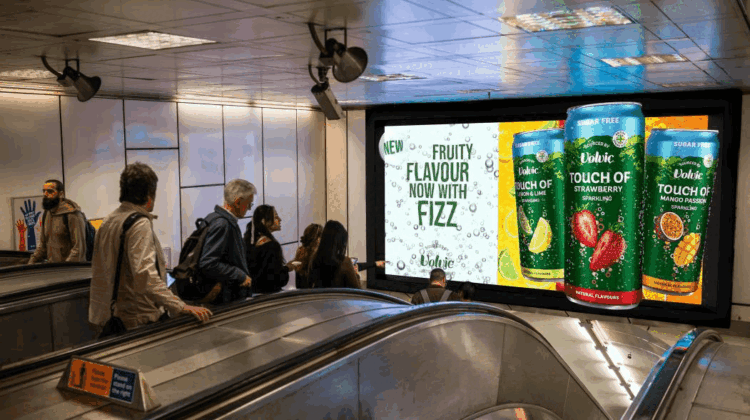
“That’s why my favourite OOH campaign has to be Volvic Touch of Fruit. It was a masterclass in harmony: the playful strategy to make water “less boring” was translated into an absolute visual feast.
“High-reach formats were brought to life with eye-popping lenticular printing that let audiences physically see the flavours twist. Digital placements carried dynamic location callouts for contextual relevance. Then there were the standout builds: a spectacular 3D-molded Volvic can banner in Shoreditch, a full immersive takeover of Manchester Printworks’ screens (ceilings and all), and a media-first programmatic 3D execution on the London Underground, which then re-targeted audiences using display and bubbly 3D audio ads. It also bagged the IAB Joy of Digital award!
“Every strategic planning decision from dynamic location callouts to banner special builds was designed to supercharge the colourful, fizzing energy of the creative. It’s proof that when media planning, data-driven tech and creative execution dance together, OOH doesn’t just build brand awareness, it creates unforgettable scale.”
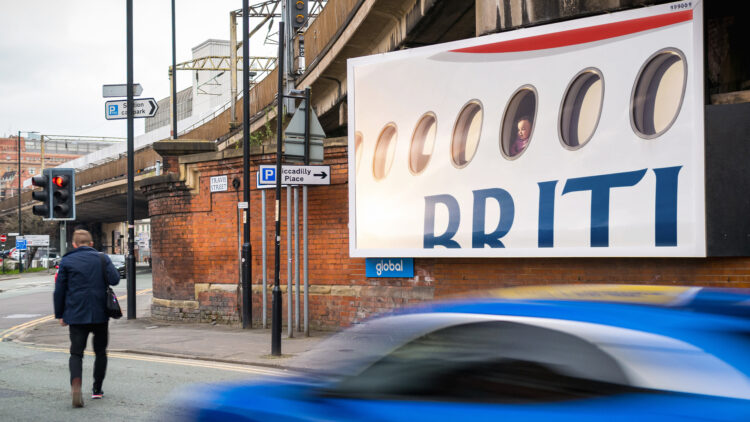
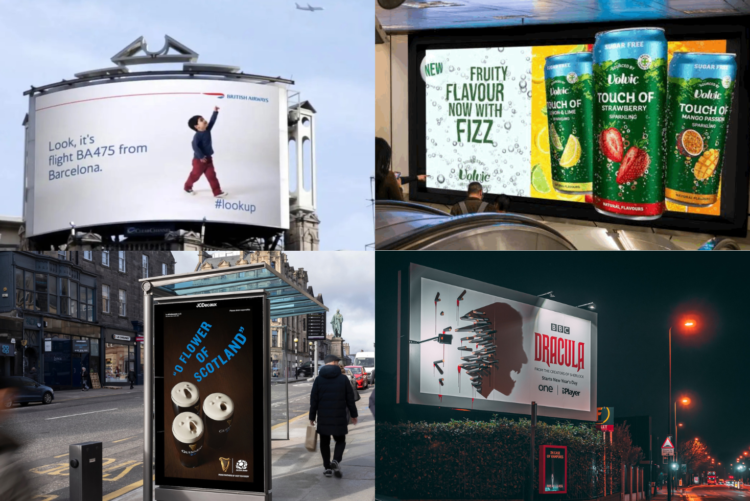
Dara Nasr, Global: “If I had to pick, one of my favourites from recent years would have to be British Airways’ “Windows” campaign.
“What makes it memorable is its striking simplicity. Billboards are incredible at conveying a brand’s core idea – if you have a clear brand message and put it on a billboard, everyone gets it. In this instance, from the colour palette alone, you know immediately it’s British Airways. It’s proof that the OOH doesn’t need to be overcomplicated – a simple, confident idea is impactful and enduring.”
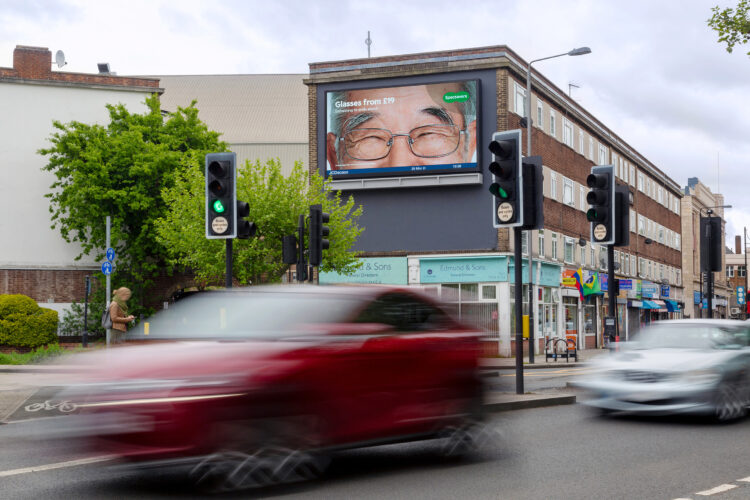
Thanh Catachanas, JCDecaux UK: “A few years ago I received a piece of direct mail from Specsavers that stopped me in my tracks. It was a leaflet with a model of an older East Asian man who could so easily have been my Dad, wearing glasses, reminding me to go and get my eyes tested.
“I have never in my 40 something years to date ever seen an East Asian man represented in any advertising let alone one that was clearly 60+. It made me think about what it must be like for my father who came to the UK in the seventies never seeing himself reflected in the media.
“So when I later saw these ads on billboards and bus shelters I literally started to sob. It made both me and my family feel incredibly seen and this is the power of OOH and how advertisers and brands can create real impact and an invitation to do business. Representation matters more than ever and Specsavers are such a hero in this space. I’m getting emotional just writing this.”
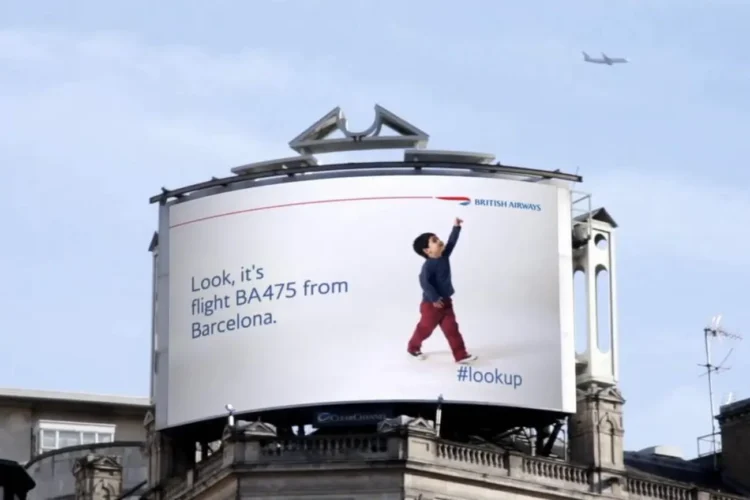
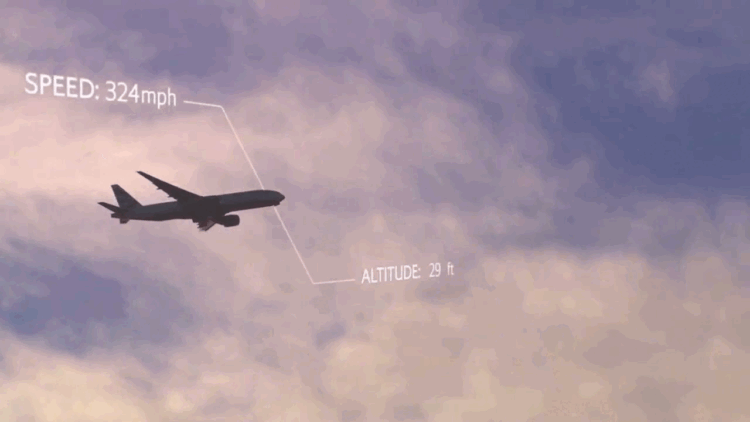
Hannah Ainsworth, Chief Growth Officer, i-media: “I’m cheating slightly and picking one brand across two campaigns, twelve years apart. Together, they tell the most complete story I know about what OOH can do.
“The Magic of Flying (2013) is the moment DOOH grew up. Billboards on the M4 and at Piccadilly that triggered a live feed whenever a BA plane flew overhead — a child appearing on screen, pointing skyward, with the flight number and aircraft origin shown above. The technology was pioneering: transponder data, cloud-height sensors, and a new media-buying model invented specifically for the campaign.
“But the reason I love it isn’t the engineering. It’s the insight. Every adult still does what children do openly, look up when a plane passes, and wonder where it’s going. The child on screen wasn’t a device. It was a mirror. It proved that contextual intelligence isn’t a media planning variable. It’s the foundation of the idea.
“Twelve years later, Uncommon’s Reflections series for the same brand shows no copy, barely a logo, just passengers’ faces at 35,000 feet, the camera reversed to show what they’re feeling rather than what they’re seeing. Absolute confidence in the audience’s state of mind.
“Both campaigns share the same belief: great OOH serves the right person at the right moment in the right mindset. Not just the right postcode. The industry has talked about that for years. These two actually did it.”
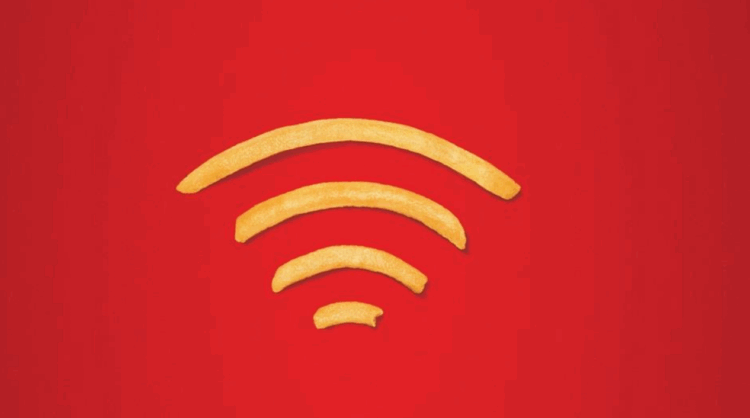
Tim Lumb, director of Outsmart
“This one stuck with me as just pure excellence. Its from years ago and tells you there is Wi-Fi at McDonalds without a single word, logo or puzzle to solve. Just pure and unmissable brand entanglement on a billboard.”
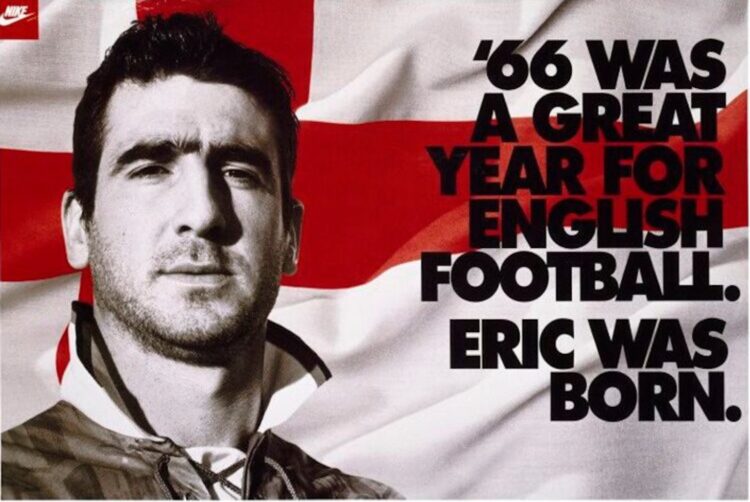
Nick Manning: “As everyone knows, this is a special year for football.
“Eric Cantona was born sixty years ago on 24 May, so it’s slightly too late to celebrate his actual birthday, but it is a good time to celebrate this poster.
“It appeared just before the 1996 Euros that began on 8 June that year.
“It was one of a series of outdoor executions for Nike that Simons Palmer created and Manning Gottlieb Media (as we were known then) placed.
“The media work involved Colin Gottlieb handpicking 96- and 48-sheet sites linked to the tournament and/or generating mass anticipation.
“At the time, this approach to Outdoor was highly original, and the work was unlike anything seen before.”
Read Nick Manning’s full thoughts here.
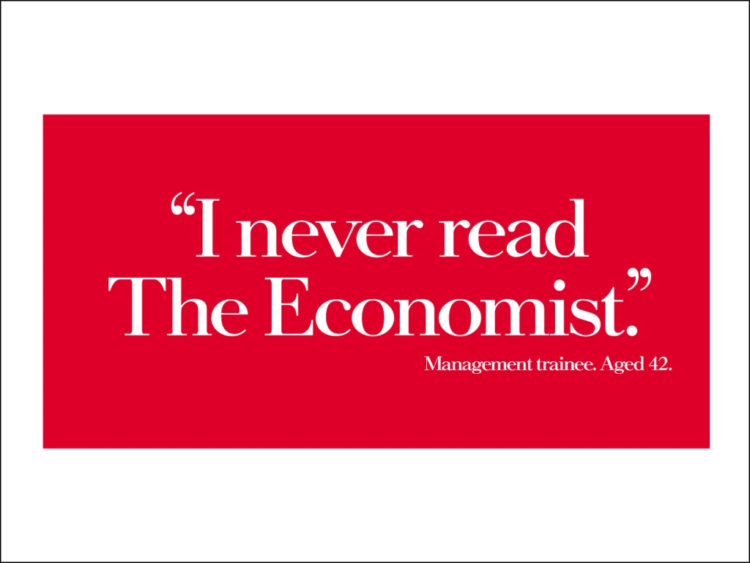
Pannie Hopper, Publicis Media: “I’ve always liked The Economist’s OOH because it trusts the audience. It doesn’t over-explain. It puts one idea on the wall and lets you meet it halfway. The best OOH campaigns – like “I never read The Economist”- work when you have to finish the thought yourself. That small moment of recognition is what stays with you. It’s simple, but it’s not easy.
“That’s the discipline of OOH. You get one line, one chance, often in a second or two. There’s nowhere to hide. When it works, it becomes part of the fabric of our society and our daily lives, rather than yet another interruption. The clarity forces better thinking, and the reward is memorability.
“I think that’s also why other media owners still invest heavily in OOH. Their own channels reach known audiences, whereas OOH reaches everyone else. More than that, it leaves a lasting mark. OOH drives reach, of course, but most importantly, it builds shared memories. And in a fragmented, ad-avoiding landscape, that kind of lasting impression is hard to buy anywhere else.”