



Sullivan’s sordid past and the power of two media giants working together
Opinion
Exposing the inappropriate behaviour of a sleazy former pornographer in the 90s is one thing. Imagine what could be unearthed by joint journalistic investigations today, writes Ray Snoddy.
There is something reassuring about the fact that when investigative reporters take on a billionaire with the ability to spend endless amounts on libel lawyers, it is a joint operation between two powerful media organisations.
Former porn provider and football investor David Sullivan is very much alive and kicking and therefore a much more dangerous target than easy post-humous investigations into the sexual activities of someone like Mohamed Al Fayed, the one-time owner of Harrods.
The joint investigation by The Times and the BBC’s Panorama means they do not have to back down at the first whiff of a solicitor’s letter – even though President Trump’s $10bn lawsuit against the BBC has not yet been thrown out, as it surely will.
Panorama has been in a lively mood recently with programmes dedicated to the fight for justice for those who suffered maternity failures in the UK and allegations by women alleging sexual misconduct by their Married at First Sight on-screen husbands.
The Sullivan Panorama edition might also have helped to enlighten new BBC director-general Matt Brittin about his new responsibilities as editor-in-chief of the Corporation.
Much more important than the corporate heft involved in the Sullivan story is the fact that the work is the outcome of two sets of investigation teams coming from two different journalistic traditions and cultures.
The Times says its reporters talked to dozens of women over two years about Sullivan’s alleged behaviour, something that would almost certainly have been beyond the resources of a weekly television programme.
But then the weekly television programme interviewed seven women, most of whom spoke on condition of anonymity, but powerful all the same.
The emotional, visceral impact of television, when combined with the “cold” headlines of a front-page splash in The Times backed up by three pages of detail inside, is a splendid example of the power of the media in action.
The Sun also pitched in, naturally taking a pithier approach.
Under the headline ‘Predator’, with a picture that showcases the bags under Sullivan’s 77-year-old eyes to perfection, the paper set out the allegations in bullet points, each enclosed in quotation marks.
- West Ham boss ‘pressed models for sex’
- Porn baron ‘abused power to bed models’
- Sacha, 24, ‘told police…but no action.’
Meanwhile, The Times reported that “among some working in the glamour model industry he (Sullivan) had the nickname ‘Blow Job or No Job.’
In a statement at the weekend, Sullivan announced his immediate resignation as joint chair and director of West Ham football club, which was recently relegated to the Championship, and said he completely rejected the “false allegations” being made against him.
Ironically, the man who launched the Sunday Sport in 1986 has complained that the allegations against him had been “sensationalised.”
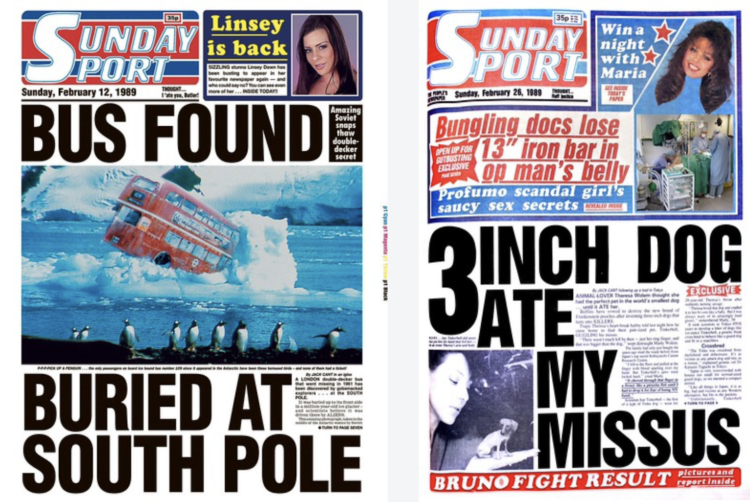
For those who were not regular readers of the Sunday Sport, it should be noted that the publication was almost always nothing if not sensational. The pick of the bunch was “Bus Found Buried At South Pole,” with the additional claim that survivors had even been found.
Then there was the Liverpool lovely who “bonked” an entire 40-man ship’s crew in a single night, and, in “another world picture exclusive,” the Sunday Sport announced that a statue of Elvis had been found on Mars.
We’ll probably never see the like again, although David Sullivan still owns the rights to the Sunday Sport title.
What next for Sullivan and joint investigations?
Yesterday, the ripples from the Panorama/Times investigation were still spreading outwards, with the Department for Culture, Media and Sport calling for the relevant authorities to investigate and the new Independent Football Regulator already urgently looking into the matter.
Sullivan is still the majority shareholder in West Ham and the new regulator has the power to adjudicate on the suitability of football club owners.
Apart from the possibility of Sullivan going ahead with threats not just to sue The Times and the BBC but any others that repeat their claims – which should give him plenty of choice – there is another likely development.
When claims of alleged sexual impropriety are publicly aired, there is often a great likelihood that other complainants will now come forward and be prepared to go on the record. This is perhaps even more likely when Sullivan’s comments from a 1996 interview about his relationships with models are taken into account.
As The Times reported, Sullivan allegedly claimed: “I’ve always said, what’s the point of owning a sweet shop if you can’t eat a few sweets.”
It may be up to lawyers to decide on what levels of consent were involved and whether positions of power and wealth were abused.
Based on the published evidence so far, even if the women’s allegations are found to be true, they might still not meet the threshold required to bring criminal charges.
A great investigation, however, by any standards and perhaps a new journalistic prize should be created to mark the importance of joint newspaper-TV collaborations.
Yet investigating the squalid activities of a former porn publisher who was once sentenced to six months for living off immoral earnings – although he got out after 71 days on appeal- is one thing.
How about tackling some really meaty stories?
Perhaps Panorama could help the Irish Times out with its investigation into a Russian-owned alumina plant in County Limerick – the largest alumina plant in Europe?
It has been reported that shiploads of alumina leave for Russia every week and that the aluminium allegedly ends up in drones used to attack Ukraine.
If true, it’s a major scandal in plain sight and arguably rather more pressing than what David Sullivan did, or did not do, 30 years ago.
Or how about investigating the 50 questions the Labour Party has put to Nigel Farage, the majority shareholder in Reform Ltd – one for every day since he last appeared at a press conference.
The first asks what date was Christopher Harborne’s £5m “gift” offered and what date was it received, while the second wants to know the currency – pounds, US dollars, Thai Baht or cryptocurrency, and did it go into his personal bank account?
Question number 50 notes that Farage told The Times on 9 May 2026 that a “serious computer hacking case” was to blame for the disclosure of the £5m “gift.” The Daily Mail was briefed that Farage’s phone had been compromised. “Was it your phone or your computer that was hacked?” Labour wants to know.
Fresh from their David Sullivan triumph, it is time for the investigative teams at The Times and Panorama to get to work on the Farage Fifty, all questions that are widely available.
 Raymond Snoddy is a media consultant, national newspaper columnist and former presenter of NewsWatch on BBC News. He writes for The Media Leader on Wednesdays — bookmark his column here.