



Strait of Hormuz disruption threatens $94bn of global ad investment over next 18 months
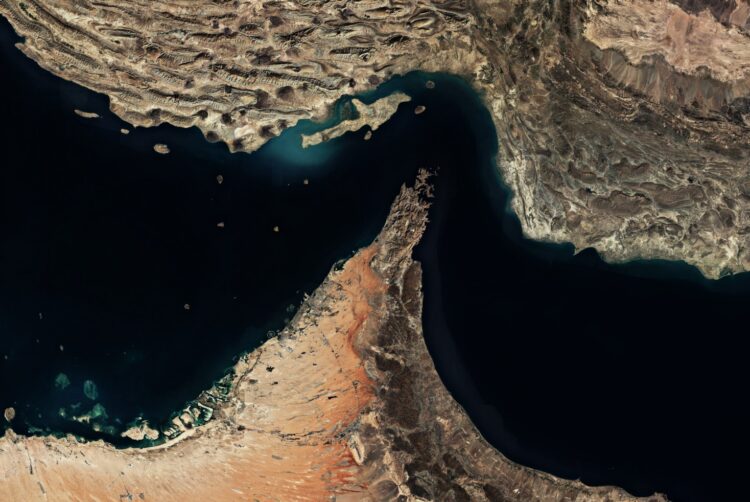
Ongoing disruption to the Strait of Hormuz caused by the US-Israel war with Iran is placing substantial global advertising expenditure at risk over the next 18 months, the latest report from Warc has forecast.
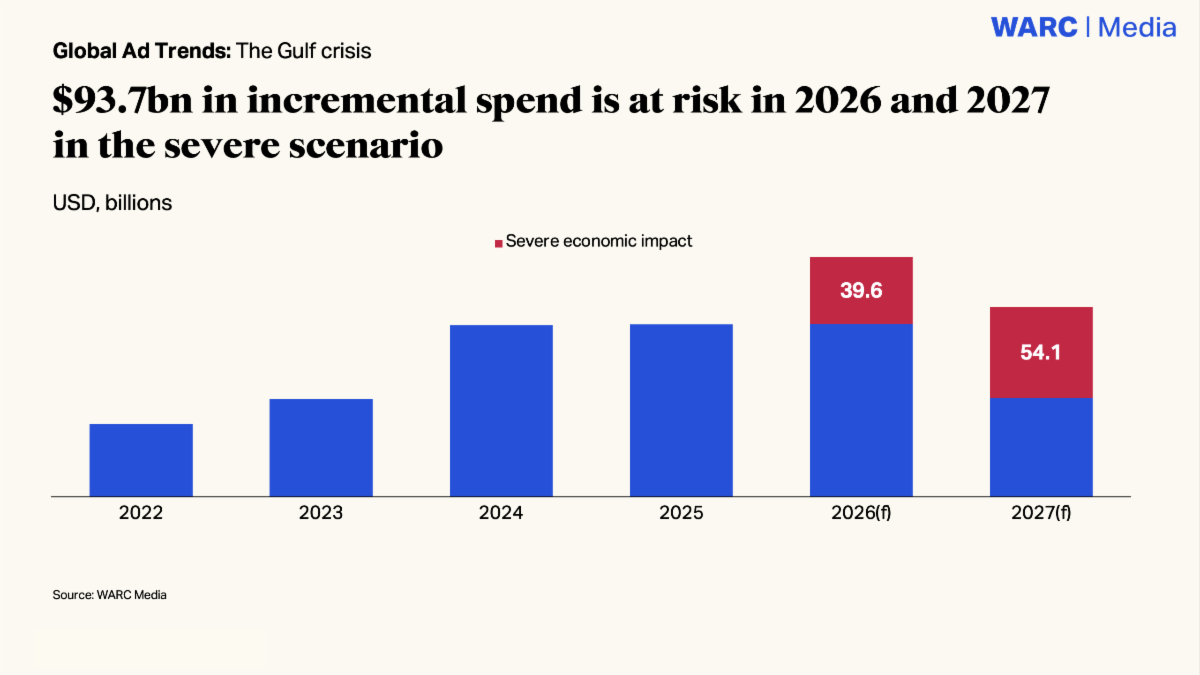
While Warc upgraded its global ad growth forecast for 2026 despite persistent fiscal headwinds caused by the war — now expecting +11.5% global ad market growth to $1.39tn — a quarter of that growth (3.2 percentage points, or $39.6bn) is now at risk.
Warc has also warned that a further $54.1bn in 2027 ad expenditure growth could be removed if the crisis in the Gulf is prolonged.
This comes as Warc is already forecasting a slowdown in global ad market growth to 8.2% in 2027, even without accounting for the extent of the macroeconomic disruption.
Yesterday, the US Bureau for Labour Statistics announced prices in the US rose +4.2% over the last twelve months — the fastest rate of inflation in three years. US President Donald Trump on Wednesday declared, “I love inflation”.
After centring his 2024 presidential campaign on bringing costs down, the Trump administration’s war of choice in Iran has threatened the global economy, as Iran has effectively kept the Strait of Hormuz, responsible for about one-fifth of the world’s oil and natural gas exports, closed.
“As the Gulf Crisis stretches into its fourth month, global markets are now in damage limitation mode as the blockade of the Strait of Hormuz acts like a tax on consumers, lifting prices and squeezing real spending power,” James McDonald, director of data, intelligence and forecasting at Warc, said.
Automotive, food, and travel and transport brands are particularly susceptible to a prolonged rise in oil prices, with energy and fertiliser prices also impacted. The US has tapped its Strategic Petroleum Reserve (SPR) to depress prices domestically and internationally, but the emergency reserves have already slipped to their lowest levels since the Reagan administration.
Central banks are weighing whether and to what extent to hike interest rates to counter inflation, with downstream effects on business investment. The European Central Bank is expected to become the first such central bank to do so today, raising interest rates by a quarter of a point.
Price inflation is anticipated to further constrain consumer spending in the still-recovering post-pandemic global economy, and tightening belts could lead businesses to cut marketing budgets, which are typically first on the chopping board during economic downturns due to their relative flexibility compared to other fixed costs.
“If the conflict drags on — or further intensifies — these risks shift toward stagflation, with sectors such as travel, automotive and food acutely exposed to higher production costs and weaker demand,” McDonald explained. “The net effect is a gruelling squeeze on margins.”
Warc is already forecasting that the global travel and transport sector will reduce advertising spend by 3.5% this year. Automotive spend is anticipated to be largely flat in Western Europe this year, but up 6.7% globally amid a rise in new electric vehicle brands. While the food sector is still expected to grow ad investment substantially this year (+10.3%), Warc warns that the impacts of the current supply chain disruption are expected to be felt more harshly in 2027.
‘Uneven’ impact on media channels
The latest Global Ad Trends forecast notes there is likely to be an “uneven” impact on media channels, with cost pressures on small- and medium-sized businesses likely to be especially acute.
This could place social media growth at risk; Warc is currently forecasting 20% growth in the channel this year, but this could fall to 17.9% in the “severe scenario”.
More generally, Warc’s worst-case forecast expects search, social and retail media to retain two-thirds of their global ad spend.
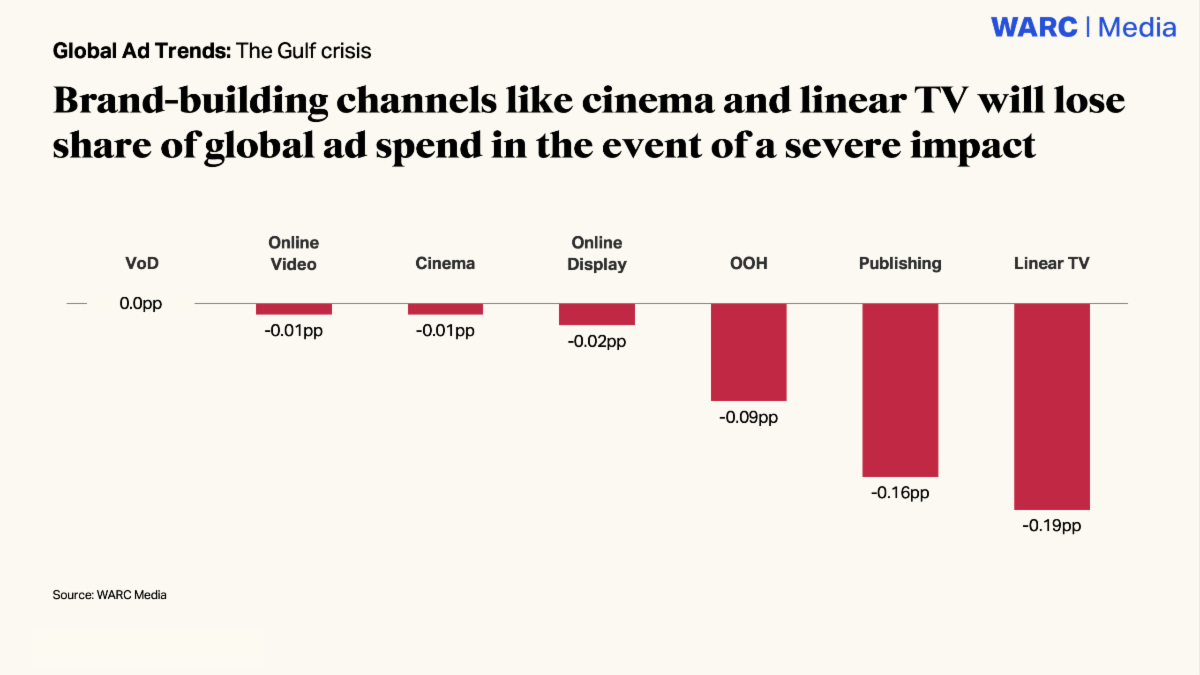
However, the report warns that the channels most likely to “absorb the losses” are those already under pressure from the shift away from traditional, brand-focused media investment: linear TV, publishing and cinema.
Linear TV revenue is forecast to fall -7.3% globally this in Warc’s severe scenario, compared to a -3.7% fall in its baseline forecast. Publishing is likewise expected to contract -8.5% (compared to -0.8% baseline) and cinema is forecast to decline 4.0% (compared to a baseline growth of +6.3% amid strong box office and attendance thus far this year).