



‘Right diagnosis, wrong prescription’? Adland torn as Starmer announces under-16s social media ban
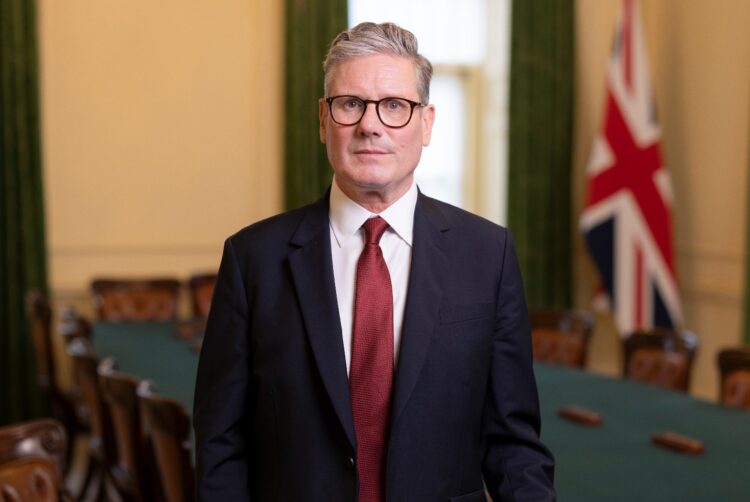
The UK is pushing ahead with banning access to social media platforms for children under the age of 16.
The announcement was made this morning (Monday) by Sir Keir Starmer, the prime minister, who signalled he expects formal legislation to be brought to Parliament before Christmas, with the law coming into force by Spring of 2027.
The ban is expected to apply to platforms including Snapchat, TikTok, YouTube, Instagram, Facebook and X. It is not expected to include direct messaging services such as WhatsApp and Signal.
The Government also said it will “go further than a blanket ban on social media” by blocking under-16s from accessing “harmful functions” such as livestreaming and “stranger communication”, which could apply to “gaming sites” such as Twitch and Discord.
Overnight curfews and mandates for “breaks in infinite scrolling” for under-18 users are also being considered, with further policy details expected to be released in July. The Government is also seeking to enforce a minimum age of 18 for “romantic companion” AI chatbots.
“This is a line in the sand,” Starmer said. “Tech giants had their chance and failed, but we’re stepping in to protect children, back parents and set a new normal for future generations.”
The social media ban will explicitly borrow from Australia’s policy. This is despite studies of Australia’s ban finding that 61% of under-16s who had previously been using now-banned platforms have reported little or no change in their social media use.
‘This is not good enough’: The business case for online safety
The UK Government indicated it would “learn the lessons from Australia’s experience” and introduce “more highly effective age assurance measures” to support compliance. Data privacy advocates have warned that this could involve forcing Brits of all ages to submit personal information to third-party verification companies to access platforms.
A spokesperson for Ofcom added the regulator is “ready to work closely” with the Government as more detailed regulations take shape.
‘Business as usual’ for advertisers?
The ban could have downstream effects on social platforms’ business models and advertisers looking to target or otherwise appeal to teen users. In the long term, assuming the ban is effective in keeping young people off platforms, it could also lead to changes in media consumption habits for Generation Alpha and beyond.
However, the medium-term impact on ad expenditure is likely to be more muted. As Chloe Singleton, group media and influence director at social media agency eight&four, noted, direct targeting of under-16s is already “heavily restricted” across social platforms, meaning that most advertisers “are not actively building media plans around this audience in the first place.” She acknowledged, however, that this is less true of brands within certain categories, such as fashion, gaming and entertainment.
“For the majority of advertisers, it would largely be business as usual,” she told The Media Leader. “The more significant implication is the potential reduction in audience reach and inventory as platforms lose a portion of their user base.”
For brands seeking to continue reaching younger consumers, Singleton suggested their focus is likely to shift to “indirect routes of influence” online, such as creator partnerships, parent- and household-targeting, and greater investment in contextual placements and alternative digital environments.
A decline in audience reach could be particularly impactful for YouTube and other platforms with an especially large contingent of young consumers.
According to Barb’s now-shuttered measurement of channel-specific YouTube viewing on TV sets (Google sent Barb a cease-and-desist letter over the effort in January), the most-watched YouTube channels in the UK on the big screen were dominated by content for small children, like Peppa Pig and Bluey.
The video-sharing giant has notably been embraced by the UK’s own broadcasters as a content distribution platform, particularly to reach younger consumers. It is unclear how an under-16 ban would impact such strategies on YouTube or other social video platforms.
Reacting to the news of the ban, a spokesperson for YouTube said that the platform is “a vital resource for young people, educators and parents” and insisted the company has “invested in expert-led, age-appropriate experiences and default protections for teens for over a decade, and will continue to do so.”
The spokesperson added: “Blanket bans push kids out of such curated, supervised, beneficial experiences and towards anonymous, less safe services.”
This very same argument was echoed by a spokesperson for Snapchat, who told The Media Leader: “We share the Government’s objective of protecting young people from online harm. However, because the majority of time spent on Snapchat is in private messaging between friends and family, an outright ban that disconnects teens from those relationships doesn’t make them safer — it may simply push them to less safe platforms.”
‘Right diagnosis, wrong prescription’?
Whether to ban social media for under-16s has been hotly debated within the UK’s advertising industry for months.
Proponents of a ban say it is a necessary first step toward driving long-term cultural change and addressing parents’ concerns about online safety.
Opponents warn a ban would not be enforceable nor effective, and would allow social media companies to maintain harmfully addictive user experiences for young users as well as adults.
Platforms have been widely accused of failing to address online harms. New research conducted by the Molly Rose Foundation found that half of teen girls (47%) saw high-risk content on social media in the previous week, with one-third (34%) of 13-17 year-olds being served suicide, self-harm, depression or eating disorder content. TikTok was singled out as the worst offender, with three-quarters (76%) of teens who saw high-risk content viewing it on the platform.
The charity has previously found that Meta’s child safety tools, including and especially its Teen Accounts (promotion for which has featured prominently in ads on LinkedIn and Channel 4 in recent weeks amid the UK’s consultation on the social media ban), are practically ineffective.
We need more than just a social media ban for U16s: An insider parent’s perspective
At an Advertising: Who Cares event last week, about half of the attendees indicated by raising their hands that they were in favour of a ban.
However, a panel of online safety advocates at the event, which included Molly Rose Foundation CEO Andy Burrows, Conscious Advertising Network co-founder Jake Dubbins, Impress CEO Lexie Kirkconnell-Kawana, and student policy researcher Cosima Wiltshire, was unanimous in its opposition.
“Is it a win for the platforms to be forced to comply with a ban for a specific age group as opposed to having to redesign their platforms to be less addictive?” Dubbins asked.
Reacting to the news that a ban had been announced, Burrows told The Media Leader that he believes that, by driving this policy intervention, Starmer’s legacy “will be setting back children’s safety by years”.
He said: “The Prime Minister has chosen to gamble on an unenforceable social media ban that will quickly unravel. When that happens, parents and children will ask why he chose not to follow the evidence but take the politically expedient option instead.
“A social media ban will fail to tackle fundamental product safety risks and leaves parents with a false sense of safety. A majority of children will continue to use high-risk sites that will have no incentive to implement robust protections.”
Kerry Moscogiuri, CEO of Amnesty International UK, agreed the ban “is a case of the right diagnosis but the wrong prescription”, warning that it “risks treating children as the problem rather than addressing the companies and systems that create the risks in the first place.”
Other advocacy groups have likewise sounded the alarm that the policy could have drastic downstream effects on data privacy.
James Baker, the freedom of expression programme manager at the Open Rights Group, which campaigns for freedom of speech online, noted that under the ban, over-16s in the UK “will have to hand over identity documents or biometric data to unregulated age verification companies.”
He added: “The Government has completely failed to acknowledge the harms that could come from that.”
What next after the social media addiction trial? With ScrollAware’s Jess Butcher