



Whose Cannes is it anyway?
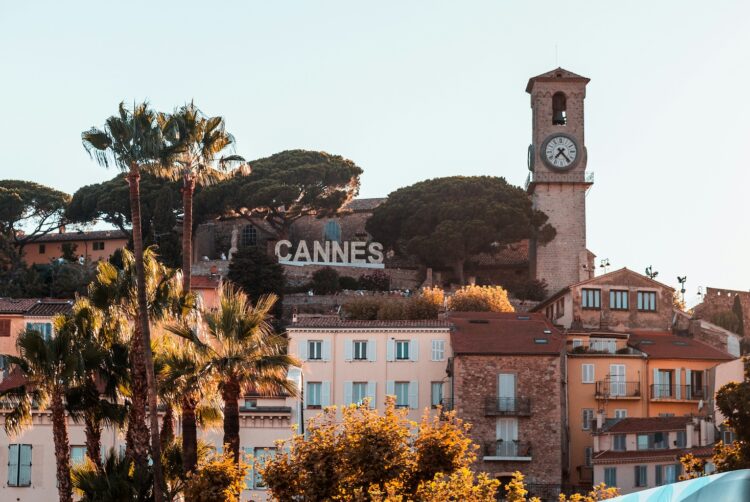
Ask anyone on the Croisette who Cannes Lions is really for and you tend to get a version of the same answer, everyone.
The festival that began as a gathering for creative agencies to judge each other’s work has swollen into an annual summit for the whole media and marketing industry, brands, platforms, adtech, retailers, creators and, this year more than ever, the AI companies.
We asked senior figures across brand, agency, media and adtech who the festival is really for in 2026, and what that says about where the business is heading.
The broad church
“Cannes began as a creative agency playground, a place to celebrate the craft of advertising,” says Sarah Hackett, managing director EMEA at APPLY.
“Tech giants, consultancies, creators and media owners are now firmly part of the mix. The range of voices has never been broader, and that mirrors how the industry itself has evolved. Cannes is no longer just for the people who make the ads. It’s for everyone who shapes how brands reach people.”
Dustin Duke, global executive creative director at Amazon Ads Brand Innovation Lab, puts it more drily. “Cannes used to be a festival where creative people judged creative work and drank rosé in between. It’s still that, but the guest list has expanded. You’ve got technologists, commerce leaders, creators and storytellers all in the same rooms now.”
So far, so harmonious. The interesting part is what the guest list looks like once you stop counting heads and start asking who has the prime spots.
The beachfront
“Look at the beach, and you’ll see who dominates: big tech,” says Nick Henthorn, global head of InfoSum, data and technology solutions at WPP.
Emma Newman, chief revenue officer EMEA at PubMatic, has the long view. “I’ve been going to Cannes for 21 years. When I started, it was owned by the creatives. The work was the point. The parties were a side effect. That’s changed. The platforms moved in and reshaped the beachfront. Now the AI companies are there too, and that tracks.
“Advertising is in the middle of an infrastructure shift, and the companies driving that shift want to be where the conversation is.”
For Adrien Boyer, senior vice-president EMEA at Seedtag, the geography is a leading indicator. “The prime real estate on the Croisette that once belonged to agencies and publishers now belongs to the platforms and AI companies. That shift tells you exactly where marketing budgets will flow over the next three to five years.”
Jordan Bitterman, chief marketing officer at MiQ, has watched it happen across two decades. “First came the digital platforms like Google, Facebook and Twitter. Then came the adtech wave: companies with names full of Xs and Ys setting up in rented apartments and, eventually, the yachts down at the marina.
“What some people dismissed as ‘Ad Tech Row’ was actually a preview of the future. It turns out that Cannes has always been for the people building what marketing becomes next.
“The companies that eventually inherit the beach rarely start there.”
The independents push back
If the platforms own the front row, the independents are not conceding the stage. Newman points to a counter-current that is easy to miss in the glare of the activations. “The independent agency story is the other thing worth watching.
“They (Indies) won nearly a quarter of all Lions last year. Holding companies are consolidating, tech and AI players are all over the Croisette, and the independents are still finding a way to matter.”
Ed Bristow, vice-president of business development EMEA at Adlook, thinks consolidation is precisely what gives independence its moment. “With recent holdco acquisitions, brands need to ensure they work with partners who have their best interests at heart.
“Independence will come into sharper focus as brands question conflicts within vertically integrated ecosystems, and search for the right partners to deliver meaningful results that contribute to specific business goals.”
Retail media, and a pitch for the open web
Beyond the platform-versus-independent framing, two constituencies are pressing their claim.
The first is retail media. “As the media industry expands, so does the variety of businesses you see at Cannes,” says Dan Sands, regional director EMEA at Zitcha. “There has been a steady rise of retail media, with the number of activations multiplying every summer for the last three years. Retail Media Networks (RMNs) like Nectar, Chase and Albertsons have all launched major activations as they look to attract agency budgets. Retail media has definitely established itself as a content and conversation stream.”
The second is the open web, and here the mood is more combative. Hugo Welkers, CEO and co-founder of Refinery89, wants the publisher presence to translate into something substantive. “More publishers are in the room, making their vital role in the ecosystem clear.
“I hope that translates into serious discussion around what it takes to build sustainable publisher businesses, because without quality, premium environments at the heart of the open web, the whole value chain suffers.”
Elli Papadaki, senior vice-president of global supply at Onetag, goes further, arguing the dominance on the beach flatters the walled gardens. “Despite the visibility of the walled gardens, the open internet is approaching a positive tipping point.
“As media quality, creative intelligence and AI-driven optimisation continue to advance, the performance gap between the open web and the walled gardens is narrowing.
“Cannes increasingly reflects an industry looking for open, interoperable solutions that deliver measurable business outcomes rather than simply scale, reach or awards.”
Has the business of Cannes eaten away at its creativity?
If the conversation has moved from the Palais stage to meeting rooms and fringe events, has Cannes stopped being about the work?
Graham Alexander, director of marketing services and adtech at With, sees the festival splitting into two crowds, “those learning from the past and those looking forward”.
Business, he concedes, “is certainly now a staple of Lions to justify the rosé”, but the group who take the time to study the best work of the past 12 months he calls “sadly diminishing”, even as the Lions’ own judging sharpens its focus on effectiveness.
Kerel Cooper, chief marketing officer at MarketCast, pushes back on behalf of the work. “Cannes has always been a celebration of creativity, and its real value isn’t measured solely by clicks or conversions. Great creative builds brand equity, shapes perception and creates the emotional connections that make performance marketing more effective over time. Emotional resonance is one of the strongest signals of future business impact.”
Amazon’s Duke, perhaps unsurprisingly for a creative, reframes the tension as a truce rather than a takeover. “What I see is the industry reorganising around companies that can connect storytelling to outcomes. Insights, distribution and measurement, that’s where the investment is going.
“Not instead of craft, but alongside it. The future of marketing is partnership-led, tech-enabled and commerce-adjacent, and honestly, I think that’s a good thing for creativity. When you can prove what’s working, you earn the permission to take bigger swings.”
What it tells us about the future
If the first question is who Cannes is for, the second is what its evolution signals about where media and marketing go next, and the clearest read on that comes from the festival’s own scorecard. Dani Cushion, chief marketing officer at Teads, points to the changes Cannes has made to what it rewards.
The introduction of the Creative Brand Lion and the expanded recognition of retail media, she argues, show a festival “no longer focused solely on celebrating individual campaigns, but increasingly rewarding the system and capabilities that make great work possible”.
On that reading, “Cannes is becoming as much for the architects of growth as it is for creative teams”, with retail media recast from a pure performance channel into “a space where creativity and data intersect”. The deeper shift, she says, is that “success is no longer measured by creativity or performance alone, but by how effectively brands connect the two”.
Pull the threads together and a picture of the next few years emerges that has very little to do with who lifts a Lion. The beachfront is a budget forecast. The independents are betting that conflict-free counts for something in a consolidating market. Retail media and the open web are both arguing they have been underpriced. And the old binary of creativity versus performance is collapsing into a single question about which businesses can connect the two.
Bitterman, who has seen more Cannes weeks come and go than most, lands it neatly. The festival, he says, is heading towards “a world where creative, media, data and AI all sit together.”
Whose Cannes is it now? On the evidence of the people who keep going back, it belongs to whoever is building what marketing turns into next. Everyone else is renting.