



Leading Questions with Andrea Latten – Condé Nast UK

Publishing week in focus: Leading Questions
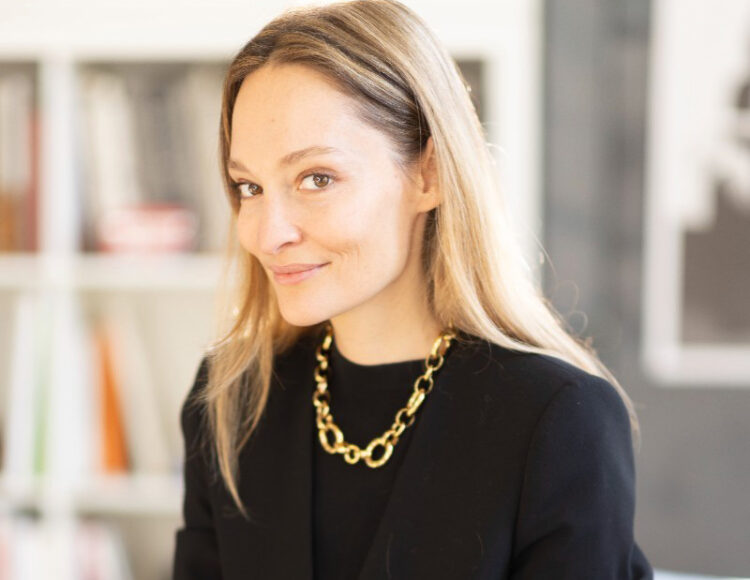
Andrea Latten, chief business officer at Condé Nast UK, is in the hot seat for our probing and quick-fire Leading Questions.
Andrea Latten oversees all commercial operations at Condé Nast UK, a portfolio that spans Vogue, Vanity Fair and Architectural Digest, among others.
As chief business officer, she is responsible for revenue growth, client partnerships and the content and events output that continues to define what premium publishing can look like commercially.
She came to the role after four years running the equivalent operation at Condé Nast Germany, making her one of the few senior commercial figures in UK media with deep experience across two of the company’s major European markets. Across 13 years at the company, she has seen the business model for premium publishing tested, adapted and, in many ways, reaffirmed.
Leadership
What principles guide your leadership approach?
I tend to come back to three words: trust, empowerment and entrepreneurialism.
‘Trust’ is important because if you don’t create trust among your direct reports and leaders, they will not tell you what’s actually challenging them in the day-to-day. And without that you can’t make the right changes.
Then, ‘empowerment’, as people work best if they are empowered to do their jobs and to choose the right direction for their team. And, also because I don’t believe in micromanaging.
The third is ‘entrepreneurialism’, because when you see the business you work for as almost like your own business, you make better, more honest decisions.
What’s the toughest leadership decision you’ve ever had to make?
Always the toughest decisions are those that drive transformation – ensuring that resources are allocated exactly where they’re needed. As a company, you have to be fast at adapting to change, which means constantly evaluating the business services you offer and bringing in the right people. I’ve learned to trust myself with that decision-making.
People and Culture
How do you build and maintain a strong company culture in times of rapid change?
When you drive a lot of change, it’s really important you foster a culture of transparency, because if you want to adjust your direction, people need to understand why.
Teams thrive with a clear structure, so when you change that, they need to understand it. I believe in regular, almost overcommunication, so that everyone on the team is properly informed.
What’s your approach to developing future leaders within your organisation?
You often find real talent in the day-to-day projects rather than in, say, a presentation or a set-piece situation where you get their best three minutes of their day.
Someone can always give you their elevator pitch, which is fantastic, but I often feel that the real talent you spot lies in how you answer everyday challenges. Then, of course, at Condé Nast we have lots of very good, more formal schemes to identify and promote, whether at commercial, editorial, or senior leadership levels. It’s something we’re always thinking about.
How do you handle failure, both personally and within your teams?
There’s a German saying: ‘Krone richten, weitermachen’, which means ‘straighten the crown and carry on’. It’s a little like ‘keep calm and carry on!’ And I’ve become much faster at that myself.
The world moves fast, and effective leaders must do the same. They need the ability to move on from failures, learn from them, and turn those lessons into future success. And then do it all over again.
AI, Innovation and Skills
How is AI changing the way you lead and make decisions?
We are just starting to understand its growing potential. To me, it’s incredibly useful for data collection and for making informed decisions based on that data.
Whereas before, I needed to ask someone on the team to find me all the information about a client, I can use AI to quickly help… so my team is freed up to do what they do best.
At Condé Nast, we deeply believe that creativity is human, but when AI offers the opportunity to spend more time on creativity, then it should be embraced.
What’s your advice for aspiring media leaders?
You have to be excited about everything that’s new and see it as an opportunity rather than a challenge. Resilience is a plus, but it usually comes with experience.
You also probably have to get comfortable with the fact that, in your lifetime, you might have three or four different careers in media, rather than just one, as it may once have been. See change not as a threat but as an opportunity that opens many more doors than it closes.
The Quick-fire Round
Which book would you make required reading for all media leaders?
Factfulness: Ten Reasons We’re Wrong About the World – and Why Things Are Better Than You Think by Hans Rosling. Sometimes things are not as bad as we would have ourselves believe.
Which leader from TV, film, or literature most inspires you?
Even if we don’t align on some leadership principles, Miranda Priestly from The Devil Wears Prada.
What’s your go-to source for inspiration when you need it — work or otherwise?
Instagram – even though I set myself a daily time limit now. It remains the most creative place for me to catch up with the Zeitgeist in fashion, culture, art and music.
Media lunch or media breakfast meeting and why?
I love a breakfast meeting. It’s something that I have only really discovered in the UK.
Which media leader would you like to answer Leading Questions next?
Richard Dennen, the editor of Tatler. He is full of wisdom, and very funny with it.
Leading Questions is published by The Media Leader every Friday.