



How Mail Metro Media stopped killing its golden goose
Opinion
Mail Metro Media deserves credit for shifting its mindset from how much revenue can be extracted from today’s web page to how valuable tomorrow’s page could become, writes Lumen’s Mike Follett
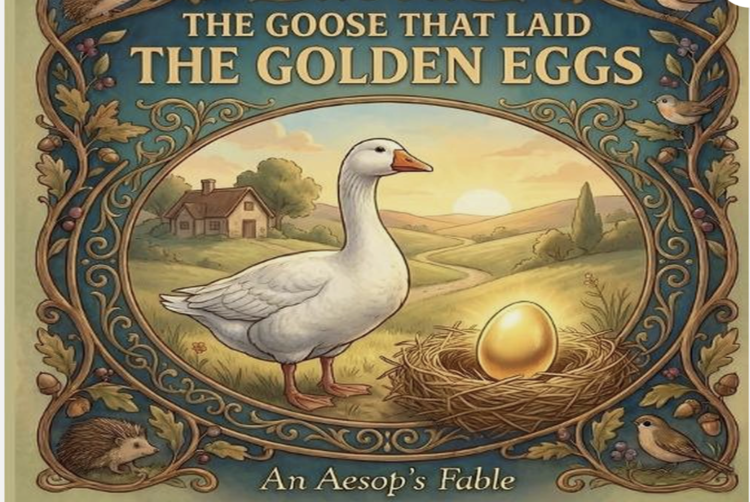
Every child knows Aesop’s fable of The Goose That Laid The Golden Eggs. Each morning, the farmer received another golden egg. It was an extraordinary source of wealth, but not a limitless one. Convinced the goose must be full of gold, he killed it in the hope of becoming rich more quickly.
He ended up poorer than before.
Digital advertising has spent much of the past three decades searching for additional golden eggs. As CPMs came under pressure, pages acquired another advertising slot, then another auction, then another opportunity to monetise the reader. Each decision made sense in isolation. Together, they nudged the industry towards a simple assumption: more inventory must eventually mean more value.
The trouble is that value rarely works like that.
Publishers don’t exist to maximise advertising revenue. Advertising revenue is what happens when publishers maximise reader value.
That distinction matters because it changes the objective. Instead of asking how much revenue can be extracted from today’s page, publishers begin asking how valuable tomorrow’s page could become. One mindset harvests the goose. The other looks after it.
Mail Metro Media deserves credit for taking this idea seriously.
Working with Lumen Research, it deliberately reduced advertising clutter across a premium edition of its sites. At first glance, it looks like an odd commercial decision. For 30 years, publishers have tried to charge more for advertising. Very few have tried to make advertising worth more.
Yet that is precisely what happened.
Readers reported a noticeably calmer experience. Nearly three-quarters agreed that advertising no longer disrupted their browsing, while the proportion describing pages as “busy” fell by 17%.
The commercial consequences were even more striking. Attention increased by 60%. Spontaneous brand recall rose by 2.4 times. Purchase intent increased by 19%, while consideration improved by 17%.
Those numbers suggest something more significant than a successful optimisation exercise.
Attention data shouldn’t just optimise campaigns. It should optimise the medium itself.
For the buy-side, attention will become less a way of comparing publishers and more a way of identifying those that have learned to build better advertising environments. Instead of looking for better media, agencies and advertisers will increasingly look for publishers that know how to make media better.
For the sell-side, the implications are equally profound.
Research ceases to be evidence for the sales deck and becomes an input into product development. Editorial, product, commercial and advertising teams acquire a common design language. Decisions about ad density, page architecture, creative formats and user experience become less a matter of instinct and more a matter of evidence. Attention stops being a measurement discipline and becomes an engineering discipline.
A better product creates a better advertising environment. Better advertising outcomes create greater willingness to pay. Premium pricing follows naturally because the underlying product has become genuinely more valuable.
That feels like a healthier future for digital publishing than the perpetual search for another advertising slot.
It is healthier for readers, who spend time in environments that respect rather than exhaust their attention. It is healthier for advertisers, whose campaigns work harder because they stand out more.
It is healthier for publishers, whose commercial success depends upon improving their product rather than stretching it. It is healthier for the planet too, because every unseen impression carries a computational and environmental cost.
Better advertising, delivered more efficiently, means fewer wasted impressions and less waste overall. Doing well by doing good. Squared.
Aesop’s farmer learnt too late that the goose was always worth more than the eggs. Publishing has the opportunity to learn the same lesson while the goose is still healthy.
 Mike Follett is the founder and CEO of Lumen Research.