



Why inclusion isn’t a trend when it comes to the work and workplace
Opinion
Inclusive thinking isn’t a trend. It’s how better decisions and meaningful campaigns are made, writes Lianre Robinson.
Getting the fuzzy feels from a banking advert wasn’t on my summer bingo card, but that’s exactly what Monzo’s new Get Busy Living campaign gave me. The campaign features multiple films, each focusing on an ordinary moment.
But the one I loved was the Black couple, laughing arm in arm, sneaking home after date night, set to the most nostalgia-inducing rendition of Teenage Dirtbag.
It looks like a lot of people’s date nights; confident but almost unremarkable in the best way, which is exactly why it stood out to me from loads of other campaigns that come and go without leaving much of a mark.
Different perspectives lead to better ideas
The best advertising has always been built on understanding people. Not broad demographics or audience segments, but the nuances of everyday life that make people stop and think, “that’s me.”
Those insights don’t come by accident. They come from diverse teams with different experiences, different perspectives and, importantly, the confidence to challenge assumptions.
Zappi research found that more than half of women say they began feeling less represented in advertising in their thirties and forties. Yet this is often the stage of life when their (our!) purchasing power is growing.
Nearly one in three women over 55 struggled to name a single brand that genuinely speaks to them. Frustrating. Yes. A completely missed opportunity.
Inclusivity isn’t just a nice idea. It works at both the brand and business levels. A 2024 Oxford Saïd Business School study with the Unstereotype Alliance, tracking 392 global brands, found that better inclusive advertising drove 16% higher long-term sales, 15% higher customer loyalty and 54% higher pricing power than less inclusive campaigns.
There’s a great phrase for this, coined by Ali Hanan, founder and CEO of Creative Equals: the new ROI, return on inclusion.
Her point isn’t just that representation matters. It’s that there’s a real difference between simply including people and actually portraying them well, with authority and agency, rather than just presence. Who makes the work shapes the work: if the perspectives around the table are narrow, the stories on screen will be too.
Blind spots rarely appear overnight
And when perspectives are missing, audiences notice.
The recent backlash against a British AI company’s advert, described by some as “misogyny with a marketing budget”, is a reminder of how quickly creative blind spots become public conversations (in the wrong way).
Lots of the conversation focused on the campaign itself. So, what happened (or didn’t happen) before it reached our billboards?
Who was in the room? And maybe more importantly – who wasn’t? The strongest teams create an environment where different viewpoints are expected, welcomed and acted upon. That’s often the difference between work that connects, misses the mark or is just downright offensive.
Better advertising starts behind the work too
Women’s Aid’s Other Kick Off is a case in point: built on survivors’ lived experience and research into when the risk spikes, rather than assumptions.
Monzo and Women’s Aid got there from different directions, one through casting and creative process, the other through survivor testimony and research. But they’re the same idea in practice: better work comes from making room for real people, not assumptions.
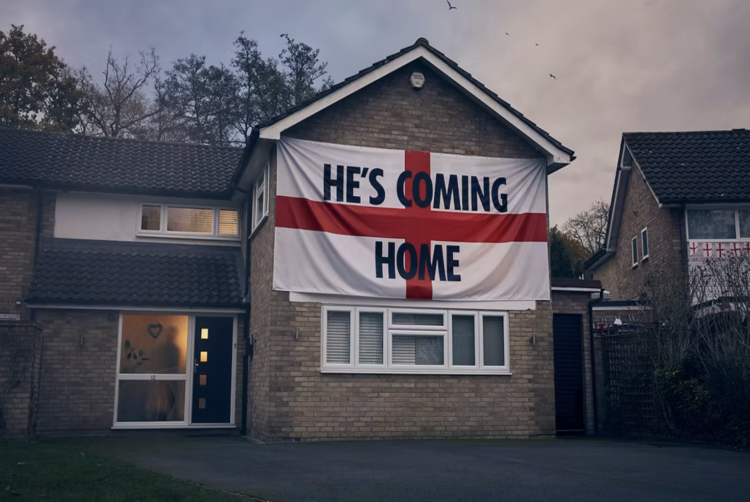
While millions were focused on England’s run through the World Cup, the campaign drew attention to another reality: domestic abuse rises during major tournaments, up 38% when England lose and 26% when they win or draw.
As England lost the semi-final, the first thing that came to my head was the horrible experience it could lead to for women up and down the country.
Supporting women throughout their careers isn’t separate from producing great creative work. It’s one of the ways we make it possible.
That means recognising that experiences such as domestic abuse aren’t seen as ‘personal issues’ that employees leave at the door. They shape people’s working lives, their confidence, health and, ultimately, whether they stay in our industry.
One in four women will experience domestic abuse in their lifetime, and more than half a million working women in the UK lived through it in the past year alone.
Statistically, that’s already true of somebody in your business, whether they’ve told you or not.
And it’s why the likes of Vodafone and Diageo have built dedicated domestic abuse policies: paid safe leave, flexible working, clear guidance for managers responding to a disclosure.
Inclusion isn’t just about who appears in campaigns, but also who feels able to build a long-term career in our industry. That’s progress. But policies alone aren’t enough. They need to be backed by cultures where people feel supported, heard and able to contribute their best thinking.
The work speaks for itself
Too often, we talk about inclusion as though it’s an initiative with a start and end date, something to revisit when the next report is due (quick, check the stats before it’s finalised!) or an awareness campaign comes around.
But inclusive thinking isn’t a trend. It’s how better decisions are made.
Monzo’s Get Busy Living, Women’s Aid’s Other Kick Off and the backlash to the AI ad are three sides of the same coin: work gets better, or worse, depending on who’s shaping it.
And in ever more complex and somewhat challenging times in this industry – our greatest competitive advantage has always been our understanding of people. Let’s not forget that.
 Lianre Robinson is WACL (Women in Advertising and Communications, Leadership) campaigning co-chair and CEO of The Marketing Academy Foundation. Read her column for The Media Leader on the first Friday of every month.