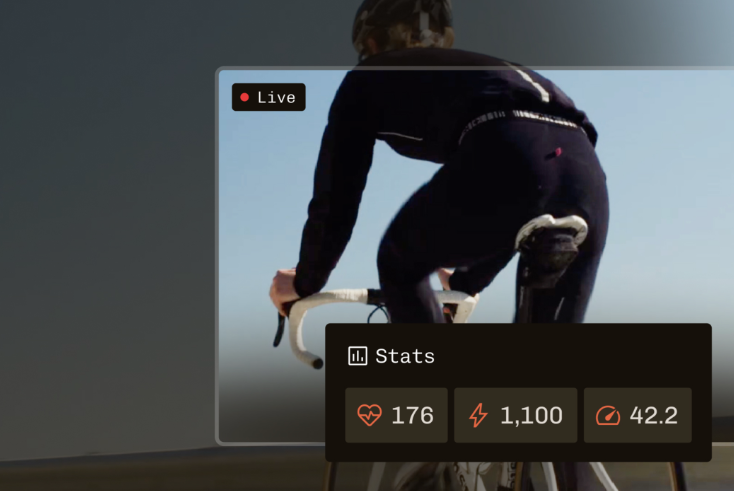
Streamers can replace separate production, graphics, and transcoding processes with one integrated media pipeline that weaves raw video feeds, video ads, graphics, and data into fully produced, ready-to-consume live streams.
This makes advanced user experiences, including Multiview and data-driven overlays, faster, cheaper, and less error-prone, according to the company behind it – Tiledmedia.
The vendor claims its Tiledmedia Fabric is a groundbreaking solution for simplifying the production and distribution of advanced streaming services. Sports coverage is an obvious application.
Tiledmedia Fabric supports the creation of a passive viewing experience – like the classic main channel with burned-in graphics – as well as interactive feeds.
For interactive experiences, Tiledmedia Fabric can process multiple video, audio and data feeds and encode and package them as individual streams for distribution. The viewer chooses which on-screen elements they want to see or interact with.
In a cycling race, for example, a viewer could follow their favourite competitor alongside the main race shots using Multiview. They could interact with data-driven graphic overlays.
The platform includes an automated dynamic ad insertion option that can show side-by-side ads (without replacing the main content) during dead moments in a race or game.
Operational efficiencies
Rob Koenen, chief business officer at Tiledmedia, says Tiledmedia Fabric has already been deployed with several [unnamed] high-profile international streaming service providers. “They are benefiting from high-quality services and operational efficiencies,” he reports.
Tiledmedia is using IBC2026 for the platform’s full launch (general availability).
Koenen claims that to achieve the same functionality with existing tools, a media company would have to bolt together a production gallery, a graphics system and an encoding and packaging chain.
“Each of these adds cost, delay, and potential interoperability problems,” he suggests. “This would be complex and difficult to optimise. Also, it would be nearly impossible to drive such a pipeline with data.
“We replace that chain with one integrated pipeline, which also makes it simple to use data and event feeds to configure and drive the platform on the fly.”