



The asymmetry of risk: why does news pay a price platforms don’t
Analysis
At the News Alliance breakfast, senior marketers agreed that trusted news is one of the best places to build a brand. So why is it still treated as the riskiest place to spend?.
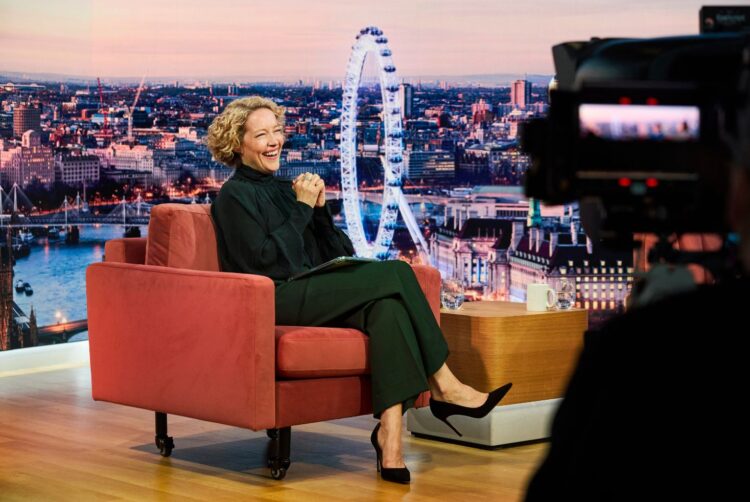
Cathy Newman arrived on the back of a motorbike; you can’t stop the news.
The Sky News presenter had squeezed in a breakfast with some of the UK’s most senior marketers between interviewing a cabinet minister in Westminster and heading back to question the Pope’s AI adviser, who happens to be a Friar.
It was a neat illustration of the business of news: unpredictable, labour-intensive and relentlessly accountable.
Before she arrived, almost everyone at The News Alliance breakfast table, where the roundtable discussion was held under the Chatham House rule, said they believed in news.
Several had built marketing careers on it. One newly appointed client-side media director said his brief was to move money out of search, YouTube and Meta and into better environments.
Yet news brands keep losing budget to platforms that few in the room would call better environments. The explanation was not that marketers doubt news. It was that risk is priced unevenly across the media ecosystem, and news keeps paying the price.
One screenshot vs a million unseen impressions
News can be scrutinised article by article and keyword by keyword. Platforms, where the exposure is arguably greater, are largely judged on outcomes.
One publisher-side attendee described a single brand’s blocklist running to over 30,000 words, more than the vocabulary of the average UK adult, and rarely updated.
A financial services marketer traced much of this back to the YouTube brand safety scandal, which sent his then employer scrambling for whitelists and blocklists that no one has revisited since. Another attendee observed that the commitment to news felt in senior marketing teams tends to evaporate by the time it reaches the buyer.
A charity marketer said he could see no meaningful difference in risk, given how close brands on platforms sit to objectionable content. An agency strategy chief went further: if social is deemed safe because no one is really paying attention to the ads or what surrounds them, that is an argument for news, not against it.
Who carries the cost of the truth?
News organisations also carry costs and liabilities that creators do not.
Newman described large teams checking and double-checking material, and investigations that run for years.
Her reporting on abuse in the Church of England ran, on and off, for eight years and eventually contributed to the resignation of the then archbishop of Canterbury, Justin Welby. She estimated that only around 10% of tip-offs become stories, every piece goes past lawyers, and broadcasters risk their licence if they get it wrong. Creators publishing on YouTube or X face no equivalent rules.
It would be easy to cast this as journalists taking risks that creators avoid. Newman’s account suggested the opposite.
Fact-checking, legal review and patience are how a newsroom removes risk before anything reaches an audience. Being forensic, she said, is her watchword. The risk does not vanish. It is absorbed upstream, at considerable cost.
A creator who skips that process has not eliminated it, merely passed it on to the audience and to any brand appearing alongside.
One marketer argued news brands should trade on this rather than straining to be everyone’s universal source of truth. Choosing a forensic news brand over a YouTuber, he suggested, carries the same cachet as choosing quality over fast fashion.
The risk nobody is pricing
The third asymmetry rarely appears on a media plan: the cost to brands and society if trusted journalism goes unfunded. Newman pointed to the growing volume of disinformation, some of it from hostile states, and to audiences retreating into information silos, arguing that well-resourced reporting is what holds power to account.
At an International Advertising Association (IAA) roundtable at Cannes Lions in June, I asked a room of brand marketers who brand safety is really for: brands, consumers or society?
The consensus was that the industry routinely conflates brand safety with brand suitability, and that today’s approach too often sacrifices quality journalism along the way.
As it stands, brand safety is built almost entirely around protecting brands from short-term embarrassment. Perhaps it needs to become something broader. If the greater danger is an information ecosystem in which trusted journalism can no longer pay its way, societal safety might be the thing worth worrying about.
The commercial case followed. The agency strategy chief argued that if audiences stop trusting the media, they stop trusting the advertising in it. For the financial services marketer, news is his brand’s most sought-after contextual environment precisely because it confers trust and expertise.
AI-generated misinformation cuts both ways. It should push brands towards credible environments, but several attendees feared it would simply lengthen the blocklists.
One agency CEO described buying only supposedly unsafe inventory on quality news brands and finding it outperformed the safe inventory, because it is what people actually want to read. With around 23m people reading a news brand every day, he argued, scale is not the problem.
The boss can’t see your feed
The final asymmetry is personal. An in-house buyer described a senior colleague forwarding a screenshot of a single ad next to a story about the brand’s own service outage. It was one impression among many, but once it had been screenshotted, it became an issue.
A former agency CEO said the difference comes down to visibility. A misplaced ad on a major news site can be seen by the CEO. One in an individual social feed almost never is.
Another marketer added that defending news in a digital-first business means a long conversation about risk management that few would see as career-enhancing, when generative AI feels like a safer priority.
The result is caution that nobody at the top has asked for. Senior leaders, the client-side media director said, often don’t know the blocklists exist, while planners and buyers further down the chain default to staying out of trouble.
High effort, high reward
So how does the balance shift? Much of the discussion came back to effort. News is more work. Platforms offer partnership teams, tracking pixels, data that feeds straight into econometric models and a single place to buy. News brands are many separate companies operating on the open web, and comparable measurement remains piecemeal. Platforms, the strategy chief noted, have also defined success by what they can measure.
But higher effort tends to bring higher reward. The charity marketer described a partnership so close that his team shares a WhatsApp group with a newspaper group’s staff; on one occasion, three and a half minutes passed between a relevant story breaking and a live ad appearing beside it.
The goal, he said, is to be part of the news rather than sit next to it. A retailer with a decades-long newspaper partnership said the value lies beyond media space, in shared editorial, events and activations, though that is getting harder to justify in a performance-driven market.
One marketer urged publishers to stop fighting on platforms’ terms: concede performance, where Google and Meta will always win, and own brand-building, where news has no equal. Others want more evidence first. An insurance CMO said her brand needs proof points to keep investing, while a marketer spending public money stressed that not all reach is equal.
What next? Brands can ask their agency what they block and when the list was last reviewed. An Isba working group found many advertisers had simply never checked, rather than actively avoiding news.
Publishers could offer tiered starter blocklists for cautious, moderate and confident advertisers. And the industry could surface quick case studies of partnerships that work, rather than leaving them buried in awards shortlists.
Risk is not going away. The question is who carries it, and who gets credit for doing so.
For now, news brands absorb the cost of the truth and the scrutiny of every screenshot, while platforms collect the budget.
Rebalancing that will take effort on both sides of the table.
But as with reporting, the reward usually comes from making the effort.
The Media Leader is a member of The News Alliance; to find out more, visit here.