



A manifesto for adland: It’s time to prepare for what’s coming next
Opinion
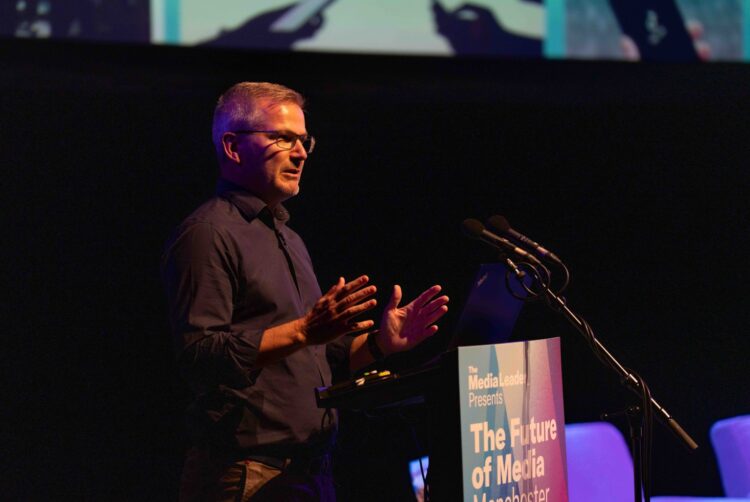
Speaking at Future of Media Manchester today, the MD of Bauer Media Advertising sets out his three-point manifesto.
There is something uncomfortable about watching governments and courts do what the advertising industry should have done a long time ago – pushing back on the toxicity of social media. I believe we are headed toward the end of these platforms’ addictive nature, so I am calling on adland to follow a three-point manifesto.
For years, we have known that the biggest social platforms are built around maximising attention, and the concerns around continuous scrolling and the algorithmic recommendations associated with it, particularly for young people. It’s one of the key reasons I have been calling on our industry to rethink its continued investment in big tech – and the huge repercussions this is creating for both our industry and society.
Despite the harms that are obvious to us all, spending on social media has shown no sign of slowing down. Adland may have failed to check big tech, but finally governments and courts are forcing the issue.
The UK Government’s decision to introduce a social media ban for under-16s, expected to come into force in spring 2027, is a landmark vote of no confidence in the way these platforms currently operate.
Meanwhile, the courts are increasingly challenging the platforms themselves. In the US, dozens of states alleged that Meta deliberately used features such as infinite scroll, algorithmic recommendations and constant notifications to maximise engagement among young people, despite its own research linking those products to harm. Meta subsequently settled the case for around $18 bn and agreed to protections for under-18s, including overnight blocks and notifications being switched off during school hours.
TikTok is facing a similar reckoning, with US states alleging that it misled users about safety and deliberately built features to maximise engagement among children, while families in the US and UK have brought wrongful-death claims linked to its content.
At my keynote presentation at Future of Media Manchester today, I will argue that ad land needs to prepare for what comes next – as I launch a three-point manifesto for the future of UK advertising.
1) Prepare for the post-algorithm era
The biggest consequence of the under-16 ban and the growing number of court cases may not be the loss of social media itself, but it could be a wider reckoning around the way social platforms are designed to maximise attention and the advertising model that has grown around it.
Adland needs to be prepared for that change.
For too long, we have become comfortable with an advertising model built around clicks, impressions and engagement g. We have become very good at chasing the next click, but in doing so, we have lost some of the care, craft and creativity that built our industry in the first place.
We need to future-proof our businesses now. That means making sure we keep investing in the right kind of media environments. It means rebuilding some of the skills we may have allowed algorithms to replace and making sure we can create effective advertising – even if the social media model looks very different in five years’ time.
The next era of adland will reward the businesses that understand audiences rather than simply target them. Those who start preparing now will be in a much stronger position to adapt. Those who don’t risk being left behind.
2) We need to measure trust as a KPI
Our industry has become sophisticated at measuring impressions, clicks, engagement and conversion. We have become attention optimisers.
But attention without trust is a dangerous proposition.
Trust is also a practical issue for advertisers. In early 2025, Adalytics found programmatic advertising from major brands appearing on a site that had hosted explicit images of young children, despite brand-safety verification being in place. Other advertisers have pulled investment from Meta after similar concerns.
The systems we built to reassure advertisers that their money is safe do not always work.
And trust in our own industry is hardly abundant. The Advertising Association’s All In Census found that 60% of UK advertising professionals do not trust the industry. That should force us to ask whether we’re measuring the wrong things.
Advertisers and agencies should start asking harder questions of every media channel: How trusted is it? What protections are in place? How transparent is the platform? What happens when those protections fail?
If governments are now restricting access to platforms because of concerns about wellbeing, and courts are forcing platforms to change the way their products work, then trust needs to be key to how we judge the media we buy.
If 60% of people working in our own industry don’t trust what we do, we should take that as a warning. Trust is the thing we rely on to exist. If we don’t believe in what we do, how can we expect our audiences to?
3) Advertisers should publish an annual Media Impact Report
Large companies already report on sustainability, diversity, governance and carbon. They scrutinise their suppliers and increasingly expect them to meet clear standards. Yet few publicly disclose the societal impact of their media investment, despite it being among the biggest cheques they write.
A Media Impact Report would show where that money went, including how much was invested in social platforms, what risks were identified and what was being done about them.
We all know the harms associated with socials, but beyond that, our industry’s investment is funding the hundreds of billions that big tech is investing in AI infrastructure.
I am not arguing that advertisers should abandon social media. Our own brands and presenters have millions of followers. Used responsibly, these platforms can be hugely effective.
We have talked about responsible media for long enough. But responsibility cannot sit solely with governments and platforms. I have long argued that advertisers, agencies and media owners have a role too.
My manifesto is clear: reduce our overreliance on the major platforms before regulation forces us to, measure trust before we lose it, and make media investment accountable to the same standards we apply elsewhere.
 Simon Kilby is managing director at Bauer Media Advertising