Are you in a promotion dependency spiral? 75% of marketers are unable to identify profitable promotions

Sales promotions have become the largest single component of marketing spend, but three-quarters (75%) of marketers are unable to estimate what proportion of their promotions are profitable.
That is the main takeaway from research by marketing effectiveness expert Les Binet and Kantar global chief strategy officer Dom Boyd, to be presented today at the IPA Effectiveness Conference in London.
The study is based on a Censuswide survey of 250 senior marketing and insights leaders from UK consumer goods businesses.
It found that 76% of marketers repeat promotions even when profitability has not been assessed.
Meanwhile, four-fifths (81%) of marketers evaluate promotions over periods of less than 13 weeks, failing to capture long-term effects of promotions beyond immediate sales uplift.
The lack of oversight is concerning, as Binet and Boyd allude to: a Nielsen analysis of 300m price promotions found that nearly two-thirds of such efforts actually lose money for businesses.
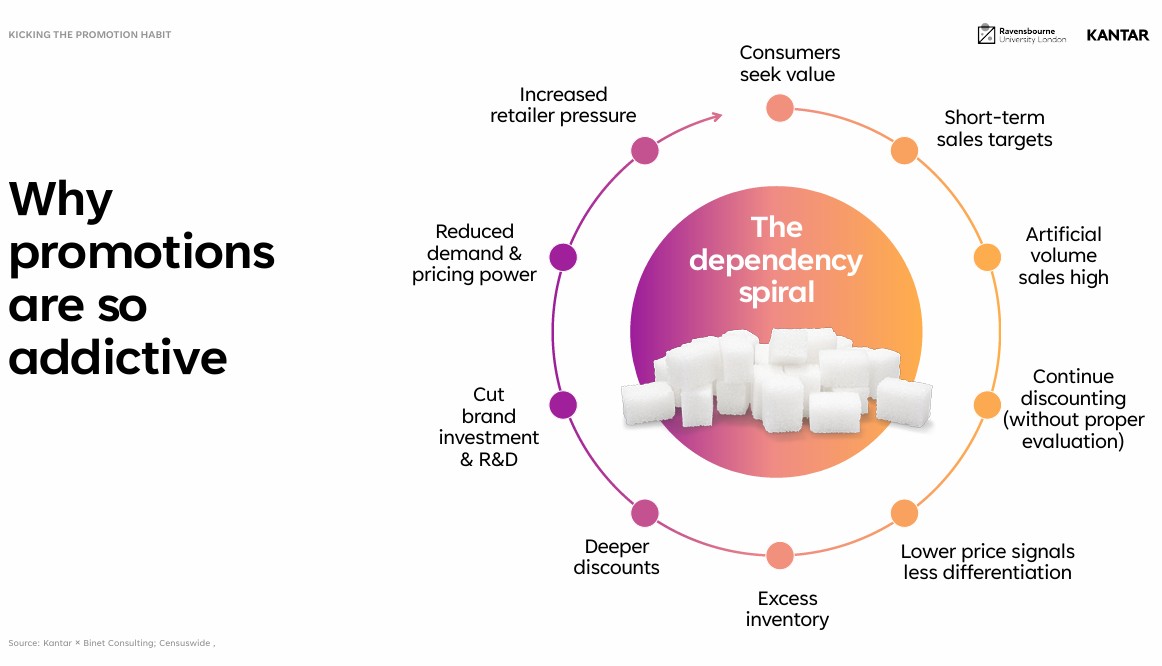
Survey respondents said the pressure to invest in sales promotions is driven by a mix of factors, including short-term volume and revenue targets, defending market share from competitors, receiving pressure from retailers, working to meet perceived consumer expectations, an organisational habit and a lack of reliable evidence to the contrary.
Binet and Boyd argue that brands that oversell promotions can fall into a “promotion dependency spiral” that devalues a brand’s products and pricing power, driving the need for more promotions to boost sales volume.
“Price promotions are like class A drugs: expensive, dangerous and addictive,” commented Binet. “Yes, they give you an immediate volume high. But the high wears off quickly. Sales slump as soon as the offer ends, and soon you need another fix.”
Marketers are not unaware of these risks. According to the survey, two-thirds (68%) would prefer to run fewer promotions, while four in five (80%) believe many promotional buyers would have purchased the item at the higher price anyway.
A similar proportion of marketers (79%) believe promotions overstate their long-term impact, while three in four (75%) say they believe repeated promotions increase price sensitivity.
Importantly, the vast majority (91%) of marketers acknowledged it would be “easy” or “very easy” to shift funds away from price promotions and into long-term brand advertising if it were shown to be more profitable in the long term.
Still, the survey results suggest marketers are underestimating the importance of brand strength and pricing power. Respondents rated brand strength as 1.3x less effective than lowering prices at driving revenue and profit growth. Pricing power was likewise viewed as 1.5x less effective than promotions.
This is despite separate analysis from Boyd showing that brands with the strongest pricing power achieve 1.5x higher margins than the weakest-performing brands.
“When it comes to actually delivering profit and revenue, most brands have a blind spot,” Boyd described. “Many are measuring promotions on gut feel or partial analysis, not really knowing what the impact on profit is, and then repeating the cycle.”
Kicking the habit
Binet and Boyd recommend a six-step process to help marketers reduce their reliance on promotions. They include:
1. Improve marketing training;
2. Learn promotional best practice;
3. Use econometrics to evaluate price, promotions and advertising consistently;
4. Measure both short- and long-term effects;
5. Assess pricing power;
6. Reinvest money from ineffective promotions into brand bulding.
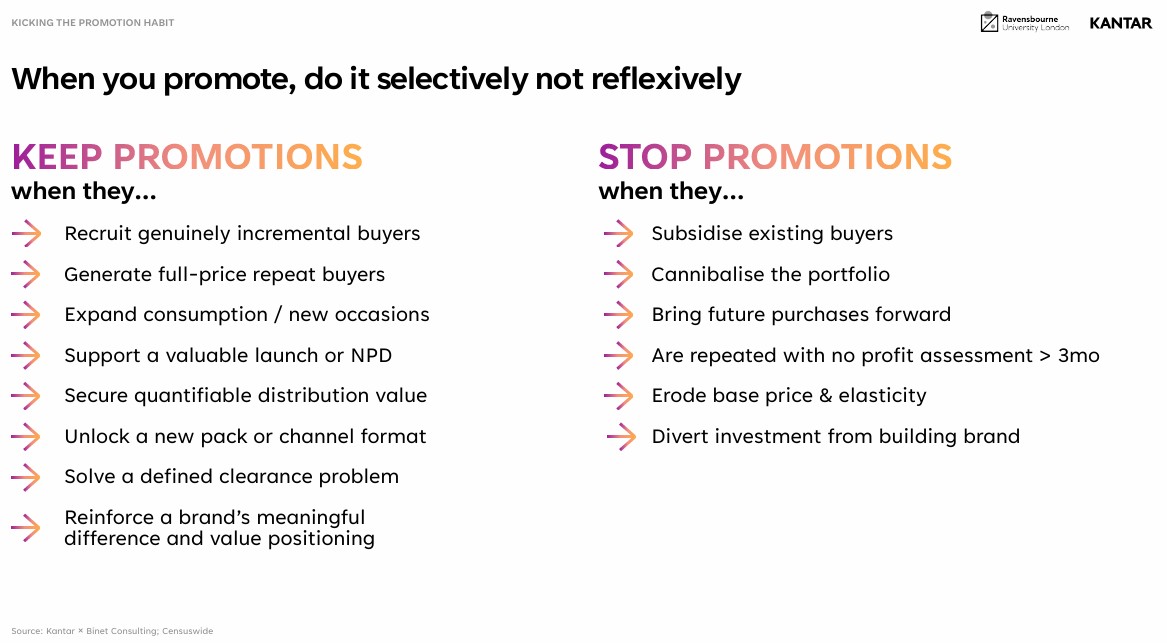
Promotions, the duo suggest, should not be eliminated altogether, but they also should not be used to “subsidise demand the brand already owns” or be “repeated without proper assessment”.
As Binet summarised: “The opportunity is to identify which promotions lose money, cut them out, and reinvest the money in brand advertising.”