



Being the sixth most famous duck in the world doesn’t make you culture
Opinion
We now understand how – and which – media create cultural impact, so don’t fall for a duck, argues Thinkbox’s CSO Elliott Mallard Millard.
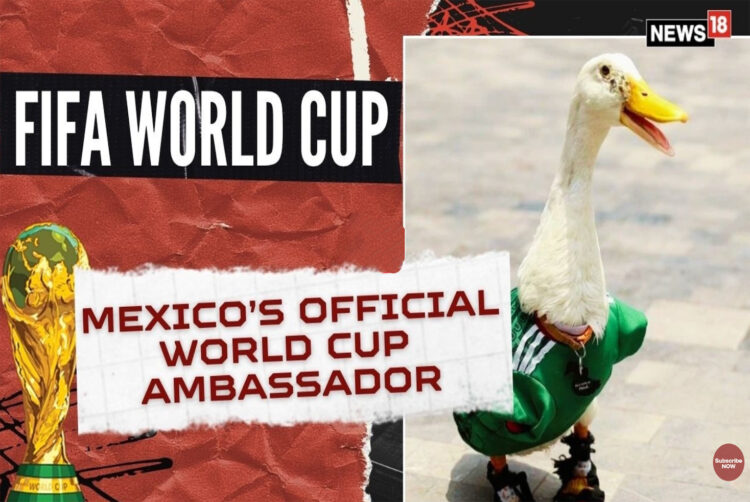
Arguably, the breakout star of this year’s World Cup has been Merlin the duck. He’s had hundreds of millions of video views, which got him a gig as an official FIFA ambassador and as a ‘commentator’ on ESPN (think Paul the Octopus but, well, a duck). He’s even been invited to meet the Mexican president, who he bit. And, according to The Guardian, he’s the sixth most famous duck in the world.
The other five, by the way, are Donald, Daffy, Scrooge McDuck, Jemima Puddleduck, and Count Duckula. I will not be taking questions on this in the comments.
By any normal measure of marketing attention, Merlin is a phenomenon. But does that make him culturally significant?
I don’t think so.
Culture isn’t what explodes, but what endures. If last year was about Labubu, cheesecake hacks, the god-forsaken 6/7, this year is about a duck in a Mexico kit. They had the numbers last year, but they’ve all but vanished from UK interest now.
Seven dimensions of cultural impact
It’s easy to spot the difference after the fact; diagnosing in hindsight once something’s already faded. But the harder and more useful question is how to spot cultural interest beforehand.
How can we define what culture really means? How can we have a framework rather than a feeling? Validation rather than vibes.
So we briefed research agency Everyday People, which reviewed the academic literature on how culture actually forms – from the anthropologist Clifford Geertz through to work from the Arts Council, the BFI, Demos, and the European Values Study.
It identified seven dimensions of cultural impact. They tend to arrive in pairs, and the ad industry usually only pays attention to one half of each pair.
“Currency” – being of the moment – gets all the attention. But its pair, “Continuity”, gets almost none, despite the research showing it’s actually the strongest driver of what people in the UK consider culturally significant.
“Transformation” and “Affirmation” form another pair. We love to talk about brands challenging norms; we talk a lot less about brands sustaining the norms people value.
“Bonding” and “Bridging” are another. Connecting to new people matters, but so does strengthening a group’s own sense of identity or place.
And finally, with no partner, there’s “Purpose”, which is whether something contributes to a sense of wellbeing and the good life.
You can review both channels and content through those seven lenses and the results are genuinely useful, because they operate as something we can plan with rather than just react to.
Something like Bake Off, for example, scores well across almost all of them simultaneously, which is why it dwarfs content that generates far more short-term noise. Love Island, by contrast, is a near-perfect currency and bridging play.
When it comes to auditing channels rather than individual shows, you get a fascinatingly different cultural footprint. Podcasts, newspapers and radio all skew toward affirmation – established and emotionally close touchpoints that people already trust.
Cinema pulls toward continuity and bridging, for obvious reasons: long-running IP, watched with people outside your own household.
Video-sharing sites and social media both lean hard into currency, which is exactly what you’d expect given what they’re built to reward.
TV is the outlier. It’s not just the largest cultural footprint of any channel – something the new culture study from DCM also concluded – but also the most evenly spread across all seven lenses. The only dimension TV doesn’t lead on is currency, which, as the research shows, is the one that matters least.
Planning for cultural advantage
What can planners do with this framework practically, though?
First, understand which of the seven dimensions actually matter to your audience before chasing any one of them. Continuity outranks currency for nearly everyone, including audiences you’d assume care most about being current.
Second: audit the actual cultural shape of the platforms and properties you’re considering against all seven dimensions. If your brand needs to feel more about currency, something like I’m a Celeb would sit; if you want to be about bonding or purpose, then something like Clarkson’s Farm.
Third: use it to spot the difference between virality and culture. Social is genuinely brilliant at producing novelty – that’s what it’s built for. But novelty decays quickly, is largely unpredictable, and depends more on the algorithm than on significance.
Finally: know that real cultural significance will pay back. Kantar puts brands that genuinely shape culture at six times the growth rate of those that don’t. IPG Mediabrands has it at three times better brand performance. M&C Saatchi puts a brand’s cultural position at around a third of total brand value. Newsworks estimates it is worth 15% of sales.
The real impact of being in culture will vary for your brand, but they all point the same direction.
Real cultural moments compound. They stay with us and get referenced years later, long after the trends and fads have been forgotten. The industry counts views and calls it significance but we’re guilty of falling for numberwang.
Last year we fell for Labubus. Recently we fell for a duck. The difference this time is that you don’t need to wait for Merlin to disappear from your feed to know it was just a brief quack.
 Elliott
 Mallard Millard is Thinkbox’s chief strategy officer.