



‘Boring costs money’: Independent media agency makes case for creativity
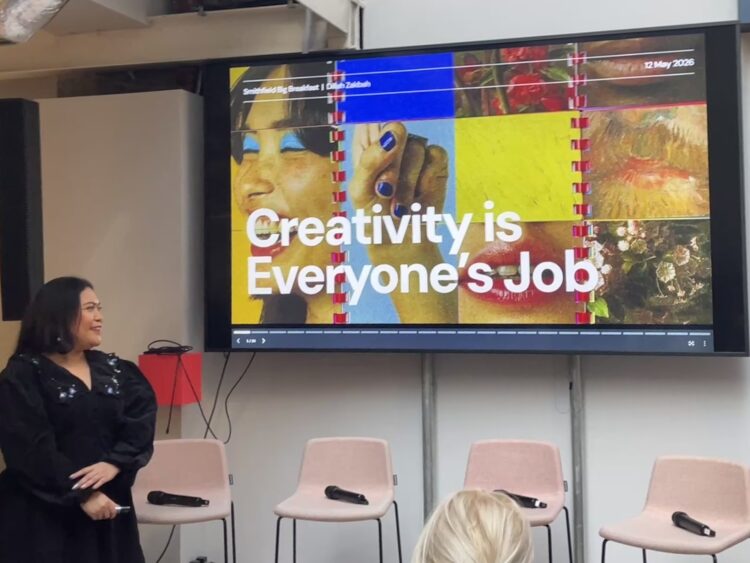
An independent media agency has made the case for creativity being “everyone’s responsibility”.
The agency Smithfield ran its ‘Big Breakfast’ yesterday, featuring three media experts reflecting on successful creative campaigns and advocating for the necessity of creativity in an industry increasingly driven by measurement outcomes.
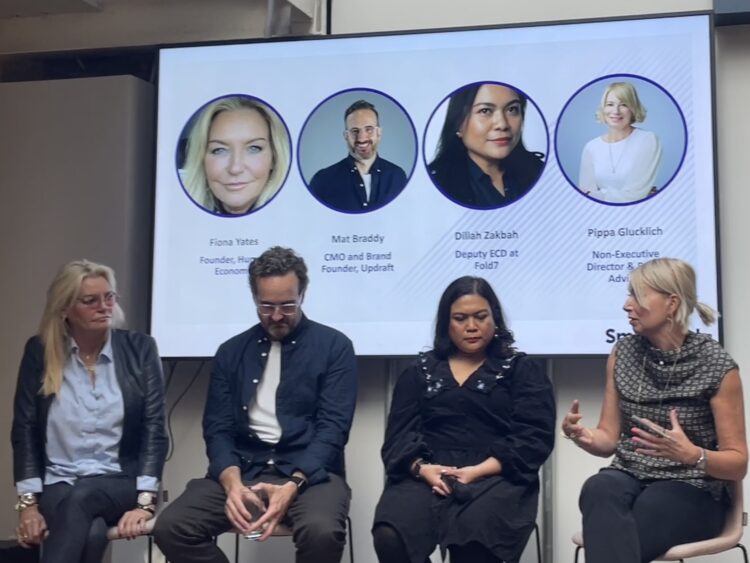
Smithfield hooked its event on the idea that “creativity isn’t dead, but it has been disrupted”, and the line-up featured Fiona Yates, founder of Human Kind, Mat Braddy, chief marketing officer and brand founder of Updraft, and Dillah Zakbah, deputy executive creative director at Fold7.
It was followed by a Q&A moderated by Pippa Glucklich, non-executive director and board advisor, and former media agency CEO of Starcom, Amplifi, and Electric Glue.
Creativity is cost-effective
The main takeaway from the event was emphasised by Braddy – previously Just Eat’s brand founder and chief marketing officer – who argued: “Boring costs money.”
He opened by asking the audience how many ads they had seen on their journey to the event and how many they could recall, and then shared his mantra: “Don’t be meh.”
For Braddy, the most valuable KPI is whether people are talking about your brand. He notes that Nike has a monopoly on being the most common answer when people are asked to name a sports shoe.
“That is the most valuable thing,” he said. “And that only comes from not being fucking boring.”
With consumers increasingly turning to AI chatbots to have conversations about products, Braddy suggests that means “brand awareness matters again” to ensure your brand is top of mind when people are inputting into the LLM.
As a result, he suggested it’s more efficient to be creative and grab people’s attention, but only if brands start to embrace more ‘play’.
Braddy was not one to disregard metrics completely. He said that data can give a “clue” as to whether your campaign is resonating, but ultimately: “Metrics can’t tell you if you’re boring.”
Ads as infrastructure
For both Zakbah and Yates, tapping into ‘community’ and creating cultural moments is essential for making an impact.
Yates argued that people don’t hate advertising; they hate interruption.
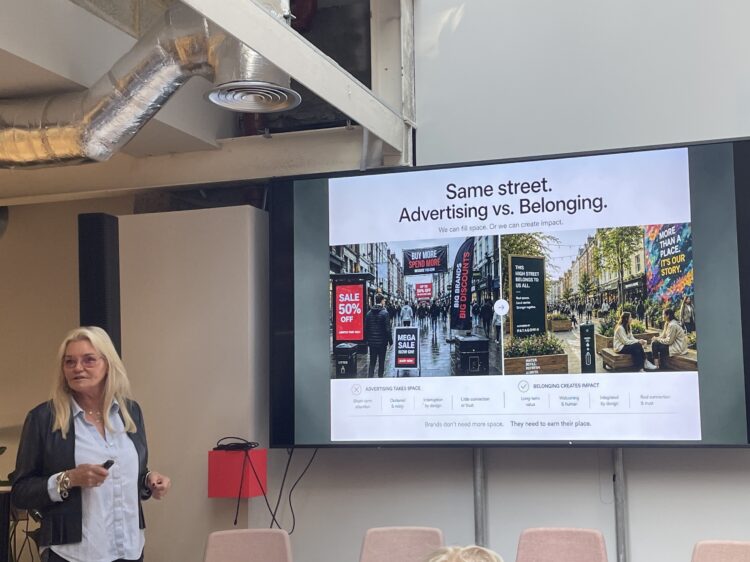
She referred to the ‘psychology of geography’: if an area is presented nicely, you’re more likely to enjoy the space. As such, she suggested empty high streets are a powerful media space ripe for ad placements. By utilising these environments, brands can create ads that become part of the infrastructure, creating a real, lasting impact.
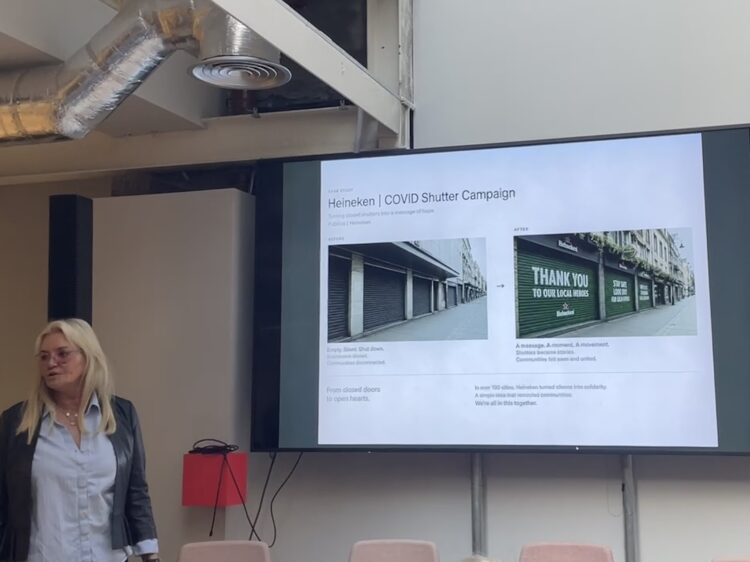
For example, one of her case studies featured Heineken’s Covid shutter campaign, in which it took over blank shutters in over 100 cities to create a cultural moment that brought the community together.
Similar to Braddy, Yates suggested that the current system for measuring success is working against attention because it is preoccupied with numbers rather than what’s relevant at a human level.
She said: “Think about people as real people, not as a dashboard.”
Collaboration
Zakbar’s presentation cited a number of campaigns she had worked on, including Ecover’s ‘Rewear Chair‘ campaign from 2024. The campaign was based on the chair that many people have in their bedrooms, which accumulates piles of worn but not dirty clothes.
The idea came from conversations with people on her team who could relate to this experience, and Zakbah argued that this can only happen if the internal team feels comfortable enough to show up as their authentic selves, allowing creative ideas to flourish.
This advocacy for collaboration was echoed during the Q&A, when the panel was asked about creative and planning teams working together.
Zakbah said that when she presents to a client, she will always work with the media team on a deck together, as they have insights into which locations and platforms are best, which can affect the creative.
Glucklich recalled how she had worked in places where the media team only saw the creative at the last minute.
She said: “The two have to work hand-in-hand.
“As consumers, we don’t think in online or offline today, we just think in: What’s the message? How is it connecting with me?”
The event concluded with a summary from Smithfield’s head of client services, Brandi Stevens, who identified their main takeaways: stay curious, be brave enough to try something different, and remember to bring back the “human factor”.