



First global measure of pDOOH spend finds $1.4bn revenue generated in 2025
Programmatic digital out-of-home (pDOOH) generated $1.339bn in revenue globally in 2025, equivalent to 7% of total DOOH expenditure, according to findings from the inaugural worldwide calculation of pDOOH adspend.
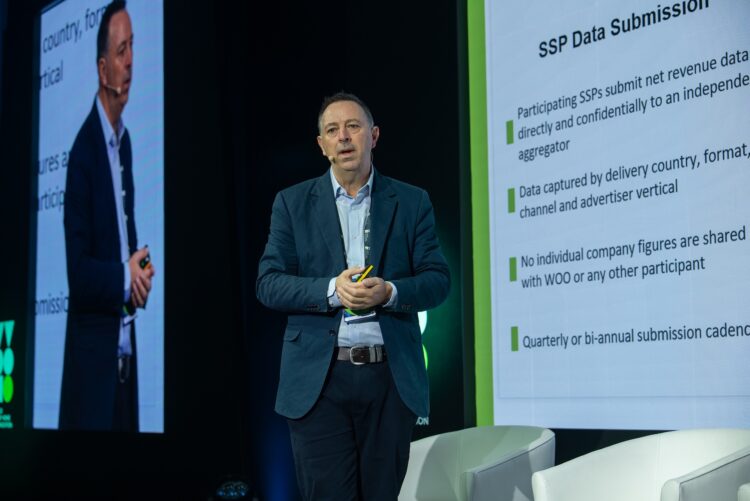
The study was conducted by the World Out of Home Organization (WOO), in collaboration with 11 supply-side platforms (SSPs) and independently aggregated by PwC.
The findings were split by region and found that the Americas led in pDOOH penetration at 14.2%, with $670m in pDOOH ad spend. The study suggests this is driven by the maturity of the US market and the established presence of OOH-focused programmatic infrastructure.
EMEA follows at 9.4% ($521m pDOOH adspend), reflecting strong adoption across Western Europe.
APAC, despite being the world’s largest DOOH market by total spend, records the lowest pDOOH penetration at 1.7% ($149m in pDOOH ad spend), pointing to significant untapped growth potential as digital infrastructure and programmatic adoption accelerate across the region.
The study also reveals a clear split in how pDOOH is transacted: OOH-specific demand-side platforms (DSP) account for 65.5% of global spend ($877m), while omni-channel DSPs such as The Trade Desk and Google DV360 account for 34.5% ($463m) – a figure that underscores the growing appetite among mainstream digital media buyers to include pDOOH in their plans.
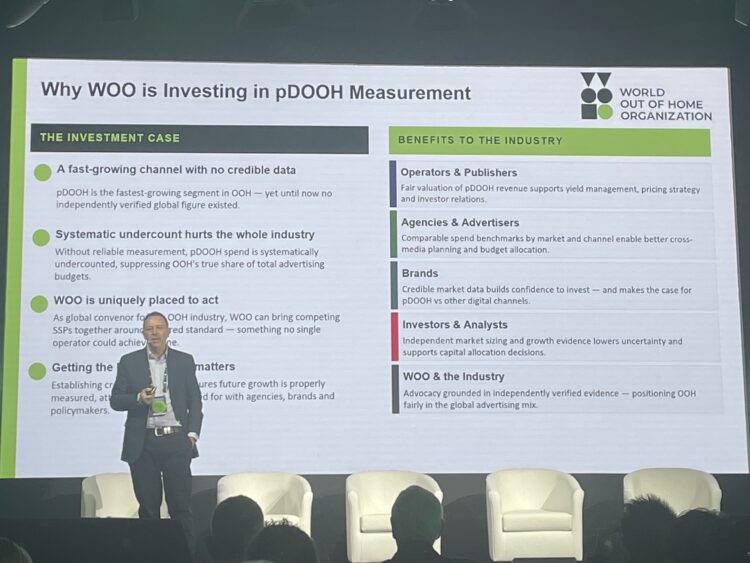
Charles Parry-Okeden, global lead of audience and data and VP of WOO, said: “This is a landmark moment for the OOH industry. For the first time, we have an independently verified, globally consistent measure of programmatic DOOH spend – and what it reveals is both significant and encouraging.
“$1.399bn in 2025 confirms that pDOOH has well and truly arrived, but it also tells us that the vast majority of the opportunity still lies ahead.”
The 11 SSPs that participated in the study were: Broadsign, DAX (Global), Hivestack by Perion, Liveboard, Moving Walls, Place Exchange, Pladway, Polygon, Ströer, Taggify, Vistar Media, and VIOOH.
All data was submitted confidentially by the participating SSPs directly to PwC.
Dan Bunyan, partner at Strategy&, part of the PwC network, said: “pDOOH is a fast-growing and dynamic sector, sitting at the intersection of technology, media and creativity.
“As the market continues to scale and evolve, this study provides an important benchmark for the global market, helping the industry track its development as it scales, matures and continues to evolve.
“By bringing greater clarity to the momentum behind pDOOH, we hope it will support continued investment, innovation and confidence across the ecosystem.”
Future editions of the study will progressively add regional and country-level breakdowns, formats and advertiser vertical splits, and move towards a more frequent reporting cadence.
WOO: automation vs programmatic panel
The WOO Global pDOOH Expenditure Study was launched last Thursday at the WOO Annual Congress in London, followed by a panel discussion hosted by Parry-Okeden.
The panel, titled ‘Automation vs programmatic: True driver of scalable growth’, was made up of Ben Allman, VP for platform sales at Broadsign, Will Brownsdon, MD of EMEA at Perion, JC Conti, CEO of VIOOH, and Oliver Goodge, enterprise sales director for EMEA at Vistar Media.
The panel differentiated between programmatic and automation by defining the former as the automated buying, selling, and delivery of DOOH advertising inventory via real-time bidding (RTB) or programmatic guaranteed (PG) through DSP and SSP platforms. Whereas the latter is the end-to-end use of technology and software to streamline the entire OOH transaction process – from inventory discovery, proposal generation and booking, through trafficking, campaign delivery, and performance reporting.
Programmatic is digital-only, while automation can also include static and classic.
Parry-Okeden kicked off the discussion by reflecting on a panel he did five years ago, where there was a “strong consensus” that 100% of DOOH would be transacted either programmatically or in an automated manner in five years’ time, with the split being around 30% programmatic and 70% automated.
With this in mind, and given the split between omni-channel and OOH DSPs, Parry-Okeden asked what’s holding the industry back.
Goodge argued it was an infrastructural question, suggesting that programmatic shows up on the balance sheet much quicker than infrastructural change.
He said: “I think when we’re talking about what’s holding automation back, I don’t think it’s a low-hanging programmatic opportunity. I definitely think it’s generally seen as an opportunity to capture revenue that would never have transacted directly.
“But ultimately, it’s the infrastructure that’s set up – our ability to capture programmatic, open, direct, in a unified way.”
Conti argued DSPs were occupied with Connected TV for a few years, but the trend is starting and now “we are the most interesting targets for these brands”, sharing that from last year to this year he has seen many markets grow “more than 500%”.
The panel went on to discuss agentic AI and standardisation, but when asked what to focus on next, Allman advised keeping the end goal top of mind.
He said: “It’s so important to not lose sight of what we’re trying to achieve.
“We’re trying to make outdoor advertising easier to buy, sell, and manage than it ever has been before. It’s very easy to trip ourselves up talking about things like protocol and open direct vs programmatic guarantee.
“It’s all important, but it’s secondary to the problem that we are trying to solve.”
Conti wants the industry to invest in data, as Parry-Okeden put it: “Better data in, better data out”.
Meanwhile Brownsdon encouraged the room to rely on the omni-channel ecosystem “in every way we can”.
He said: “The AI stuff is scary and exciting, but there will be a time when you literally plug in and you say: this is the profile of my perfect customer, find it for me. And there is no channel-by-channel optimisations; it’s outcome delivery. And we need to make sure that we’re close enough with everything that’s happening in omni-channel.”
Brownsdon’s final thought offered a reminder to the room about where the big agencies are investing: in AI and proprietary data. He concluded: “We need to make sure that we’re investing in the same way.”