



Gamechangers: Fragmentation is at the heart of the challenges facing the media industry
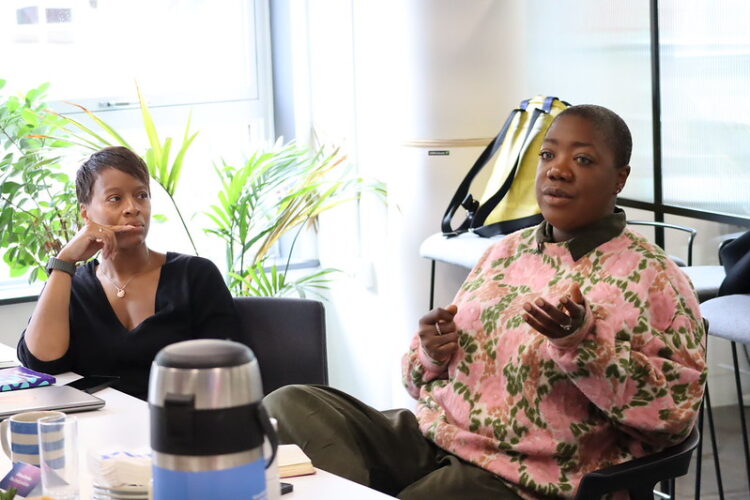
Fragmentation is at the heart of the challenges facing the media industry, according to a recent roundtable featuring media Gamechangers.
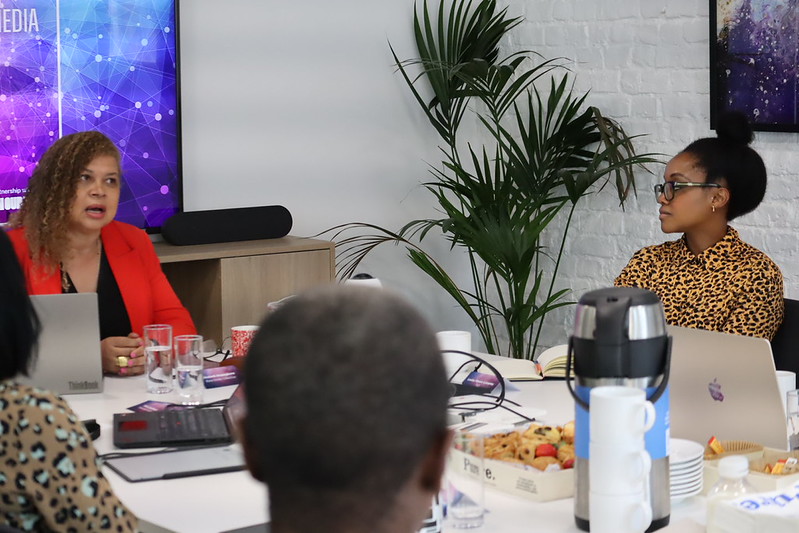
The discussion, held on 15 May, focused on channel strategy and the craft of planning.
The group of seven women, who were identified as part of The Media Leader and Join Our Table’s 50 Black Women Gamechangers in Media earlier this year, argued that the industry needs to unite across silos, channels, and the industry as a whole to move forward more effectively.
“It’s all about the bottom line, more so than ever,” said Caroline Forbes, head of sales, Out of Home Agencies at Bauer Media Outdoor UK, and this has shifted priorities across the industry.
Short-term versus long-term strategy
When discussing the balance between brand building and performance metrics, this preoccupation with the “bottom line” might indicate why the industry has focused so heavily on data.
For Lesley Myers-Lamptey, head of commerce strategy at T&P, this strategy hasn’t resulted in better results.
“There have been lots of examples showing that media is less effective when people are focused solely on performance and the short-term, but this doesn’t have to be the case” she said.
Louise Twycross-Lewis, head of insight at PHD, attributed this to panic.
“Panic feeds the focus on the short term,” she said. “But actually, we all know the evidence and research that is there shows that the brands that focus on both are the ones that have their longevity.”
One channel that has seen rapid growth in recent years due to its ability to combine brand building with performance is retail media, noted Gerry Anyanwu, head of client development (Telecoms and FMCG) at Global.
“They’ve been able to measure it all so you could go the whole funnel, and that’s why we, within the category, have seen it explode,” she said.
Retail media grows 17.5% to reach £3.7bn, finds AA/WARC Expenditure Report
Michelle Sarpong, head of activation at the7Stars, argued that agencies have a role to play in educating clients on the importance of brand building and how it should still be seen as performance, it’s just a different type.
But for Myers-Lamptey, clients’ lack of awareness is understandable.
“We’re not helping ourselves by having these teams, these silos, which make it very fragmented in terms of channels, and then putting it into buckets for brand or performance,” she said.
Forbes echoed this, arguing that the industry needs to do a better job of communicating to clients that different channels play different roles within the marketing funnel.
She suggested that media owners should be in the room with clients when these conversations take place to help manage expectations around the role of each channel.
Chloe Davies, growth marketing partner at Unmistakables, echoed this, arguing the answer to getting clients to think long-term is clear: having one connected strategy.
She said: “If there was a strategy plan where everyone was in the room, where we’re all going: Here’s what you activate, here’s what you don’t. […] If we all knew our different parts to play, then you’ve got somewhere to go.”
Elizabeth Anyaegbuna, founder of Buna Street Collective, added that, in her experience, media teams should work closely together to create a single “media pitch,” rather than splitting pitches by media channel.
She said: “They’re all one, they all complement each other.”
Barriers
Everyone in the room agreed that the biggest barrier to achieving this cross-silo collaboration is a combination of time, habits, and incentives.
“Everything is quick,” said Sarpong, who explained that quarter-long plans, let alone year-long plans, are rare in the UK, which demonstrates the time and money pressure that many CMOs are under.
However, Myers-Lamptey suggested the industry should lean on AI tools to ease some of this time pressure.
She said: “Rather than just thinking about getting things live and the performance side, can you think about what the context is appearing against? What’s that audience insight? And spend more time connecting with other channels and other disciplines.”
Trust was also raised a number of times as being essential for the industry to embrace longer-term strategy.
Anyanwu shared that Global’s decision to go public with its growth strategy increased transparency around its business goals, ensuring better alignment with clients’ goals.
This was echoed by Twycross-Lewis, who argued the client needs to trust in its agency’s expertise to effectively reach campaign goals.

Social responsibility
The roundtable closed with a discussion about social responsibility and the impact that advertising has on the community.
Anyanwu argued that it’s everyone’s responsibility to think about the impact of media choices on consumer behaviour and often, as Anyaebuna identified, many in the industry underplay their role, saying they’re “not saving lives”, when actually the media has a significant impact on society.
Sarpong argued that while agencies should advise clients on the risks associated with unregulated channels, like social platforms, ultimately it’s in clients’ hands whether they proceed.
As Chloe concluded: “Individual responsibility, collective accountability.”