



‘It’s not like we knowingly have bad ads’: Meta on ad fraud, teen safety, and why AI will not replace agencies
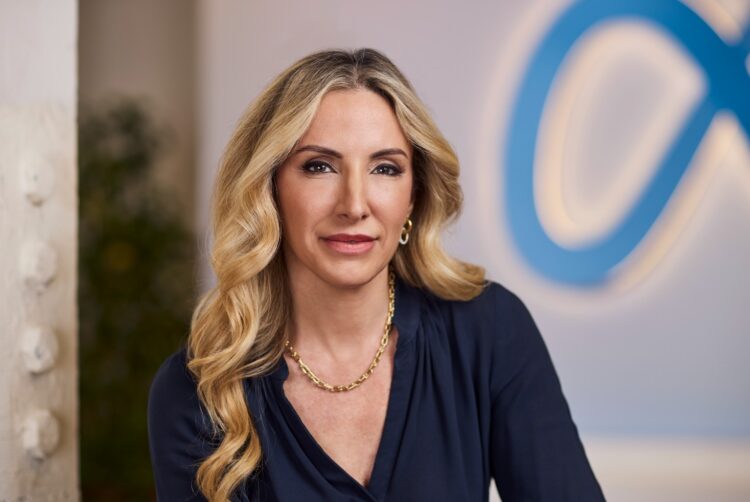
The Media Leader Interview | Cannes Lions 2026
Meta’s Derya Matras discusses her reaction to social media bans for under-16s and answers questions relating to harmful platform design, ad fraud, automating media and creative work, and the future of smart glasses.
Meta is growing at a remarkable rate. Already one of the world’s biggest global advertising businesses, the tech giant’s revenue grew 33% year-on-year to $56.3bn in Q1 alone.
But while its dominance over the ad industry has crystallised, so has scrutiny into its business practices – and advertisers’ role in funding online harms through its platforms.
Separate court cases in the US this year found that Meta has designed harmfully addictive platforms, and that it has misled users about platform safety and facilitated child sexual exploitation.
A report from Reuters last November found that Meta knowingly earned 10% of its global turnover in 2024 from fraud and scam ads. At the LEAD conference in London this year, a spokesperson for Meta disputed the figure, but acknowledged that revenue from fraud and scam ads “might” have accounted for 3-4% of turnover – still equivalent to between $5bn and $7bn.
And now there are concerns over the privacy implications of its line of smart glasses, which the company has positioned as the future of consumer electronics. Wired reported in June that Meta had quietly added facial recognition code into the product, before removing it after the publication of the reporting.
All this comes as Meta has increasingly launched tools aimed at automating creative and media decisioning for advertisers, calling into question the role of agencies in a future dominated by tech platforms, their data, and their AI tools.
It’s a lot to unpack. At Cannes this year, The Media Leader put questions on all these topics and more to Meta’s EMEA vice president, Derya Matras.
In the interview, Matras notably claimed that Meta has invested $30bn into addressing issues of ad fraud, scams and “other integrity issues”. She said, “it’s not like we knowingly have bad ads” and that Meta is “incentivised to take action on this” because it is “not good for us.”
But, since recording the interview, an investigation by the BBC found that Instagram has been running paid ads in India that promote child sexual abuse material on the messaging app Telegram.
When one of the ads was reported to Meta by the BBC, Meta reportedly initially responded that the ad did not violate its community guidelines. Meta later told the BBC it had disabled several of the ads and suspended the accounts posting them.
A spokesperson for Meta told The Media Leader: “Meta has a zero tolerance policy for soliciting or sharing CSAM, including in ads. We use advanced AI technology to proactively detect violating content and individuals, but we are in a constant battle with criminals who hide among our 3.5bn users and try to evade our detection. That is why our expert teams are constantly working to improve our defenses, develop new technology to root out predators, block links to violating websites, and share intelligence with other companies so they can take action too.”
A full transcript of the conversation with Matras is available below, edited for length and clarity.
Listen now by hitting the play button or use the appropriate entry point into Spotify, Apple or Google Podcasts:
Thanks to our production partners, Trisonic, for editing this episode. Discover how Trisonic can elevate your brand and expand your business by connecting with your ideal audience.
Highlights
3:27: Reaction to social media bans for under-16s, criticism of failure to address online harms and addictive design
11:58: Advertisers want more transparency of where their ads show up on platforms
13:29: Why is Meta knowingly earning billions from fraud and scam ads?
17:15: Meta is automating creative and media decisioning. Should agencies be concerned?
27:04: Are smart glasses still the future of commercial technology? What about privacy implications?
30:21: Meta’s growth depends on providing good user experience. Is it getting worse?
Transcript
This transcript has been edited for length and clarity.
Derya Matras, thanks so much for chatting with me. We’re here in Cannes. How’s it been so far?
It was a great week. A lot of momentum, a lot of energy despite the heatwave. We survived. Conversations have been very energising.
What have you taken away from the last couple of days?
Three big themes that stood out: the transition into the agentic economy; creators and how important they have become, particularly for brands to create trust and authenticity and be relevant locally and culturally; and creative, and how the gen AI creatives have passed a threshold in enabling better campaign performance.
Those are the three big themes that I’m hearing in meetings with executives from different industries.
I’ll ask lots of questions about AI shortly, but there’s been quite a few news items I wanted to run past you.
Just ahead of Cannes, in the UK, the Government announced a ban on social media for under-16s. Meta platforms are of course included, with the exception of WhatsApp, though formal legislation is still forthcoming.
What was your reaction to that, and to other under-16 social media bans in different markets?
We are watching those developments very closely. We are taking this topic incredibly seriously.
For this reason, for a few years now, we’ve been launching more than 50 different tools to protect teens on our platforms. We launched Teen Accounts on Instagram, which my kids are using as well. I have three teens and it’s a brilliant tool. I can see who they are talking to, who are their friends, how much time they spend [on apps], which types of topics they follow, et cetera. So I feel personally confident, as a mom. I know what they are doing. They are in a more protected environment.
Coming to the ban, we have seen this happening in other countries like Australia. Teens are finding ways to get back in. They are using VPNs, playing with their age. And what happens is they end up in platforms that are less safe for them. Being on a platform where there’s automatic age detection, that serves content via PG-13 settings in Teen Accounts so they cannot see adult content. It’s all gated in terms of how much time they use, who they can connect with, who can follow them, but also the content itself. Bringing a ban in which teens might end up in less protected places, or find ways around it, is a scarier scenario.
Obviously, we are going to comply with any laws and regulations in any country. At the same time, I really do hope that the implementation of the law is going to be secure enough to protect our teens even further. We wouldn’t want them to end up in less safe places.
You mentioned Instagram Teen Accounts. They’ve been found by the Molly Rose Foundation, an online safety charity, to be practically ineffective.
It found that less than one in five features are fully functional, and that some of the features don’t actually exist. This was a former Meta employee who conducted the research. So what’s going on?
In terms of adoption, first of all [Teen Accounts] are widely used across teens. If teens are under 16, they either switch directly to Teen Accounts, and if they don’t, we use a variety of technologies to put them there. Then their accounts are automatically private accounts. That’s a very important function, because it stops them from being followed from people who might be bad actors. That’s one of the features that is very important.
The second feature that works is how much time that people use the platforms. It comes with 15 minutes automatically and then it’s up to the parents to set if it’s a half-hour, 45 minutes, et cetera.
The other feature that I find very helpful is who they are following and who’s following them. For example, when I go to the list and I see someone who has 30-40 common friends, I feel more confident that it’s a friend from a school group, but when it’s someone that they have no common friends, then I’m a bit more alarmed. I can at least ask the question, ‘Who is this person?’
The other thing thing is who they are messaging with and what type of content they are following. These are very helpful insights for parents to protect their teens and have conversations around their experiences in social media.
So I don’t know what they are specifically talking about, which features are not working, but at least the ones that we have rolled out have gotten very positive feedback both from teens and parents.
They dispute that.
The other one that is very helpful is the fact that you can reach it [Teen Accounts] in two clicks once you go to your Instagram account. So it’s easy to use.
Earlier this year Meta was found in separate court cases in the US to have designed harmfully addictive platforms and to have misled users about platform safety and facilitating child sexual exploitation.
Molly Russell charity CEO: Social media’s user safety efforts have been ‘performative’
Why should advertisers feel comfortable being on a platform that has been subject to those court case decisions?
First of all, it is ongoing litigation, so I won’t be able to comment on the details of that.
There are appeals.
There are appeals, exactly.
We are doing a number of things to protect teens on our platform. Such as protecting teens from being followed by different actors and making sure that they see appropriate content.
We have run many studies to see what is affecting teen mental health and the role of social media in that. And what these studies show is that teens’ mental health is affected by a wide variety of factors. The academic pressure they are in, their family situation, their social dynamics, and what they watch as well. We’re trying to do our best in launching all the tools I talked about. But teen mental health is a much more complex topic than just to be attributed to social media.
At least, that’s what the studies are showing.
Are there not aspects of the design of social media platforms that are harmful? Infinite scroll, algorithmic decision-making that users have little control over, so they might see content that might be harmful for them even though the platform believes that’s what they want to be viewing more of?
We have time limits for teens. As I mentioned, it’s already set for 15 minutes, and it’s up to the parents to increase the time limit for how much they can use the platform.
It’s not just teens, though. Anyone using the platform — parents, adults — might have the same issue.
I can definitely say that, for teens, in terms of content and how much time they spend, we are providing tools to protect them.
In terms of the harmful things, if they are asking too many questions about body image issues or self-harm, it is being flagged to their parents if they are using parental supervision tools. So, on that part, we are taking this extremely seriously and doing the best in the industry.
When I talk to advertisers and agencies, what they often say is that they would love more transparency into where their ads show up on the platform and a better understanding of the context in which the ads are placed.
Would you commit to offering advertisers more transparency so they can see that information?
Yes, I mean we have brand safety and suitability tools that give advertisers control over where they want their ads placed and which types of content or topics they want their ads to appear on. We have tools that give them control over ad placement.
They want more granular understanding of where their ad was served. Do you think you’re meeting those requirements?
We are working with the largest advertisers globally. We are working with the trade bodies and industry bodies. We regularly get feedback about each of the topics you’ve asked about. Especially brand safety and suitability tools. We’ve come up with a variety of tools, and they’ve evolved over the years to address their concerns.
I mean, this week I had tens of meetings with these partners, and this topic hasn’t even come up once.
‘Right diagnosis, wrong prescription’? Adland torn as Starmer announces under-16s social media ban
Interesting.
Another topic that I know has been raised within the advertising community in the UK and elsewhere: last November, Reuters reported that Meta earned 10% of its annual turnover in 2024 from scam or fraud ads. I know a spokesperson for Meta came on stage at the LEAD conference in London and disputed that figure, saying it was actually 3-4%.
Regardless, it’s billions of dollars. Why would Meta knowingly take money from fraud and scam ads?
This is a very important topic that we are investing significant resources to address. So far, we have invested more than $30bn into fighting fraud and scams and other integrity issues.
It is an industry-wide issue. There are bad actors, as there are bad actors in the world and in the online world, trying to scam people. What we are doing is, first of all, we employ AI systems to catch fraudulent advertising and scams. And we have human reviewers. We are taking down those ads and employing more advanced technologies to take down scam networks all at once.
What has been very helpful in this journey has been the collaboration with industry partners, as well as private companies like banks. We launched the Fraud Information Reciprocal Exchange (FIRE) initiative in the UK and other European markets as well, where we work as a partner group to flag fraudulent advertising and organic content as well.
But it is an industry-wide issue. In some countries, like Thailand, we collaborate with governments, with law enforcement, with industry associations to fight fraudulent tactics.
So you’re working on it to try and improve on the 2024 figure? Meta was aware of the issue internally, the reporting was on internal documents and Meta came on stage and acknowledged the problem.
The thing is, when something is obviously scammy advertising, our most advanced AI systems can take it down quickly. When something is benign, we allow it on the platform. When everything comes together, there is a grey area that systems and reviewers struggle to catch. Sometimes there is reporting. Then we have to review it and catch it. So it’s not like we knowingly have bad ads.
It’s not good for us. It’s not good for us. It’s not good for our community.
I was going to ask how advertisers have reacted.
We are actually incentivised to take action on this. We employ our best resources, a lot of AI investment to make sure we are taking these down. I have personally been involved with this cross-functional work as well, and we have made impressive progress on this.
Meta admits revenue from fraud and scam ads ‘might’ have accounted for 3-4% of total revenue
Meta is making a big AI push. There were announcements here at Cannes, including an end-to-end creative solution that is automated. I remember last year Mark Zuckerberg notably said advertisers will soon be able to automate all creative and media decisions in the near future through Meta.
We’re at the Festival of Creativity. There’s lots of agencies here. WPP is here, it is one of the initial partners for that end-to-end solution. But should agencies be concerned that you’re essentially offering to do the job that they previously have done?
Absolutely not. They should be excited about this. If you compare the tools and technology that was available a couple of decades ago in the marketing industry, we are in a very different state right now. Technology has evolved, but the role of agencies has become even more important. You see great investments in technology and they are also evolving and staying ahead of the industry.
We are a tech company, and as Meta we use agencies for our marketing ourselves. There is a reason for that.
Going back to your point about Mark’s comments last year, it was about the role of AI and how it’s increasing campaign performance. Obviously, if you give a greater degree of freedom to AI to do the job, it is creating better performance.
It is easier to do for small businesses. Instead of trying to choose to show this creative to this audience at this time, and doing all of that manually, having a single-button solution and AI to do the job is great for small businesses. But it’s never easy for a large global corporation, operating in tens of countries, in all different agencies, to have a single-button solution. That’s where the agencies come in.
The tools that we are building are also making their operations easier, so they can really focus on where they are really value-creating.
One of the announcements we made this week, which is the first in the industry, was the creative workspace, where we have the media teams and the creative teams coming together on one platform. One of the challenges in the marketing industry is you have your brand teams in one place, your performance teams in one place, creative teams… it’s all working in siloes. What we’re trying to do is a full-funnel thing. Because you’re trying to build a brand so people are interested and buy their products and come back. That siloed approach never worked. But what we are doing right now is bringing the performance team and the creative team in one platform, so you can see all the active assets and which ones are working and which ones aren’t working. That’s informing the system to recommend even more creatives based on the working assets.
You can support that further through what we announced as Brand Memory. So you can take the assets that represent your brand better than others and feed it to the system to say, okay, I want to take what is working in my active assets and campaigns, and I want to support it further with my brand memory. The recommended new assets create a flywheel. So I’m really excited to see the feedback from the advertisers that play with this, because it will be industry-defining.
To support that we also launched new tools for voice over, language translation, text variations, et cetera. We have really passed the threshold with these gen AI creative tools, to protect brand identity while at the same time create effective creative at scale.
How do you make sure it’s not just great optimisation, but also bringing in the big idea? Because the concern a lot of people, including at agencies, have is that without a strong human element you might end up making more of the same. Taking old assets and refining them instead of coming up with something new. Is there a concern these tools undermine that process?
I love this question, because the answer is exactly the opposite. You know why. Imagine one person has a very analytical brain and one person has a very creative brain, and you give them the same AI tools, the same model. Their model is going to evolve, in a few months, into a very different version of themselves.
When you give creative brains the most powerful tools, and imagine the richness, the amount of insights they can tap into, it is going to inform their models in a way that is very different than anybody else’s.
What these models are really doing is separating the tasks from human value. Humans were never intended to do the tasks. We don’t want to waste our time doing manual tasks. We want to tap into what makes us human: empathy, judgement, creativity. I believe the tools that were are developing are doing exactly the opposite, empowering creative brains to do even more creative and distinguish themselves.
We are living in an era of abundance. As you said, producing anything average is at the cost of zero. Anybody can produce average content, average creative, average, average, average. There’s an abundance of ideas and products. How do you stand out? That’s where the value comes. That is going to happen through trust, through the creative input, that judgement, and everything that makes us human.
Within Meta itself, I know there were some recent staff cuts. It was around 10%. And there’s been some reporting about how staff at Meta are feeling about using AI tools for their own work [one staff member was quoted in a recent Wired piece as comparing working at Meta to living in a ‘gulag’]. Within the company, how would you describe how the working processes have changed, and how staff are responding?
We have very ambitious goals for the future. We have a lot of responsibility. We are building some of the most cutting-edge frontier models in the world. 3.5bn people are using our platforms. In terms of the economic value we’re creating, each dollar spent on what we’re doing on our platform is creating €4.17 back. Just for Europe, that means €160bn in economic activity that is dependent on our platforms. This is a big responsibility.
We have to keep on investing in our infrastructure. That requires some hard decisions. These people that have been impacted by layoffs have done a lot for this company, and our heart goes to them.
It’s not easy; it’s never easy. We’re working through this. But when you put that big picture on what we’re working towards, really driving the future of this industry and being able to give the best tools to everyone, millions of small businesses that depend on our platforms, when you put it in context I’m very excited about our ambitions. At the same time, it sometimes comes with very hard decisions.
I know Meta AI is a new consumer product you’re pushing. Is it going to be monetised with advertising, long-term?
We just launched Spark, our new model, which is very exciting because it’s the first model launched by our new Meta Superintelligence Labs.
Why it’s unique is that it’s the first model that is natively trained in multimodal input. If you have an LLM that is trained on text, and you’re trying to train it on other multimodal inputs, it’s not as effective as training it multimodal from the ground up. Taking all the image and movement and video and text inputs together and making more meaning of the world around us.
It’s powering Meta AI, which is also embedded in our wearables, our glasses. It’s going to create great experiences to support people in their day-to-day lives.
I want to ask about the wearables. We happen to be sitting in a hotel room here at the Majestic with quite a few wearables within my view. I don’t own them, but there are a number of different models, an expanded line. I remember I saw you at Advertising Week Europe two years ago, and you talked about how smart glasses are your vision, Meta’s vision, for the future of consumer technology. Do you still believe that? It’s been two years; we’re not there yet, but there’s been some progress.
We’ve seen great success with our glasses. Our sales tripled last year. So that’s why we’re focusing on wearables and glasses even more. It’s an exciting vision.
We do believe that the next form factor of how people connect with their friends and the world around them is going to evolve from phones to glasses at some point.
Because if you think about it, they’re on your face every day. They can see what you see. They can hear what you hear. And putting such a powerful AI technology in them, you can interact with them day-in, day-out very seamlessly without having to drop what you’re doing and look at a small phone screen.
I do believe we have a very bright future in that space.
A lot of the concerns I hear on the consumer end are around facial recognition technology. Wired reported that Meta added [facial recognition] code [to the smart glasses] recently, and then after that report came out, that code was removed.
There are concerns around privacy, data privacy, spyware [The ICO wrote to Meta in March after a report surfaced that outsourced workers were able to view sensitive content filmed by the company’s smart glasses.] How do you think about those concerns? When you bring a new technology into the world, I would hope you would want to be responsible with how people are using it.
Absolutely. We are thinking about those when building the product.
Privacy review is embedded into each product we build in the company. So if you don’t pass the privacy review, you don’t even start building the product. Worrying about those potential risks is embedded within the product development cycle.
For glasses particularly, we have this LED light, for example. If the camera is active, everyone sees that it’s active because there’s a bright light.
Some people have been able to disable that.
We also thought about that.
I hope so.
Bad actors might just cover it with a band. So then it stops recording. The moment that you cover it.
But some people have hacked the device itself. [404 Media reported that a $60 mod can disable the light.]
I mean, we are thinking about all possible risks. We want these tools to be successful, widely used. If I’m taking pictures of my kids, I want to make sure that it’s private. That’s why we are bringing all sorts of protections into how they are going to be used. Any potential risks that we see, we will also work on addressing them as well.
Last topic area: Meta’s business has grown tremendously. Every quarter I’m actually quite stunned, personally, to see such large double-digit growth for such a large company. Almost all of it is advertising revenue. How do you continue to grow at that rate? Is it going further into the long tail? Is it getting more out of large advertisers? How do you stave off the inevitable slowdown that comes with scale?
There are multiple factors that go into the success. It first starts with our userbase. Today we have more than 3.5bn people visiting our apps every single day. It’s about making sure they have a great experience on the platform. That means protecting them from the things that you talked about and offering great experiences, and really bringing them what is relevant to them.
I love my Instagram feed. It’s the best time of my day when I’m just scrolling. It’s becoming more of what I am really interested [in]. We are making sure that people are having meaningful experiences, connecting with their loved ones and their interests. I think that’s an important part of what’s driving our business success.
Can I interject? Because I’ve used Instagram. I was on Instagram before Meta acquired it, so quite a long time ago. There’s been a big change in that product, in all of Meta’s products.
I see less content from accounts that I follow, from friends and family and other interests, and more that is recommended to me. In fact, that was presented this year at Advertising Week Europe by one of your employees. 70% of the content shown on Meta platforms is now recommended to you.
Personally, I like to see friends and family. Is there a concern that there’s an overadjustment into recommended content, especially given all the harms that could lead to? Is there a desire from some consumers to get back into the social connection? Certainly other platforms on the Croisette this week have made that argument.
In different surfaces you have different graphs. When you’re looking at Stories, you see more content from friends and family. When you’re looking at Reels, it’s more an interest-based graph. The feed is a mix. It’s catering for all needs.
It’s important to cater for what you’re interested in. You might want to deep dive into your interest areas as well. So it’s a mix.
Going back to the question, the first thing is making sure we are offering great experiences for people using the platform and keeping it healthy. The second part is really the discipline that we have around building the right product that is going to power the business of our advertisers. The Advantage+ suite is a good example where we have seen 25% improvement in return on adspend (ROAS) compared to when they’re not using it. It’s been a big impact.
Our product strategy is moving more and more toward outcomes and precision outcomes. So if you’re a business who wants to optimise for total sales, we can use value optimisation for GMV (gross merchandise value). If you want to optimise for profit, we have ad solutions, because you might want to sell SKUs (stock-keeping units) that are more profitable for your business. Or maybe you are a gaming player and you want to optimise for your LTV (life-time value).
It’s really about catering to the needs of each advertiser and delivering the outcomes that they care about, and bringing discipline in our core business on how we execute against that. That’s been powering our business so far.
I’ll be keeping a close eye on the future of the business. Derya, thanks so much.
Thank you, it’s been a pleasure.