



Leading Questions with Damon Reeve – Ozone
Week in focus – Leading Questions
Ozone CEO, Damon Reeve, is in the hot seat to face our probing and quick-fire Leading Questions.
Earlier this month, Ozone launched Aura (now called Access), its “proprietary audience access and content classification solution” that helps advertisers connect with more of their target audiences across publishing brands on Ozone’s platform.
After drilling down into how classifying content at a deeper, more nuanced level gives advertisers a more accurate view of publisher web pages, The Media Leader took the opportunity to speak with Ozone’s CEO about his leadership style, how he’s embracing AI and how trail running provides much-needed screen breaks.

Leadership
What are the principles that guide your leadership approach?
If I were to sum it up, I would focus on these three areas:
Be a clear communicator. If everyone is pointing in the same direction, life is much easier.
Work out what leadership style will get the best out of people. Sometimes it’s leading from the front. Other times it’s being more like a peer, but mostly it’s getting out of people’s way. You hire good people for a reason, so let them get on with it.
Be friendly and human and say thanks. Nothing is more demoralising than working hard and not being acknowledged or appreciated.
How do you define success as a leader in today’s media landscape?
The first gate is staying in business. In a volatile market that’s so full of change, that is an achievement in itself. After that, success is having a committed team with a clear purpose, who believe in what we are trying to achieve and enjoy being part of what they’re contributing to.
How do you personally stay ahead of industry disruption?
I lean into it as much as I can. If something new and unknown emerges, I have to immerse myself in it. To understand it and to understand if it’s helpful or disruptive, and just as importantly, to know how to handle it.
I see a core part of my role as minimising risks while maximising opportunities.
People and Culture
How do you build and maintain a strong company culture in times of rapid change?
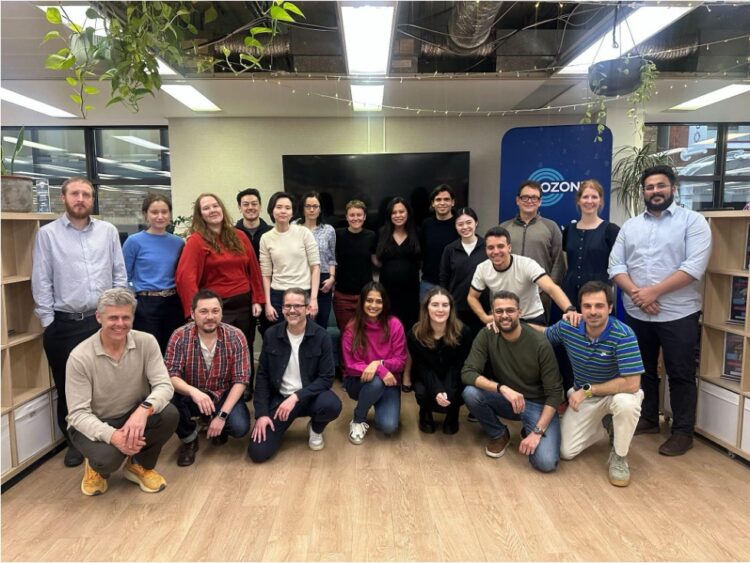
Make sure everyone is along for the ride and avoid knowledge or capability being siloed within teams or individuals. We communicate a lot, ideally in person, in company town halls, so everyone is on the same page.
If people feel like the road is uncertain, it’s important for them to know that they are travelling it with their peers and not being left behind. That way, uncertainty doesn’t seem so bad, and any opportunity gets as much airtime as any challenge.
How do you handle failure, both personally and within your teams?
Not everything is going to go the way you want, and people knowing that it’s ok if it doesn’t is important. I’m lucky to be a pretty positive person. If something doesn’t go right, I process it, reconcile it, work out what could have been done better, and move on.
It’s important to acknowledge failure or where things didn’t go to plan, but dwelling on it doesn’t get you anywhere. I hope my approach rubs off on the people around me.
AI, Innovation and Skills
How is AI changing the way you lead and make decisions?
I find I’m increasingly passing decisions through another layer of scrutiny – the LLM second opinion. Even when it’s not really necessary, I’m keen to see if there is something I might have missed. I’m not sure whether this will become the norm or just a phase while I get used to new tools.
In leadership, it’s certainly a bit more complex. Where LLMs are verbose, what I value most from others is brevity and specificity. Every day, I’m becoming more sensitive to AI slop being packaged as considered opinion.
What skills will define successful media leaders in the next decade?
People skills: Being a good communicator and storyteller has always been important, but will become more so – as a leader, you can’t hide behind screens.
Alongside that, technology innovation is changing everything we do at a rapid pace. Understanding how to get the best out of new tools is important, but it’s also important to focus on what need they solve. Leverage technology, don’t be led by it.
What’s your advice for aspiring media leaders?
Stay curious. Learn. Lean in. Enjoy what you do.
I think it’s important to learn from what came before because the principles of why we do things rarely change, and if they do, that happens slowly. Methods are changing quickly, so don’t be afraid to try new ways to get things done.
The Quick-fire Round
Which book would you make required reading for all media leaders?
Impro by Keith Johnstone: It’s been widely reported as a strange book on a Palantir induction reading list. I learnt a lot about group interactions from it.
Which leader from TV, film, or literature most inspires you?
David Attenborough. Every time I hear his voice, it reminds me of what a love of life sounds like.
What’s your go-to source for inspiration when you need it — work or otherwise?
Anything physical and outdoors, far from a screen. Right now, that’s trail running. Or surfing when I can.
Media lunch or media breakfast meeting, and why?
Breakfast. I’m generally better in the morning. That said, I’m a big fan of a long lunch.
Which media leader would you like to answer Leading Questions next?
Piers North (Reach plc).
Leading Questions is published by The Media Leader every Friday.