



Q&A with FreeWheel: Getting the best from linear and streaming
Opinion – The Future of TV: Global Series
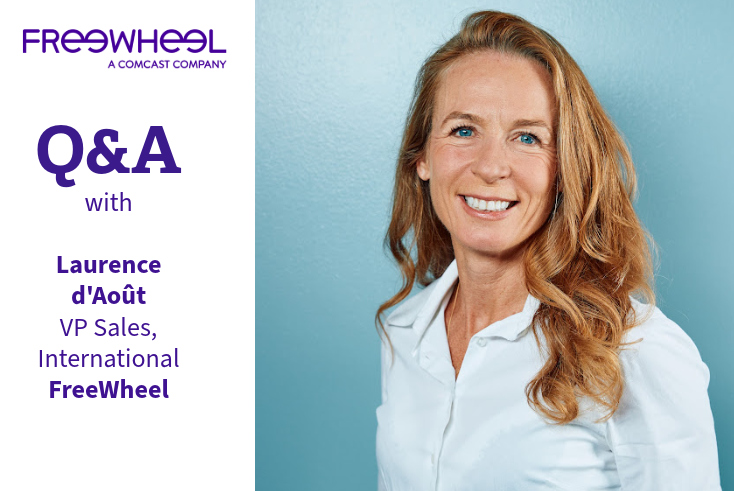
FreeWheel’s Laurence d’Août discusses the threats to broadcast TV revenues, how to demonstrate the value of linear TV to buyers, the implications of siloed broadcast/streaming planning, and the impact of AI on measuring TV and allocating budget.
Is it fair to say that broadcasters and channel owners increasingly rely on live sport and tentpole cultural events to maintain the relevance of linear TV?
TV has always been built around big live moments that bring mass audiences together, and these events remain some of the strongest draws for viewers and advertisers.
However, for broadcasters, relying solely on mass reach is no longer an option.
The whole viewing experience has evolved, from formats to schedules. Broadcasters need to prove they can continuously innovate around major cultural events; they must show advertisers that they can keep live TV feeling modern for modern viewers while remaining commercially viable.
What is the biggest threat to broadcast linear TV revenues over the next two years?
We’ve been talking about the decline of linear TV for quite some time. The pandemic briefly slowed that trend, but the long-term view shows a clear shift towards a digital-first approach.
Ironically, digital’s precision and quicker workflows are the very factors drawing ad spend away from traditional TV. Advertisers increasingly expect the same level of accountability, targeting, and cross-platform measurement they get from digital platforms.
While linear TV can still deliver on audience volume, it lacks a unified framework that matches the granularity, consistency, and ease of digital channels.
How do we improve how the value of linear TV is demonstrated to buyers?
CTV buying today remains complex and fragmented, with trades often conducted in different currencies and standards across markets, which is slowing progress.
As broadcasters become more digital-first, the focus should shift away from navigating this complexity and towards creating a simpler, more unified approach to buying and measurement.
For example, measuring co-viewing will be key, as it helps translate traditional ratings into impression data that better reflects how many people actually see an ad.
Inventory scale is also critical. It’s a major advantage of large digital platforms, which can more easily prove performance because they control huge audiences and data within a single ecosystem.
Traditional media has struggled to compete on that level, but broadcasters are increasingly collaborating in the UK, for example, giving advertisers greater reach and better measurement capabilities.
Is planning and buying still siloed, focused on either broadcast linear or streaming?
Broadcasters increasingly see themselves as streaming companies, but for many advertisers, they still represent traditional TV businesses.
Large advertisers with large budgets are used to dealing with legacy relationships and long manual processes, but many brands interested in buying TV today are smaller, digital natives, and more familiar with digital platforms than traditional TV buying.
They expect simple, fast, self-service campaign activation with flexible targeting and measurement.
As the approaches are so different, the digital and linear teams eventually stop working together.
What inefficiencies does this introduce, and what are their implications for the market?
Data silos present a clear challenge.
Consider the same large advertiser running complex global TV campaigns that also needs agile local-level activation to adapt those campaigns. A lack of granular first-party data, typically available in digital environments, prevents them from executing targeted campaigns.
This results in a missed revenue opportunity.
If addressed effectively, this represents a significant opportunity to reclaim market share from big tech.
Marketers consistently tell us they want to shift greater investment back into premium TV for two key reasons: first, TV is proven to deliver results; and second, there is growing frustration with the digital ecosystem – specifically a lack of transparency, insufficient third-party measurement, and a perception that large platforms over-attribute outcomes to their environments.
Overall, the availability of simpler, more unified buying routes continues to expose inefficiencies in the current landscape, preventing budgets from flowing as freely as they could into premium video.
How close are we to converged linear and streaming measurement that offers a single, comparable view of campaigns?
How close depends on the timeline. In a few years, we may no longer be talking about convergence.
Currently, we can bridge the gap thanks to additional datasets that show TV performance across the funnel. That data can be matched to the digital impressions.
For example, we can measure spikes in website traffic within minutes of a TV spot airing.
What impact will AI have on how we measure TV and premium video, and what we do with measurement insights?
AI is clearly accelerating innovation, although we are still in an experimental phase, and its full impact remains to be seen.
What we can see now is its power to democratise access to technology, including measurement tools, that were typically reserved for larger players.
It also speeds up the generation of insights, enabling faster decision-making and optimisation, which in turn improves performance.
What challenges would we face if we wanted to harness AI to improve media evaluation and budget allocation?
Much of today’s AI remains at a surface level, but to truly harness its power, we need to embed these innovations directly into the core of premium video transactions, empowering both publishers and advertisers to innovate on their own.
What’s especially important is access to TV’s full-funnel performance data.
That allows us to close the media loop, giving advertisers a much clearer view of what’s working, enabling smarter budget allocation, and ultimately driving stronger long-term value.
AI will act as a powerful accelerant here – closing critical capability gaps by automating buying workflows, enabling more intelligent optimisation against outcomes, and supporting the rapid delivery of personalised creative at scale.
Laurence d’Août is VP, sales, international at FreeWheel.