



What Cannes Lions can teach us about advertising’s most important customer

Opinion | Cannes Lions 2026
Trust was a major topic along the Croisette this year, but more conversation is needed about whether chasing attention at any cost is harming the industry’s relationship with the public.
With the dazzling tech showcases and stellar creative work that was celebrated at Cannes Lions this year, it would be easy to overlook our industry’s most important stakeholder — the public and their trust (or lack of it) in the advertising the industry serves to them.
At the Advertising Association, public trust sits at the core of our work, a focus that has only intensified for me while researching and writing our book, Trusted Advertising. If we’re to build on the creative benchmarks and technologies on show at Cannes this year, we must focus on the health of the global advertising ecosystem, the quality and integrity of the work itself, and ultimately, the public’s confidence in what we do.
Rewiring the ecosystem: trust and responsibility over attention
A criticism of advertising is that the ecosystem is designed to chase down people’s attention at any cost, but the counter is growing — to prioritise investment that genuinely engages people and builds long-term trust and confidence.
Why? Because this leads to greater business returns and long-term success.
We saw this early in the week when WPP doubled down on trust, aligning it directly with business growth and launching a set of Trust Principles. Cindy Rose, CEO, said: “When we set out Elevate28 earlier this year, we aligned around a clear mission for WPP: to be the trusted growth partner for the world’s leading brands… And for me, the two words at the heart of our mission — growth and trust — matter more than ever.”
How to harness the value of trust — with Matt Bourn and James Best
Meanwhile, the self-regulatory community gathered for the first-ever Cannes Rules! discussions, where Jeffrey Greenbaum of US law firm Frankfurt Kurnit Klein & Selz posed a key question for the week: “How can we talk about creativity without talking about responsibility?”
With the emergence of influencers and AI, building a sustainable funding model for the self-regulatory organisations (SROs), like the ASA in the UK, is essential for advertising to function successfully going forward.
Importantly, three major tech platforms — Google, Meta and TikTok — stood side-by-side with the world’s self-regulatory bodies in a public commitment to a stable, strong self-regulatory system.
AI: transparency, governance and finding the new equilibrium
The industry’s rapid adoption of AI is an established fact. Which is rightly leading on to debates about governance, transparency and finding the right balance of human and machine, both in the lead and in the loop.
Journalists, business leaders, and agencies are looking closely at the promises being made and looking at the evidence of return on investment. Regulators are considering whether and in what circumstances AI use should be disclosed, with a great deal of debate at global level through the ICAS Global Thinktank amongst others.
According to the Financial Times’ New Dimensions of Influence report, 80% of business leaders say trusted sources are more vital for strategic decisions than they were two years ago, seemingly driven by concerns over the trustworthiness of AI-generated information.
It appears technology cannot “manufacture” credibility but needs the rigour and fact-checked content from trusted sources. To reap the many potential benefits of AI in the advertising industry’s working practices, organisations must ensure the governance is in place to deliver the best of both worlds, using AI as a tool to enhance human creativity and productivity, not replace it.
Making ads that people enjoy
Sir John Hegarty delivered a brilliant presentation in the Palais, urging the industry to study the great entertainment companies to understand why their hit shows work and to bring that same enjoyment back to advertising.
Making advertising enjoyable is the single biggest opportunity we have to increase people’s confidence in our work. Of course, this needs to be built on integrity in the first place, but when I reviewed the latest Lions winners through the lens of trust, the most successful campaigns worked by being honest, self-aware, and often highly enjoyable.
Look at how some of the world’s best brands tackled scepticism (and issues such as fraud) head-on this year:
- Ikea’s Sleep Talk Reviews & Dove’s r/eal reviews: Both satirised the erosion of trust in online and influencer reviews by sourcing raw, unedited consumer feedback.
- Huggies’ Expensive Sh*t: A daring product demonstration that gave parents the real, tangible proof they could rely on.
- Vaseline & The Real Nigerian Prince: Used a clever trust-building framework of belief and proof to combat a wave of fraudulent counterfeit products in the market.
Whether building belief in a product or, in the case of Comanda con Venezuela’s 600K Network, using a QR code tech to protect democracy, the work that won trust was the work that doubled down on proving its claims.
Metrics, value and collective responsibility
During a Trusted Advertising Roundtable supported by the UK Advertising programme (which brought together leaders from organisations including Channel 4, The Guardian, Sky, Edelman, Ipsos, and Kantar) the conversation explored how we can put trust at the heart of every advertising campaign.
Anna Vogt, Edelman’s Global CSO, shared the agency’s latest thinking on how “Trust plus relevance equals brand growth”. By breaking trust down into five clear dimensions — ability, dependability, integrity, purpose, and emotional relevance (self) — there is an opportunity to build frameworks that measure it.
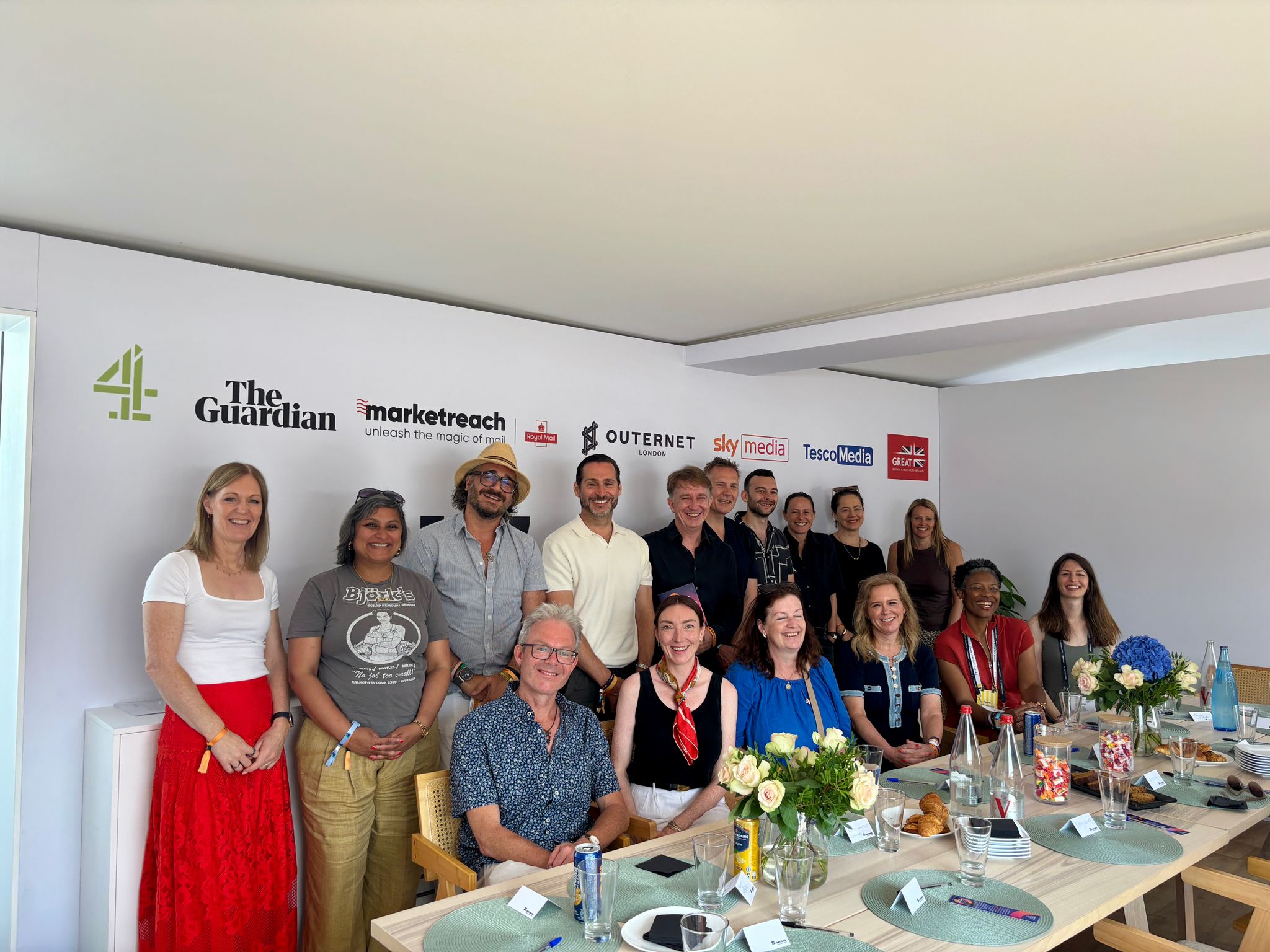
Attendees of the Trusted Advertising roundtable.
The conversation also explored the shared responsibility for building and protecting trust across the advertising ecosystem — the interdependent roles of advertisers, agencies, media, tech, and SROs to deliver a system that works, where all types of commercial messaging can be trusted by the people who receive it.
Our next Trust Action Plan will explore how we address this and more as we build out the business case for trust in advertising, as part of the bigger case for trust in business as a key competitive differentiator.
The commercial mandate for trust
The advertising industry doesn’t exist in a vacuum, but I rarely heard people talk directly about our most important stakeholder: the public. That has to change in my view.
Cannes Lions 2026 was a powerful reminder that chasing attention at any cost doesn’t work and the result is potentially harming the industry’s relationship with the public. The biggest commercial opportunity we have right now isn’t an AI algorithm or a data set. It’s making advertising that people actually enjoy, hosted in environments that support collective responsibility and trust, and backed by transparent measurement.
As we look toward the next Advertising Association’s next Trust Action Plan in the UK, the challenge is clear. It’s time to put trust at the heart of the commercial brief, because it is the ultimate driver and differentiator for long-term growth.
Treat the public with respect, give them enjoyable advertising experiences, and they will reward you with their business.
 Matt Bourn is director of communications of the Advertising Association and Ad Net Zero. He is also the co-author of the books Trusted Advertising and Sustainable Advertising.