



What Paramount’s takeover of Warner Bros Discovery means for global TV and cinema
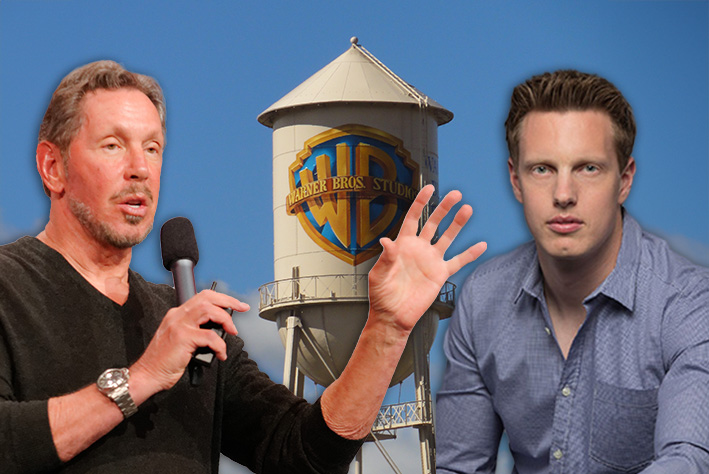
On Monday, Paramount reached a settlement with 12 US state attorneys general that will clear the way for the closure of its $110bn acquisition of Warner Bros. Discovery. The deal is now expected to close within the next two weeks.
As part of the settlement, Paramount has made several concessions, as reported by Deadline, that will apply over the next five years, assuming a court approves them. These include:
- Forming a “News Editorial Independence Board”, comprising five “established journalists” with at least 10 years’ experience and a variety of political party experience. Board members will serve for three years and will establish “guiding editorial principles” for CBS News and CNN and “establish and monitor adherence to ethical journalism”.
- Agreeing to release, in theatres, a minimum of 30 films per year for the next two years, and 32 films in years three, four and five after the closure of the acquisition. At least two-thirds of these films must be given a wide release, and at least four must be independent films. Theatrical windows must be at least 45 days.
- Committing to withhold these films from streaming video-on-demand (SVOD) platforms for at least 90 days from debut.
- Spending commitments of at least $300m annually ($1.5bn total) for US-based productions over the next five years.
- Maintaining basic cable TV commitments.
- Maintaining a free ad-supported TV service (e.g. Pluto TV)
Failing to meet these commitments could force divestiture of some assets, such as a sale of Miramax, should Paramount fail to meet its theatrical commitments.
Importantly, no concessions were agreed that would require the merged Paramount to immediately divest any assets.
The settlement comes after the acquisition has already received regulatory approval in the US, UK, and elsewhere, including permission to waive the standard cap on foreign equity ownership as part of the deal.
The new entity would be owned primarily by Oracle co-founder Larry Ellison and RedBird Capital Partners, who would retain 100% of the voting shares.
As Reuters has reported, Middle Eastern investors could own 85% of Paramount’s equity; however, Saudi Arabia’s sovereign wealth fund would maintain a 15.1% stake. Sovereign wealth funds will collectively own 38.5% of the company.
Analysis: ‘Palatable’ concessions for Paramount
The acquisition would make David Ellison, Larry Ellison’s son, the foremost figure in traditional US (and by extension, global) media.
When the acquisition closes, the Ellisons will own — in full or in part — properties including: TikTok’s US business; CBS (including News and Sports); CNN; Paramount+; Discovery+; TNT and TNT Sports; Nickelodeon; Cartoon Network; Comedy Central; Miramax; MTV; Showtime; BET; 5; Pluto TV; Warner Bros Pictures; Warner Bros Games; New Line Cinema; Castle Rock; DC Entertainment, Studios and Comics; HBO and HBO Max; Adult Swim; TBS; TruTV; HGTV; Food Network and TLC.
The control the Ellisons will be able to exercise over global media is practically unprecedented in modern times, and has grown quickly.
Until taking over Paramount in August 2025, David Ellison was the CEO of Skydance, a production company known for mass-market action films like Mission: Impossible and Top Gun: Maverick and TV shows like Reacher and Jack Ryan.
In January 2026, Larry Ellison’s Oracle took a 15% stake in TikTok’s newly splintered US business, and now Paramount’s acquisition of Warner Bros. Discovery is set to occur — without being compelled to sell off any assets. Such deals have all occurred under the Trump administration.
Tom Harrington, head of television and media research company Enders Analysis, told The Media Leader “the concessions appear quite palatable for Paramount”. He noted they are mid- rather than long-term concessions, “meaning they may well have little impact on what was going to happen anyway”.
Harrington described that the terms of the settlement mean there is “little protection for longer-term studio cinema output, for which Paramount and Warner are incredibly important,” which could result in a “declining volume and breadth of films being theatrically released”, negatively impacting cinemas just at the moment the film industry is finally emerging from a post-Covid and post-writers’ strike slump.
The streaming market also appears set to consolidate, with David Ellison previewing he intends to consolidate Paramount+ and HBO Max into one streaming service. Harrington warned, however, that there are “general difficulties of quickly consolidating overlapping assets without material detriment”, such as declines in subscribers or average revenues per user.
August box office grows 67% to cap off highest-grossing summer on record
Media analyst and investor Alex DeGroote added the deal could be perceived as a modest win for Hollywood, given it will maintain some level of preservation over the film distribution supply chain, a central concern of studios.
Streaming, he added, has “totally changed the rules of the game”, with scale “clearly needed” to compete against Big Tech streaming giants like Amazon, Apple and Netflix. Warner Bros. Discovery remaining independent, DeGroote said, “was not an option”, and its merger with Paramount is arguably preferable for studios than its assets being swallowed by Netflix, which has a worse track record of offering extensive theatrical releases and supporting multi-series TV programming.
Will editorial independence board have teeth?
However, the acquisition is also likely to have severe downstream effects on news delivery. As DeGroote told The Media Leader, there are “clearly political undertones to this transaction”, with the Ellisons known allies of Donald Trump.
Last October, David Ellison named former Free Press founder Bari Weiss as editor-in-chief of CBS News. Her leadership has been widely criticised by journalists, including former correspondents at flagship US news programme 60 Minutes, several of whom have alleged executives applied pressure to insert pro-Trump administration bias into several segments that aired earlier this year. The network has subsequently suffered from sharply declining ratings.
Paramount’s decision to shut down The Late Show with Stephen Colbert, the ratings leader in its timeslot, has also been similarly criticised as politically motivated.
While the creation of an “editorial oversight board” is meant to help keep CNN and CBS News editorially independent from the company’s new ownership and its other business interests, the reality, as NiemanLab’s Joshua Benton wrote on Tuesday, is that such boards have proven to be “mostly toothless” in the past.
As Benton noted, Rupert Murdoch was forced to institute similar editorial oversight committees as part of his acquisitions of The Times and Sunday Times and Wall Street Journal, respectively, and was able to circumvent them in both instances.
“No matter how well-intentioned the members of these committees may be, if David Ellison wants to get around them, he will,” Benton wrote, likening them to “PR gestures, not vehicles for editorial protection.”
Money pressure
The merged entity will immediately face questions over its net debt, which is estimated to exceed $77bn this year.
Credit ratings companies Fitch and S&P Global Ratings both issued downgrades to Paramount’s debt following the announcement of its deal to acquire Warner Bros Discovery, with Fitch placing the company on negative watch pending details of the transaction.
In a slide deck shared with investors, Paramount’s leadership indicated its net leverage at the close of the deal — calculated by dividing net debt by the sum of the most recent four quarters of adjusted EBITDA (its measure of profit) — is 6.5x. Paramount has forecast its “post-synergies” net leverage will eventually be drawn down to 4.3x, with the aim of further reducing it to 3.0x within three years of closing the deal.
DeGroote has previously told The Media Leader that net leverage above 3x is generally considered too high for a media company, let alone one whose newly acquired assets saw a decline in profitability last year, as Warner Bros. Discovery’s did (adjusted EBITDA, its measure of profit, declined 3% in 2025 to $8.7bn).
The net leverage is notably higher than Warner Bros. Discovery’s own net leverage following WarnerMedia’s 2022 merger with Discovery. That merger resulted in $53bn in debt and an initial net leverage of 5.0x.
The company subsequently took extreme cost-cutting measures, including thousands of layoffs, the cancellation of several finished films to collect tax write-offs, and multiple price hikes for its streaming service HBO Max, eventually reducing net leverage to 3.3x earlier this year.
DeGroote said it is all but certain the new company will move to “de-lever quickly post deal” by generating cash flow through job and production cuts.
Kate Scott-Dawkins, WPP Media’s global head of business intelligence, previously told The Media Leader the “most obvious” lever for debt reduction is indeed on content spend.
According to WPP Media’s estimates, on a combined pro forma basis, Paramount and WBD spent $28bn on content in 2025, more than all other media entities.
The concessions Paramount agreed to will require it to maintain some production spending for its first few years, potentially limiting its ability to reduce debt through drastic drawdowns in content spend. Still, a report released jointly last month by the Los Angeles County Department of Economic Opportunity and the LA County Film Office estimated more than 10,000 jobs, $1.26bn in wages, $2.78bn in economic value, $4.06bn in total business output, and $547m in tax revenue could be at risk in the long term.
Beyond content cuts, Harrington said there will likely be a “quick rationalisation of back office roles where there is a lot of duplication”, as well as overlapping tech costs, particularly in streaming.
Importantly, because Paramount has sought to purchase Warner Bros. Discovery’s total business, it will inherit both growing streaming assets and depreciating legacy assets, including still profitable but declining linear properties.
As Harrington explained, it will need to retain these “given their still outsized contribution to revenue and profit,” even though “the decline of the content spend on them will only increase”.
Warner Bros. Discovery announced last summer that it planned to split into two before Paramount offered to buy the whole company, intending to section off its higher-growth streaming and studios properties from its slower-growing global networks, with the latter likely to be saddled with debt. Paramount could eventually seek a similar tactic.
UK impact
Here in the UK, the TV market is already restructuring significantly. Not only have both the BBC and Channel 4 announced steep cuts, but Sky is in the midst of its own effort to acquire ITV’s Media & Entertainment business.
That activity has reshaped the ad sales market, with Channel 4 poaching Paramount’s UK ads business from Sky last week and assuming responsibility for airtime sales across 5, MTV, Comedy Central and Nickelodeon.
Last year, Warner Bros. Discovery appointed Sky Media as its ad sales partner in the UK and Ireland. It is unclear how Warner Bros. Discovery will continue to be serviced when it is brought under Paramount, though The Media Leader understands Channel 4’s deal with Paramount is limited to a specific set of properties.
Harrington told The Media Leader he believes Paramount’s merger with Warner Bros. Discovery is unlikely to make a significant difference to the UK streaming market, which he described as “quite slow and solid” and has plateaued for years.
Apart from a likely eventual consolidation of streaming services, the main question for Harrington is how the company manages TNT Sports in the UK and elsewhere. “They will probably not want it on HBO Max if they are to wind down promotion and development for the whole service,” he said.
As far as viewing goes, Harrington previewed that a combined Paramount-Warner may attract a greater share of TV viewing simply by virtue of greater scale.
But he added that the TV industry’s main competition for eyeballs and ad dollars is not between TV companies, but with social video platforms like YouTube and Meta.
Channel 4 Sales to become exclusive partner for Paramount’s UK linear and digital brands