



Yannick Bolloré: If you want to know where you’re going, it is important to know where you come from.
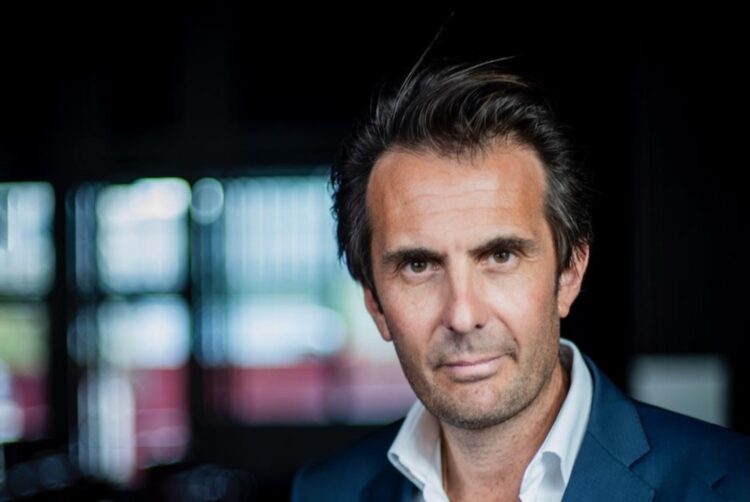
The Media Leader Interview
Havas chairman and CEO Yannick Bolloré discusses the agency’s strategy in an era of accelerating consolidation.
Size, in periods of change, is more of a handicap than an advantage”
At Cannes Lions, Havas unveiled a global proprietary study, “The Science of Desire”, built around three levers – attraction, affinity and attachment.
Havas research finds 84% of brands are viewed with indifference by consumers
The group also announced an investment in Vurvey Labs, an agentic intelligence scale-up, in which it will act as lead investor in the Series B. Both announcements sit within the group’s global positioning: Growth, Powered by Desire.
Chairman and CEO Yannick Bolloré discusses these announcements and the company’s ongoing strategy in an exclusive interview with The Media Leader.
The Media Leader: Havas posted 3.1% organic growth in 2025, above your initial guidance. How do you explain that performance in such a turbulent environment?
Yannick Bolloré: 2025 was an important year for us – it was our first full year as a public company again, having been listed until about 10 years ago. Returning to the market meant delivering solid results. This growth reflects a combination of factors: the excellence of our teams, the quality of our client relationships, and our ability to win new contracts. If you compare us with our peers, Havas has clearly outperformed the sector. And our Q1 2026 results are tracking in the same growth trajectory.
TML: Against a backdrop of consolidation – Publicis expanding through acquisitions, the Omnicom-IPG merger still being digested – you claim the status of “challenger”. Is that a posture or a strategy?
Y.B.: It is not a posture – it is a mindset that pushes us to go further and serve clients better than anyone else. Scale matters, yes – you need a global network and the ability to operate across all areas of expertise worldwide, which Havas has. But beyond a certain threshold, size generates complexity, bureaucracy, and you lose agility.
When I started in this industry about 15 years ago, WPP was the biggest – and it is the one that has struggled most in recent years. Size, in periods of change, is more of a handicap than an advantage.
TML: France is ‘Creative Country of the Year’ at this year’s Cannes Lions. With Publicis, there are now two French holding companies in the global top five – a unique position since the Omnicom-IPG merger.
Y.B.: Since that merger, France is the only country in the world with two holding companies in the top five. I am obviously very proud of that. France represents 18% of our revenue – at Publicis, I believe it is slightly under 10%. But roots matter in a group: if you want to know where you’re going, it is important to know where you come from.
TML: There were rumours around a major acquisition at the time of your stock market listing. Where does that stand today?
Y.B.: We are very happy with our current size. We make acquisitions that seem relevant to our clients – 11 last year, six since the start of this year. But today, we have no discussions with our peers around a large-scale merger. That is simply not what we are focused on. We are executing our roadmap, outperforming the market – and we will continue with that philosophy.
TML: You are launching “Growth, Powered by Desire” as a new global positioning. What sets this study apart from a marketing manifesto, and how will clients measure its concrete impact?
Y.B.: Many of the clients I speak with are a little lost. They see all these mechanisms – data, AI but do not always understand what it actually delivers for them. So we wanted to go back to the fundamental question: what is communication for?
It is first and foremost to generate growth – by selling more products or by increasing pricing power. And how do you create that growth? By building desire for brands. We developed “The Science of Desire” – a methodology built around three levers, attachment, affinity and attractiveness – to help our clients build more desirable brands, increase their sales and pricing power, and ultimately drive growth. This is a study aimed directly at CMOs, written in clear, accessible language and grounded in concrete business outcomes.
TML: You are raising your commitment in data, tech and AI from 400m to €1bn. How do you measure the ROI on that investment when many players are still struggling to quantify it?
Y.B.: There is a dual approach. We invest in things that are demonstrably productive and effective. But at times we take calculated risks. The investment we have just announced in Vurvey Labs – just over €20m – is a good example. Our clients commission a great deal of qualitative research, as do we. Being able to deliver it faster, at lower cost, with a better speed to market – that is a real differentiator for us. That is the kind of investment we are making.
TML: You say that 90% of your employees are now AI-proficient. How do you define that proficiency, and what happens to the remaining 10%?
Y.B.: All our employees have taken – or must take – a proficiency test to access our tools. In reality, we are close to 100% among our stable workforce. The gap comes from new joiners: every month, new people arrive and need time to complete the test. The goal is to reach 100% certification among permanent staff.
TML: What are your early impressions from client conversations at Cannes this year?
Y.B.: Clients come here for three reasons: to be inspired, to discover what is new, and to choose the right partners. For us, it is a valuable moment to connect outside of regular office meetings and discuss longer-term visions. And the early signals – even though I am only a quarter of the way through the festival – are extremely positive for Havas this year.
 François Quairel is the editor‑in‑chief, head of content at The Media Leader FR / BE