



Zee Entertainment’s Parul Goel: ‘The aim is to have Zee in every household’
Partner content
Zee Entertainment’s Parul Goel discusses doubling the business in Europe, the micro-drama opportunity and why partnerships are the key to scale.
Zee Entertainment is not short of ambition. The Indian broadcaster, one of the largest media exports from the subcontinent, currently reaches approximately 35-40m users across 14 European markets via 10 channels and a streaming app. Parul Goel, its territory head for Europe and CFO for Europe and the Americas, wants to double that.
“The aim is to have Zee in every household,” he tells The Media Leader’s James Longhurst at the Cannes Lions Festival of Creativity. “I know it is a big aim, but if we aim higher, we’ll reach there.”
Partnerships as the engine of growth
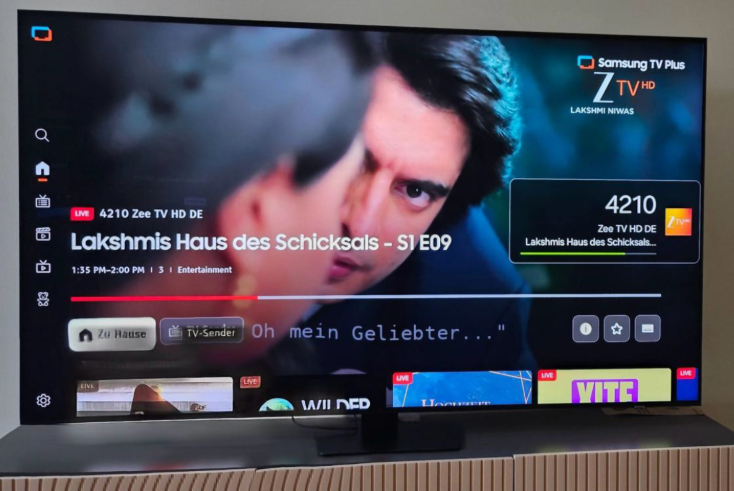
Goel’s strategy for getting there centres on partnerships. Zee works with more than 15 companies across Europe, with Sky and Samsung the two he names specifically. The model is straightforward: Zee supplies content and platform capabilities, while partners such as Sky Media and Samsung Ads bring commercial relationships and access to advertisers.
“I believe partnerships are one thing which can scale our growth,” he says. “Partnerships will help not just Zee, but our partners as well, to grow mutually.”
The broadcaster operates a hybrid model on its Zee5 platform, combining advertising-supported video on demand (AVOD) and subscription video on demand (SVOD), a structure it has had in place in the UK since 2019.
Goel draws a comparison with ITVX’s approach, arguing Zee has been operating this way for longer and with similar logic: give free content to those who want it, premium content to those willing to pay, and strong targeting data to advertisers.
Owned IP and the micro drama moment
Zee’s content differentiation, Goel argues, lies in owning its intellectual property outright rather than licensing it. That gives the business more flexibility and better economics than competitors relying on acquired rights. Production is primarily based in India, with co-productions in the Middle East, South America and elsewhere supplementing the core slate.
The most immediate new product is a micro drama app, launching shortly with around 2,000 assets and a target of more than 10,000 episodes within a year. It will be subscription-funded and positioned as a premium offering. Goel describes the format’s appeal from personal experience: once you start watching, he says, it is very difficult to stop before the story concludes.
Younger audiences and mainstream ambitions
Zee’s primary audience is the South Asian diaspora, estimated at 1.2 to 1.4m households across Europe including the UK. But Goel is clear that mainstream audiences are equally in scope, with dedicated content in English, German and French.
On younger viewers, the broadcaster has seen under-25s account for roughly 25 to 30% of its social media viewership, a number Goel uses as evidence that the generation is reachable if the content is right. The approach is short-form, fast-paced, and episodically contained: reality formats and series of five to ten episodes rather than the long-running drama serials that built Zee’s heritage audience.
Technology as enabler
On technology, Goel’s position is uncomplicated. “Technology today is an enabler. It is not a hindrance,” he says. The focus is on making content as easy as possible to access regardless of screen size, with the platform and presentation adapted to context rather than standardised across devices.
Zee developed its streaming infrastructure in-house, a decision Goel says is a differentiator, citing the broadcaster’s delivery of FIFA rights in India on the Zee5 platform.
For H2, the priorities are the micro drama launch, continued partnership development and staying, as Goel puts it, not just in the game but ahead of it. “What people are thinking today, we have to think like yesterday,” he says.
The household ambition, he is keen to stress, is not a slogan. It is the plan.
This podcast was recorded at the Cannes Lions Festival of Creativity.