



New York Times, Observer, Economist, ITV News among 40 new members to join SPUR Coalition
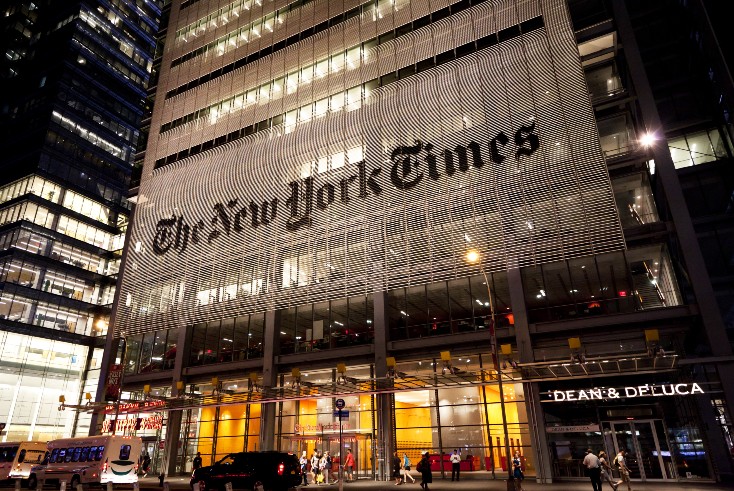
The Standards for Publisher Usage Rights (SPUR) Coalition has announced its largest expansion to date, welcoming over 40 new members.
Joiners include The New York Times, Agence France-Presse (AFP), The Atlantic, The Observer, ITV News, Which? and The Economist.
A bevy of news publishing trade organisations have also become members, including Brazil’s National Association of Newspapers (ANJ), Mexico’s Alianza de Medios and Argentina’s Asociación de Entidades Periodísticas Argentinas (ADEPA).
The SPUR Coalition was founded in February by the BBC, Financial Times, Guardian Media Group, Sky News, and Telegraph Media Group. Soon after, the Associated Press, CMA Media, and Mediahuis joined, rounding out the association’s founding members.
Dubbed the “NATO for news” by FT CEO Jon Slade, the coalition aims to prevent AI companies from misusing or profiting off publisher IP without permission. It intends to set clear rules of engagement for publishers and tech platforms to do business by agreeing to paid licensing agreements to allow for AI models to use copyrighted media.
“Intellectual property protection and technological advancement can and must co-exist,” said Rebecca Grossman-Cohen, The New York Times‘ SVP of strategic partnerships and executive operations. “High-quality journalism is crucial to healthy democracies and to the functioning of AI products and experiences. We are proud to work with SPUR to develop robust standards and protections for copyrighted content that are not unilaterally set by tech platforms.”
The New York Times is one of the largest global publishers to have sued major AI companies like OpenAI, Microsoft and Perplexity, alleging copyright infringement. At this year’s WAN-IFRA World Media Congress, NYT publisher AG Sulzberger likened the intellectual property theft undertaken by AI companies to a “Napster moment” for the publishing industry.
This month, SPUR released its Content Telemetry Standard, a key effort aimed at standardising the process by which AI agents and AI model builders record how they use media content and report that usage back to publishers.
The Standard defines the different actions AI models take with publisher content (e.g., scraping versus citing), which will ultimately allow publishers to create a standardised licensing market based on AI companies’ use cases for accessing copyrighted content.
Moving forward, the coalition will look to implement the framework. It is also developing agentic tools that allow AI companies to easily adopt the measures it sets out with the goal of making it easier for them to agree to and institute fair licensing and reporting requirements.
“We can’t simply hope for the best when it comes to AI companies and the future of publishing,” commented SPUR co-founder David Buttle. “Media organisations across the world must come together to protect themselves, each other and the future of journalism.”
Buttle described there is “rapidly growing momentum” behind the coalition.
“We know that high-quality journalism forms the foundations of AI models yet, as it stands, publishers have no mechanism to ensure they are fairly compensated for their work. In many cases, their output is literally being stolen,” he continued. “As AI transforms every aspect of the global media market, maintaining the principles and integrity of original journalism requires stakeholders to come together and establish clear, industry-wide rules of engagement.”
In September, The Media Leader sat down with SPUR’s technical lead, Alex Springer, about its Content Telemetry Standard (then still in draft form), and whether publishers yet have the leverage needed to get AI companies to come to the table.
How SPUR is building an economic model for publishers – with technical lead Alex Springer