



Jellyfish’s Seun Odeneye: ‘This place is like a sleeping giant’
The Media Leader Interview
Jellyfish’s chief media officer discusses his plans to integrate the agency’s paid, owned and earned media efforts, and why he’s bullish on the agentic era.
In September, Brandtech Group agency Jellyfish appointed Seun Odeneye as its first-ever chief media officer for EMEA.
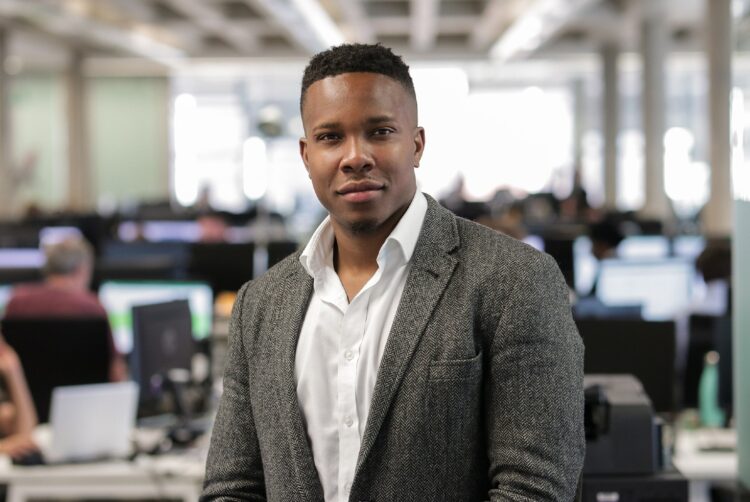
“What you typically see is walls between paid and owned,” Odeneye tells The Media Leader from a room with a view at Jellyfish’s offices in The Shard. “Our customers aren’t thinking like that. They aren’t thinking in lanes. So when you think about my appointment, Brandtech is saying we don’t think in that framing. We’re bringing it together. Togetherness is the future of how we operate.”
Speaking a month after joining the agency, Odeneye exudes confidence and an AI-driven, performance-based mindset. His remit covers paid media including search, social, programmatic and owned and earned, as well as strategy and investment analytics.
“This place is like a sleeping giant,” he says.
Odeneye joined Jellyfish from IPG Mediabrands, where he was managing director for investment and, previously, UK & Ireland managing director for media at IPG performance marketing agency Kinesso. Earlier in his career, he worked in digital and programmatic media roles for Mindshare and Microsoft.
Earlier this year, Jellyfish CEO Nick Emery, who Odeneye worked under while at Mindshare, reached out to Odeneye directly with an offer to join.
“To be honest, I wasn’t necessarily looking,” Odeneye shares. “But to cut the story short, after one conversation with him, Tasha (Natasha Wallace, Jellyfish global chief of media, strategy and AI) and Stephie (Stephanie Parry, Jellyfish UK&I MD), it became apparent really quickly that Brandtech and Jellyfish are disruptors.
“They just break stuff and make stuff for clients, in its purest form.”
Performance mindset
Jellyfish was founded in 2005 by Rob Pierre and sold to The Brandtech Group in 2023.
The business built on its reputation as a Google specialist (the agency once prided itself on being known colloquially as “Google’s ad agency”), even as it expanded services to other tech platforms and media offerings.
It posted significant growth last decade, leading French private equity firm Fimalac to acquire a majority stake in 2019 and invest in an expansion effort before selling to Nick Emery’s Brandtech after a Covid-driven market downturn.
Odeneye doesn’t dispute Jellyfish’s reputation as a “Google shop”, but says he’s been “blown away by the depth of what we’re able to do”.
Likening Jellyfish’s media capabilities to an iceberg, Odeneye says: “That was the heritage, but when I think about some of the clients we’ve won and the work we’re doing, it’s incredible. But I think we could do so much more with the talent, the tech, the tools that we’ve got.”
Jellyfish CEO Nick Emery: ‘Traditional agencies are finished’
That doesn’t necessarily mean moving away from maintaining a primary focus on tech platforms. When asked whether he believes brands are overinvested in the likes of Google and Meta, as marketing effectiveness experts have been arguing for years, Odeneye demurs.
“You’ve got different schools of people that say, ‘Everyone’s spending too much on Google, everyone’s spending too much on Meta’. It may be true, or it may not be. But the question is: Are our users only on Google? No. Are our users only on Meta? No. So our job as marketers is to find those users at the right place, at the right propensity to purchase.”
It’s a performance-first mindset, focused less on building brands and more on converting sales. But Odeneye argues that media spend can be proportioned accurately and efficiently by testing outcomes in real time and adjusting channel mix on the fly.
“We’ve got some proprietary measurement stuff we’ve done to measure incrementality across the board and in-platform,” he explains, confidently adding: “The clients that we’re running media for, we are not overinvesting in those channels.”
‘I’ve not seen something like this before’
What makes Jellyfish so exceptional to an agency veteran like Odeneye? On the surface, its core proposition remains performance media, increasingly backed by its AI platform, Pencil; a similar model is offered by other challenger agencies and large holding groups alike.
For Odeneye, Jellyfish is attractive as “an agency where media never stops”, where its practitioners are “looking at signals” and not simply producing “a blunt media plan” but rather “creating meaningful moments for brands” by “delivering the right ad at the right place at the right time with the right message”.
Pencil, Odeneye says, brings together media and creative within an operating system to help deliver that for clients.
When asked whether this is sufficiently different from other agency offerings, he responds: “My job isn’t to tear down any big agency holdcos, but I’ve worked at many, and I’ve not seen something like this before.” When asked to elaborate, he adds: “Pencil was here at the genesis of some of these LLMs, so I think it’s at the forefront.”
Unlike other AI-driven tech spines offered by agency groups, Pencil is notably not a closed shop. The Brandtech Group appears perfectly happy to offer the service to clients that work with other agencies through a software-as-a-service (SaaS) model. “We don’t go, ‘You’ve got to come to us for everything,'” Odeneye says. “We’re very happy that we can offer any part of our services to clients. If we can be one part of that solution, brilliant. If we can do end-to-end for that client, brilliant.”
Will ‘media planner’ still be a job title in 10 years? Nine specialists weigh in
Odeneye has doubtlessly been tasked with growing Jellyfish’s end-to-end proposition; however, to do so, he is keen to institute a more joined-up mindset between offerings that often sit in siloes.
“How do we have an integrated solution that looks at paid, owned and earned?” he asks. “We need to stop looking at it separately.”
At the core of linking paid media strategies with owned and earned propositions is Jellyfish’s Share of Model platform, which aims to help brands understand how they show up in LLMs.
Brands can use it to inform search engine optimisation (SEO) and generative engine optimisation (GEO) strategies, as well as paid strategies such as partnerships. It can also be used to provide feedback to clients about how their brand and their products and services are perceived more widely by the open web.
“Being a partner of a client means consulting them in every area,” says Odeneye, who refers to Share of Model as “gold dust”. He continues: “If we’re hearing something about product, that will be fed back. We’re not trying to hoodwink the end user. It’s about working as a partner to the client to show them why they’re not showing up in an LLM, and why. This is what we can help with, and this is what you can do.”
Agency model, talent must adapt
Odeneye believes AI will change “everything” in the ad industry, both because consumers are already using chatbots to assist consumption journeys and because tools like Pencil and Share of Model are increasingly opening doors for clients by providing “deeper insights”.
Still, consumers remain broadly sceptical about using AI for purchasing decisions. According to Kantar’s latest Media Reactions report, just one-third (32%) of consumers say they currently use AI assistants to research brands and products, while less than one in four (23%) say they trust its product or service recommendations.
Marketers are pushing forward anyway, with 75% planning to increase their investment in AI assistants next year. For Odeneye, the role of the agency must shift to meet that demand: “Customers today are starting their consumer journey in AI, and sometimes finishing in AI,” he says. “That change is coming, and agencies need to set themselves up to take brands on that journey.”
Odeneye, like many other leaders in media, is nevertheless at pains to insist human talent must remain “in the loop” to “make sure there’s differentiation” in what is ultimately recommended to clients. He acknowledges, though, that AI will “probably” mean fewer people are needed to produce what he believes will be higher quality work.
Strategic thinking is biggest skills gap in marketing, WFA-Mediasense report finds
“Talent in general needs to evolve,” he says. “In an agentic world, how good is your prompting? How good is your ability to use AI?”
He clarifies that agencies will “need less mediocre talent” because AI “elevates your top talent” and can “codify and scale [their] thinking”.
Does the agency model more generally need to change for this new agentic era?
“Fundamentally, we’re at a crossroads. Clients are having reduced opportunity in terms of, if they want to go for a big agency, who they go for,” Odeneye says, referring to the consolidation of holding groups, particularly Omnicom’s acquisition of Interpublic Group last November. “It’s been a race to the bottom where the big agencies do what they do to stay afloat.
“The question is, how do we add value for clients? That value comes from understanding the client’s problems and putting solutions in front of them that they can own themselves if they want, or that we can manage. This is what agencies should have been.”
The future of media agencies, to Odeneye, is adding a “consultancy layer”. That is, “not how can we make the most money out of you. Not, “How can we arbitrage your inventory?” Not how I make my margins.
“It’s: How can I help?”