



Educating brands and agencies will be key to unlocking pDOOH growth, say IAB UK panellists
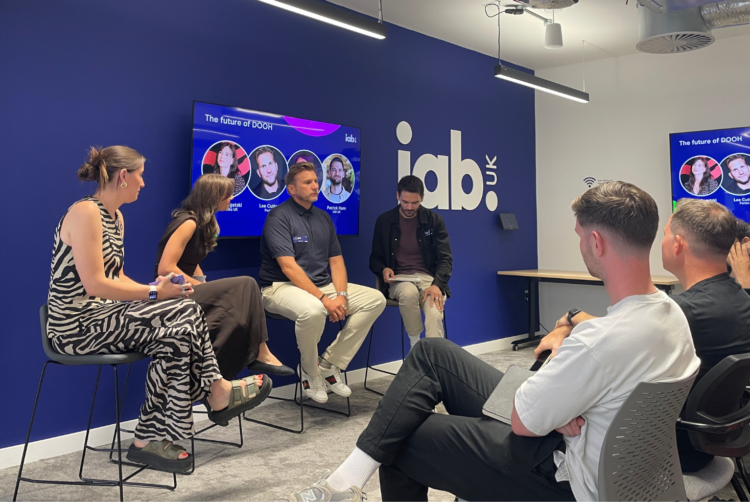
Educating brands and agencies will be essential for the growth of programmatic digital out of home (pDOOH), according to industry leaders speaking at the IAB UK’s event, DOOH Compass Launch: The future of real-world attention, on Tuesday.
The discussion occurred as IAB UK published its updated Compass report, forecasting that digital out of home (DOOH) will account for 76% of the OOH ad market by 2031, up from 67% in 2025. The report also predicts pDOOH’s share of OOH adspend will rise from 9% to 24% over the same period.
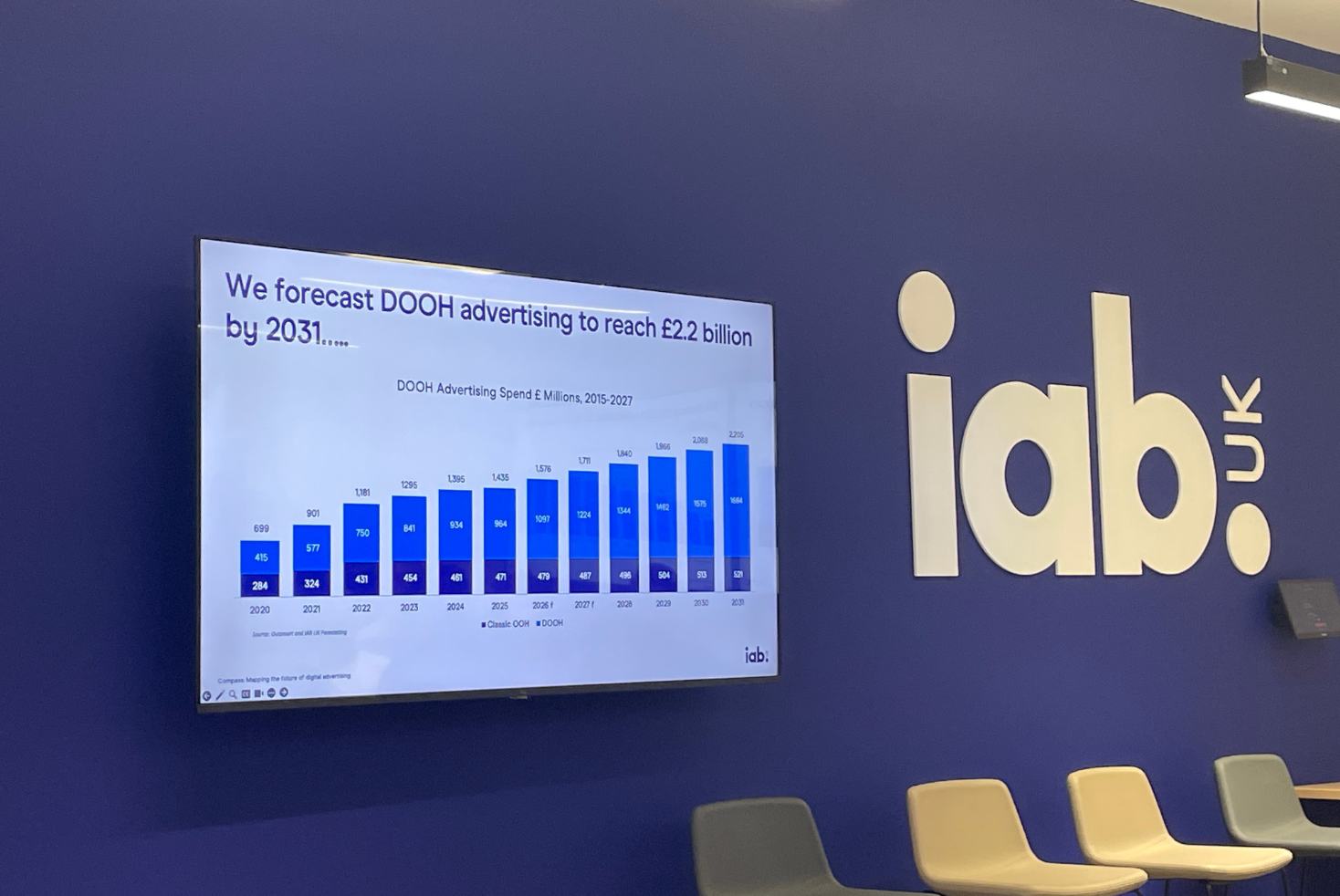
Key drivers of such growth, according to Compass, include growing inventory and retail media expansion. Co-op’s launch of the Media Network Out of Home in May was cited as one example of retailers further investing in the channel.
The report also identifies a number of benefits and drawbacks for pDOOH, pointing to flexibility, precision targeting, omnichannel integration and full-funnel capabilities as advantages, while recognising that knowledge gaps across agencies, and a lack of case studies and training continue to hold adoption back.
Upskilling in pDOOH
During the panel, the importance of educating media buyers was viewed as a unanimous concern among the speakers.
Megan Bogatzki, head of programmatic at health and fitness media owner Zoom Media UK, explained how she tries to translate programmatic into a language familiar to digital-first buyers, making the channel easier to understand and trust.
Emily Bearn, senior DSP partnerships manager at pDOOH marketplace VIOOH, believes this should go one step further: upskill the buyers — not just agencies, but brands directly, too.
“The ideal situation is: you could have a brand go directly to an agency or into an omnichannel DSP and just activate straight away and have the skillset to do so,” she said.
Her comments reflect a broader shift across digital advertising towards self-service buying, although she acknowledged the inconsistent standards across agencies and DSPs remain a hurdle.
‘OOH needs to be traded in the same way as everything else,’ says Broadsign CEO
Patrick Hann, ad tech manager at IAB UK and moderator of the discussion, asked whether that means the panellists’ doors were “always open” for education, to which the panel agreed.
Lee Cutter, vice president of sales for the UK, Nordics and MENA at adtech company Perion, added that while parts of the industry still need to “lean in” further, he is seeing new buyers, such as digital agencies, adopting pDOOH as part of omnichannel campaigns.
That trend is reflected in the Compass report, which found that 92% of marketers who bought pDOOH in the last 12 months said it was planned as part of broader digital or programmatic activity.
The discussion also highlighted the opportunity for brands to make greater use of their first-party data. Cutter argued that advertisers have access to an abundance of first, second, and third-party data that can be used to activate campaigns, and Bearn pointed to an M&S campaign that dynamically adapted creative based on store stock levels.
What OOH can do, not what it can’t
The event’s second discussion focused on another long-standing challenge for OOH: measurement.
Speaking with Global’s head of outdoor business development Jane Lee, Goodstuff’s head of OOH Roy Shepherd argued that the industry should spend less time dwelling on what OOH cannot measure and more time demonstrating what it does well.
He cited dynamic creative optimisation (DCO) and pDOOH’s ability to tap into moments of national and cultural feeling that other channels struggle to match. Lee agreed, adding that programmatic has allowed a complicated buy to be much more accessible.
Rather than treating “measurement” as a single concept, Lee said advertisers need to define what success looks like, whether that’s media mix modelling (MMM), sales outcomes, or performance.
Shepherd also questioned the industry’s approach to cross-media measurement.
“This is the greatest irony, isn’t it? We know channels work better when combined, but when we measure them, we try to strip out the effect of an individual channel because we’re trying to adjust it to future budgets,” he said. “The reality is that they’re accumulative — they work together.”
Despite calls to focus on OOH’s strengths, both speakers acknowledged that a lack of effectiveness case studies remains a significant obstacle. Shepherd said advertisers are often reluctant to share sales data, creating a “catch-22” in which brands demand proof of effectiveness while withholding the evidence that could demonstrate it.
Lee said Global has sought to address that challenge through its Outcomes initiative, in particular with Benchmarks, in which the media owner anonymises and aggregates campaign case studies to show performance by category.
Big is back – Global launches outdoor trade marketing campaign to drive OOH in media plans
For Shepherd, however, the biggest driver of campaign success remains creative.
“You have to be particularly focused on the creative because it’s probably accounting for 80% of the results itself.”