



‘OOH needs to be traded in the same way as everything else,’ says Broadsign CEO
The Media Leader Interview
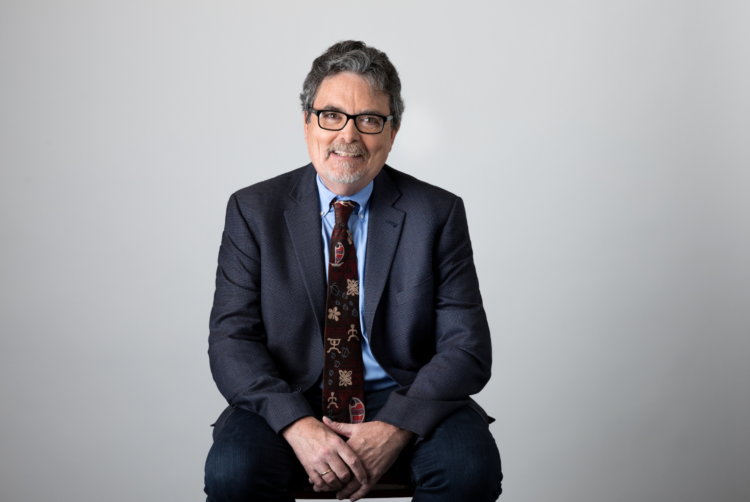
Burr Smith, Broadsign’s CEO, president, and chairman, won the inaugural Digital Transformation Award at the Out of Home Advertising Association of America (OAAA) 2026 OOH Media Conference in May. When asked how he feels about receiving the award, he doesn’t hesitate:
“Personally, it’s embarrassing,” he laughs.
“Sometimes I get picked out – and it’s an honour and a privilege to be the CEO of Broadsign – [but] sometimes I get recognised for stuff that Broadsign does.”
It’s a humble response from someone who clearly believes in the team at the software company. They have a “magical quality”, he says.
“There’s something about Broadsign where everybody inside Broadsign is better than they would be outside of Broadsign.”
Broadsign was founded in 2003 as a content management system (CMS) for what was then known as digital signage. Smith became CEO in 2014, after having been an investor since 2008.
When Smith took over, he recalls clashing with the then vice president, insisting the company needed to build on top of the CMS and go up to the demand side. Now, the global platform has more than 2.8m static and digital signs.
For Smith, it seems that change is the only constant, as he attributes Broadsign’s success to its ability to embrace that change.
“If we had just stopped and been a CMS company at that time, we might not have even survived,” he says.
“For our particular business, it’s constant change.”
AI and automation
One area where that is blindingly evident is in the rapid development of artificial intelligence. While Smith doesn’t claim to be particularly technical, he encourages the rest of his team to stay ahead of developments. As such, earlier this year the company ran its first end-to-end agentic campaign.
“We are very interested in trying to see where the technology will take us and where it will work and where it may not work as well,” he explains. “There are certain elements of the way that the money flows that we don’t think that machines do particularly well. But there are certain aspects of delivering a campaign that are very labour intensive.”
It’s those labour-intensive aspects, like structuring and responding to a brief, that Smith suggests could help make the company more efficient. He doesn’t see this development as posing a risk to jobs, but simply streamlining their processes.
The other technological development that Smith is a huge advocate for is automation. It’s a topic explored during his session on stage at the World Out of Home Organisation’s (WOO) annual summit in London last month.
For Smith, the future growth of OOH depends on making it as easy to buy as other media channels.
“Out of home needs to be traded in pretty much the same way as everything else does. It just needs to,” he says.
He describes technology as the “common denominator” between media channels. While OOH has its own workflows, he believes advertisers increasingly expect the same level of automation and flexibility they experience when buying other forms of media.
Although the industry has embraced automated and programmatic trading, adoption has been slower than many expected. Figures shared at WOO showed that programmatic digital OOH (DOOH) accounted for just 7% of total global DOOH spend in 2025.
First global measure of pDOOH spend finds $1.4bn revenue generated in 2025
Perhaps that could be in part due the market’s fragmented technology landscape. Smith explained that, over the past decade, numerous companies built competing platforms, but more recently tougher fundraising conditions – accelerated in part by the Covid-19 pandemic – have driven consolidation across the sector.
“It got harder to build a platform, to raise money for it, and lose the money that investors put in the company, so there’s increasingly been a degree of consolidation that happens inside the industry,” he says.
“As a consolidation happens, the ability to be able to, as a demand source, access audiences around the world in a more automated fashion that bears more of a resemblance to the way that most advertising is done […] That tends to pull dollars into the market. And that would be part of what I think is happening.
“The external push is to see the market become more modern, more automated, become more of what the rest of the world advertising market is like.”
Smith says the shift towards automated buying has tended to occur first in smaller, more agile markets, citing The Netherlands and Australia as examples.
Nonetheless, Broadsign is now seeing more campaigns bought directly through automated channels, including larger campaigns.
“There’s more interest coming in,” he says. “And that interest is a combination of: maybe connected TV is just a little too intrusive, maybe there’s concerns about fraud in the online world, maybe those things are beginning to get to the place where people are willing to try something different.”
Collaboration the answer to growth?
Reflecting on this year’s WOO conference as a whole, Smith has three main takeaways. Firstly, it was clear there is continued progress in the channel. Secondly, OOH is still not moving “as fast as it could”, and finally, advertising and demand sources are still interested in the sector.
“The growth is right there just for us to grasp it, but somehow we, as an industry, don’t grasp it.”
For many of the speakers at WOO, collaboration is the answer to this signal for growth. The opening keynote speech at the summit by JCDecaux’s co-CEO, Jean-François Decaux, argued that OOH leaders “have to get united” to reach their potential for growth.
Double-digit growth every year? OOH leaders ‘have to get united’, says JCDecaux co-CEO
But for Smith, this is not a new narrative for the sector.
“We go to these events periodically every three or four months, wherever they happen in the world, and everybody talks about how we really need to kickstart the industry. We need to co-operate together. We need to take action to bring the industry together and realise its potential.
“And then, no matter what, somehow when you go back, everybody focuses on what’s going on with their particular business.
“I personally think that’s a mistake because I think we have a tendency to focus on smaller things instead of the larger, most important things.”
Nonetheless, Smith acknowledges that people often get “wedded” into old systems that work for them, and notes that it is really hard to change, especially once you’ve become successful.
Collaboration isn’t the only hurdle. Measurement remains another longstanding challenge for OOH. The channel often gets lost in media mix modelling (MMMs) because they don’t have the same granular data as others. Smith described measurement as a “solvable problem”.
One initiative repeatedly referenced during the WOO summit was Route’s planned integration with Playout data, expected later this year, which aims to improve how OOH is reflected in MMMs.
Route developing integration with Playout data for use in media mix modelling
Looking ahead, Smith is excited about what’s to come and will continue to bang the drum for automation. He believes the next stage for the industry will be the unification of direct buying and programmatic, and eventually the automation of classic or static forms as well. He notes that retail channels can also expect expansion.
His final thoughts: “It’s been a lot of fun being with the company here, and it’s going to be more fun in the future.
“I can’t think of anything I’d rather be doing right now.”