



Open goals: how The Guardian brought the World Cup to life
Opinion
After 308 goals, 15 red cards and 208 hydration breaks, the final whistle has blown on FIFA’s 2026 World Cup. So with Spain taking gold from Messi’s Argentina in extra time, what did The Guardian’s ad team learn, asks Imogen Fox.
We’ve always made the case that true brand safety for advertisers is about sharing a trusted environment. That’s something that really stands out in huge moments like the World Cup, where the story is as much what happens off the pitch as it is during the games.
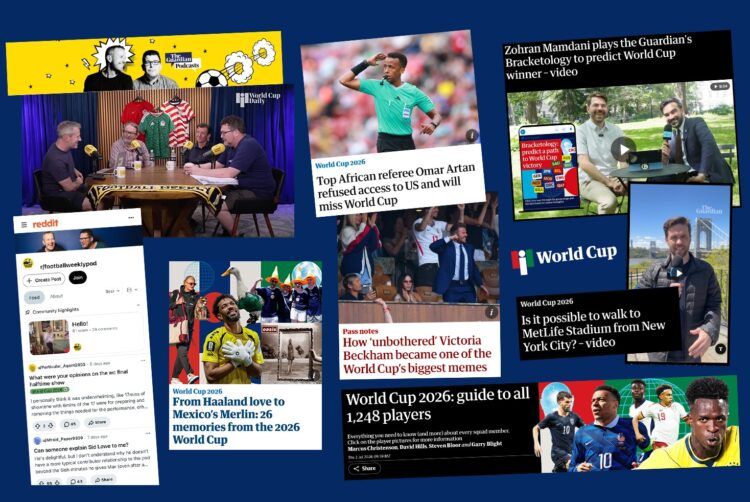
Advertisers avoiding the “news” would have missed some of the biggest FIFA World Cup moments — Trump lobbying Infantino to reverse Balogun’s red card; Mbappé calling out a Paraguayan senator’s racism; Somali referee Omar Artan being denied entry to the US.
They also might have missed viral moments, like Zohran Mamdani playing our brilliant “bracketology” tournament predictor on TikTok (sorry, Mr Mayor, Morocco didn’t win); Guardian US reporter Mark McPartland discovering if it was possible to walk from NYC to the MetLife Stadium in New Jersey (yes, if you’ve got 4.5 hours to spare); or Victoria Beckham’s “unbothered” reaction to England’s goals.
That’s because at the Guardian, we believe in telling the whole picture.
For the FIFA World Cup 2026 that meant the range and depth you’d expect from our award-winning football team. Our trademark minute-by-minute live blogs of every game (which had some fascinating second screening traffic spikes at half time — and yes, during the hydration breaks); our unmatched player guide (with details of all 1,248 players); the unrelenting Football Weekly team transforming into the World Cup Daily and breaking into US sport podcast charts for the first time.
As a modern marker of popularity, Football Weekly’s subreddit has been an unexpected success with 15,000 weekly visitors — a self-sustaining fan community who dissect every moment, including Barry Glendenning’s socks-on pool dive on TikTok.
Our belief in covering the whole picture also meant we brought our audience the surprising details you can’t plan for. Wayne Rooney’s pithy reaction to the Superbowl-style half time show (“it was crap”). Jérémy Doku juggling national duty with fatherhood. Donald Trump and Gianni Infantino being booed as the US president attempted to crash Spain celebrations.
The whole picture is a strategy that delivered not just The Guardian’s most read, most watched and most viral World Cup (overall we were up 57% on global impressions compared to the 2022 tournament) — but also our most commercially successful, with multiple global partnerships running on platform and off, across YouTube and Acast. And of course, that’s without taking any gambling ads — we’re still the only major UK newsbrand to not run any.
For O2, we took football influencer Craig Mitch to Madrid (¡Viva España!) — a great way to bring their “beautiful game in beautiful places” campaign to life. We pitched our “66” package to a couple of other advertisers (we’ll leave the financials of this one to your imagination, don’t want to give away any commercial secrets here).
In a FIFA World Cup that really was full of the whole picture of human life, we believe newsbrands like The Guardian are best placed to share it with audiences and advertisers. See you next year for the Women’s World Cup in Brazil.
 Imogen Fox is The Guardian’s global chief advertising officer.