



From scroll to sold: How AI and social have collapsed fashion and beauty’s purchase journey
Opinion
Agentic AI and social commerce have reshaped visibility and transaction, turning media into a storefront. Fashion and beauty brands are rethinking their advertising approach in this new world.
Fashion and beauty brands are collapsing the traditional marketing funnel, turning media into moments of instant commerce.
Initiative’s proprietary research reveals platforms like TikTok and Instagram are driving real-time, personalised discovery and purchase, particularly among Gen Z and millennials. With agentic AI and social commerce reshaping visibility and transaction, media is no longer just storytelling; it is the storefront.
In fashion and beauty, the path to purchase is no longer about brands carefully guiding consumers through layers of brand storytelling, product claims and careful in-store purchase.
The moment of discovery has become the moment of intent, with influencer-driven content and seamless in-app checkout crunching the journey into a matter of minutes. The average TikTok user, according to GWI research, makes purchase decisions within 30 seconds of exposure.
In this world of speed and impulse, fashion and beauty brands are having to completely rethink their approach to advertising. Media is now the marketplace, with platforms becoming integrated discovery-to-purchase ecosystems.
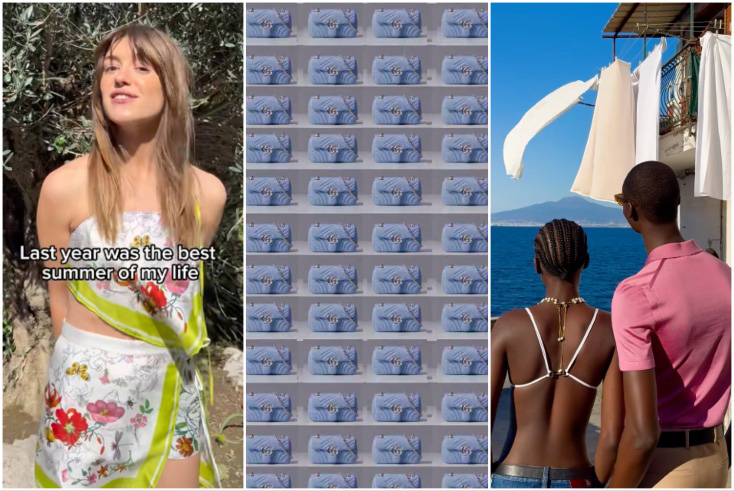
Even the traditional architects of brand and emotional storytelling are now channelling discovery into commerce. Take Gucci’s recent use of “narrative commerce” on TikTok. Its serialised content strategy is built from clips of art films and artistic runway visuals, but it is all on a fast-moving social commerce platform.
News, analysis, comment and community — Join The Media Leader
Discovery and media become one
With discovery collapsing into media, the traditional advertising hierarchy is being dissolved.
Creative is no longer layered on to media; it’s becoming part of it. Social-platform logic, AI-driven recommendation and volume culture are writing the creative script.
The moment of media placement is now the moment of emotional resonance and conversion, rewriting the traditional agency workflow. Media doesn’t just tell — it sells. As a result, fashion and beauty brands are building visibility around places that become the moment and facilitate rapid conversion.
TikTok is now the fourth largest beauty retailer in the UK (according to NielsenIQ), driven by the purchasing habits of Gen Z and millennials. In skincare, Initiative’s research of 1,000 consumers found that TikTok is the discovery platform for 50% of 18- to 29-year-olds, with 45% of them using it for browsing and 24% for purchase.
The picture is slightly different for 30- to 39-year-olds, with 42% of this cohort using Instagram for discovery and 25% for buying. Facebook comes a close second for discovery at 39%, but is higher for buying at 29%.
So just how should fashion and beauty brands respond to such massive shifts in consumer behaviour? Brands leading the charge in media innovation are binning the traditional marketing funnel. And they’re turning their backs on advertising campaigns in favour of “commerce moments” that are emotionally resonant, frictionless and platform native.
Brands are shifting their spend to real-time, discovery-driven media — where imagery, recommendation logic and commerce are native to user interaction. Discovery-driven planning means creating content purpose-built for discovery channels, such as TikTok and Instagram.
It also means shifting to search that starts visually and socially, not with keywords.
Is the death of the marketing funnel nigh? With IAB’s James Chandler
Personalisation is driving media and commerce
However, discovery-driven media is only effective when people are seeing and experiencing exactly what brands and products are right for them. In a world of discovery-to-purchase ecosystems, personalisation is critical.
The Vogue Business Beauty Index found that 75% of global consumers now demand personalisation. It’s no longer an add-on or a novelty, but an essential part of marketing, especially in fashion and beauty.
LVMH is now delivering ultra-premium, personalisation at scale through its agentic AI platform MaIA, enabling predictive pricing, content generation and hyper-tailored messaging across its 75 brands.
In media, personalisation is no longer a conversion tactic. It’s fundamentally about visibility. Personalisation is driving discovery media, with audiences now expecting brands to recognise their context, not just their category. Through AI-powered personalisation, brands are able to go beyond automating the right creative and who discovers their ads to dictating where and how they are visible.
This is all about creating the right commerce moments at scale.
Fashion and beauty brands seeking to embrace discovery and commerce moments should refocus their media strategy around AI-driven personalisation. The benefits of investing in personalisation go beyond media and advertising to creating a full ecosystem across search and discovery, personalised interactions, product recommendation, proactive outreach and other areas of marketing and business operations.
AI is changing the rules of discovery and purchase
The need for personalisation in fashion and beauty discovery is now being taken to new places with large language models (LLMs). AI is becoming the new source of discovery, with consumers increasingly using AI search and AI assistants as their first port of call for product discovery, steering away from browsing and clicking, in favour of asking.
Fashion and beauty are responding to this with a shift from generative to agentic AI. Brands are no longer just generating content at scale; they’re creating autonomous systems that navigate, recommend and transact on behalf of users. LVMH’s agentic platform is testament to this.
This is a fundamental evolution in how discovery is orchestrated and has major implications for how brands think about paid media — the unit of influence is no longer an ad; it’s an AI decision tree.
The future of branding: Influence LLMs to protect your share of market
And agentic AI is rapidly shifting beyond influence. OpenAI is rolling out new functionality to allow ChatGPT users to shop directly from their search results and a full integration with Shopify is expected soon.
With LLMs shifting from being media to transaction environments, we are seeing the increasing breakdown of traditional divides in fashion and beauty: paid versus organic, brand versus retail and search versus social.
With over 50% of beauty discovery in the UK now happening outside Google (according to Initiative’s Total unified search proprietary data), the idea of planning search as a standalone channel is obsolete.
With discovery collapsing into media, the shift from campaigns to commerce moments, personalisation becoming a fundamental driver of visibility and agentic AI emerging as a one-stop shop, the implications for fashion and beauty are seismic. We’re moving into a media ecosystem where discovery isn’t directional — it’s totally dynamic.
Pay per click as we know it is being eaten alive by shoppable, scrollable AI. Media planners must stop thinking in silos and start behaving like systems designers, ensuring every piece of content, data signal and brand asset is structured for AI-native discovery.
Discovery is the media plan now in fashion and beauty and, increasingly, it’s happening without a single paid click.
 Rachel Coffey is UK chief strategy officer at Initiative