



The HFSS opportunity no one’s talking about: Why coupons could rewrite 2026 media strategy
Opinion
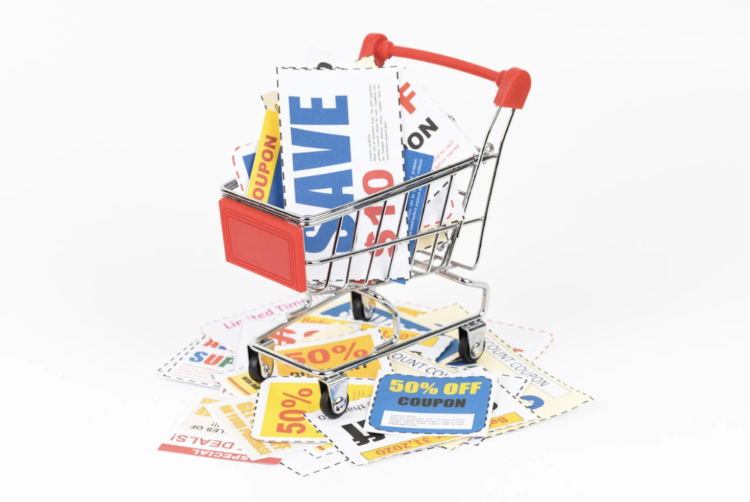
Couponing remains one of the few compliant ways for brands to put LHF products directly in front of consumers. What happens now that the secret’s out?
On 5 January 2026, the long-awaited Less Healthy Food (LHF) advertising restrictions finally came into force.
In a nutshell, product-led advertising for HFSS (high in fat, salt or sugar) products is now banned across all paid-for digital media, as well as TV and streaming services before 9 pm.
However, several channels remain either out of scope or exempt, including OOH, audio (radio and online), print, and cinema. Brand ads are still permitted, provided they don’t feature or reference identifiable less healthy products.
LHF restrictions round-up: How each media channel is impacted
Still, there appears to be one deliberate, and currently unaddressed, loophole: coupons
As things stand, no restrictions have been placed on the use of coupons, including mobile and digitally distributed formats, even when they feature LHF products.
A deliberate distinction, not an oversight
Is this an oversight? It seems unlikely.
The HFSS promotional restrictions, which came into force in England in October 2025, apply to volume-based price promotions on HFSS products. Under these rules, retailers with 50 or more employees are prohibited from running multi-buy offers or similar incentives, such as ‘buy one get one free’, ‘three for two’, or ‘50% extra free’, or loyalty point promotions linked to the purchase of HFSS products.
The regulatory focus is on limiting promotions that encourage consumers to buy more HFSS products, such as multi-buy offers or volume-driving mechanics, rather than on promotions that simply reduce the price of a single purchase, such as 20%, 50%, or £1-off discounts.
Crucially, discount vouchers and coupons, including those that offer free products, are out of scope of the volume price promotion restrictions.
The legislation is designed to curb volume-driven consumption, not to prevent consumers from accessing value on products they already choose to buy, particularly at a time when many households are still feeling the effects of the cost-of-living crisis.
By their nature, coupons operate as a price-saving mechanism applied to a single purchase, rather than an incentive to increase basket size or purchase frequency. As a result, they remain one of the very few fully compliant ways for brands to put LHF products directly in front of consumers in 2026.
Why this matters for 2026 media planning
For marketers rebuilding their media strategies, this distinction is critical.
Where TV and digital have been the go-to mediums for achieving the highest reach, and online advertising offers unrivalled targeting capabilities, brands now need to find alternative ways to fill the void. But with everyone looking to the same compliant channels, competition will increase, and costs will inevitably rise.
And whilst brand-led advertising is still permitted, the inability to feature the product itself will prove to be a significant hurdle. Particularly for medium-sized brands that don’t have the advantage of being a household name or have well-established brand assets, not to mention smaller advertising budgets.
This is where coupons have an advantage. Not only do they sit outside of these restrictions, but they also retain many of the capabilities brands are about to lose:
* Direct product visibility
* Targeted delivery to relevant audiences
* Clear attribution and measurable outcomes
* A strong value exchange with consumers
The evolution of couponing
The first step for many marketers will be a change in mindset, rethinking how coupons are classified internally. Historically treated as a promotional tool, in 2026, coupons will need to function as a core communications channel, capable of delivering reach, relevance and performance within a compliant framework.
Mobile couponing allows brands to appear in moments that matter most: when consumers are planning a shop, browsing retailer apps, or standing in-store deciding what to buy.
Our own research (savi Shopper OnePoll Survey, November 2025, 2,000 UK adults) shows that 70% of consumers would try a new product with a coupon (rising to 85% of 25–34-year-olds), and 72% have redeemed coupons on their smartphone in-store.
Digital coupons can be targeted using retailer and behavioural data, served dynamically based on shopping patterns, and optimised in real time, effectively operating as a sophisticated media channel in their own right.
Crucially, redemption remains an active consumer choice.
Driving more value from compliant campaigns
The brands most likely to succeed in a post-HFSS regulation era will be those that integrate couponing into their media planning early, invest in targeting and measurement infrastructure, and treat it as a strategic lever rather than a last-minute workaround.
Consider the iconic Cadbury’s Gorilla advert, a perfect example of well-executed brand-led advertising, long before the current regulatory landscape. Reimagined today, that same creative could remain fully compliant while driving conversion by incorporating a QR code linking to owned channels and a mobile coupon that encourages purchase or interaction.
For brands navigating HFSS restrictions, the opportunity lies in using compliant channels to build brand reach, then layering in coupons or vouchers to drive conversion, capture first-party data and measure ROI.
Channels that work particularly well in this context include:
- Organic social media and owned website environments
- In-app placements
- CRM and direct communications
- DOOH
- In-store POS (within regulatory limits)
Used together, these channels, supported by couponing, can continue to drive awareness, trial (including for NPDs) and meaningful consumer engagement, while providing valuable insight into where, when and how shoppers respond.
Coupons may not be the loudest channel in the mix, but in 2026, they could quietly become one of the most effective.
 Amy Hawksley-Blackburn is head of sales at savi