



Mass media is a museum exhibit – rare and priceless
Opinion
Super Bowl ad spots are one of vanishingly few moments when an advertiser can still reach everyone, everywhere, all at once. The messaging was from a different era too, writes Chris Herbert-Lo.
My secondary school maths teacher, Mr Kite, had a favourite phrase I remember long after forgetting how to sketch a sine wave: ‘It’s the exception that proves the rule.’
The phrase, of course, means when you find yourself pointing out an exception, you’re quietly admitting there’s a rule everywhere else.
Last month I wrote about how media fragmentation means popular culture forms differently. That was once a time when a small number of media gatekeepers decided what everyone watched, discussed, and bonded over (or argued about); things are now very different.
A couple of weeks later, the Super Bowl proved the point perfectly by behaving like a museum exhibit.
The media exception which proves the rule
The cost of a Super Bowl ad once again made headlines: now roughly $10m for 30 seconds. NBC reportedly sold the spots faster than ever, prompting further widespread amazement.
Mark Ritson neatly summarised the economics: “In 1967, a Super Bowl commercial cost $42,500. Adjusted for inflation, that would be about $383,000 today. Prices have doubled in the past decade alone. This is not a market keeping pace with the economy. This is a market on fire.”
Why? Because the product is not just rare but genuinely finite. Like the works of a dead artist, no new supply is coming. There will be no fresh Super Bowls added to the calendar to meet demand. There will only be more bidders.
Super Bowl ad spots are one of vanishingly few moments when an advertiser can still reach everyone, everywhere, all at once. Not sequentially or across multiple sites, not via algorithmic inference, but simultaneously.
There may be a handful of similar moments left; we have a FIFA World Cup this summer after all, but even there, I doubt advertising will play such a role in the event (when promoting its feed of the event, DAZN called out that it is the only place a UK viewer could view ‘all the iconic ads’).
Super Bowl spots are the exception that proves the rule: Instantaneous mass reach in paid media is no longer normal. It’s now a valuable antique, an irreplaceable work of art. Which is exactly why demand and prices are so high.
The messaging, which dates from a different era
If the economics tell one story, the creative tells another just as revealing.
Trade press noted the heavy use of nostalgia in this year’s ads, while social media joked Super Bowl commercials seem to follow the brief: ‘Hey, remember this thing, yeah, us too.’
Nostalgia in Super Bowl ads ultimately means referring to a time before the shattering of shared popular culture. In terms of when that era was, only a fool would place a date on the moment popular culture broke into pieces, but it was probably somewhere between 2008 and 2014.
Across the years leading up to that period, the seeds of Web 2.0, the iPhone, and high-speed home broadband were sown. Between 2008 and 2014, they took root and flourished, allowing people to curate media around them rather than all having to watch and read the same thing.
The reaction of film studios over the period shows the effect on popular culture. Movies are expensive, and global hits require global agreement. Once everything fractured, studios had to seek safety in stories and characters which predated the split. Hence, the relentless turn to franchises, sequels, remakes, and cinematic universes is as much a lifestyle commitment as a film series.
In 2000, sequels accounted for around 10% of revenue among the top 100 films. By 2015, it was nearly 50%. This isn’t creative bankruptcy so much as wise risk management in a world where shared reference points can no longer be assumed.
Super Bowl advertisers face the same logic. When you’re spending $10m on half a minute, and in a unique position to be reaching the masses simultaneously, ‘will everyone broadly get this?’ becomes a fairly important question.
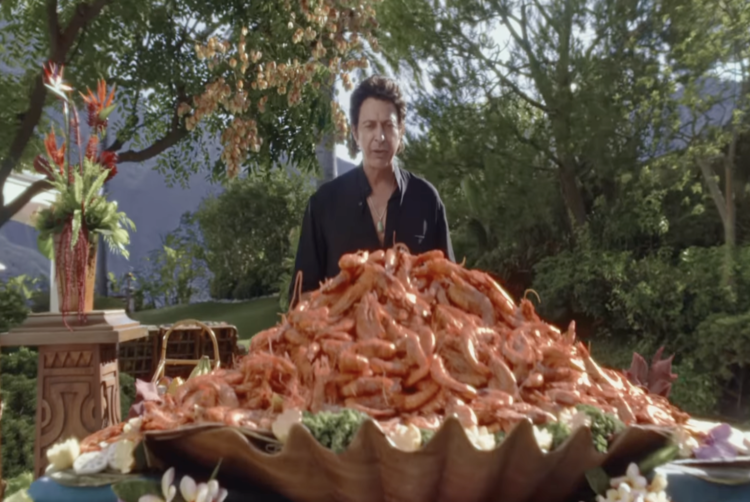
Cue ads set in Jurassic Park and referencing Good Will Hunting (with nods to Seinfeld, Friends, Cheers and The Fresh Prince). And ads featuring iconic songs such as ‘Sweet Caroline,’ ‘Living On A Prayer,’ and ‘I Will Always Love You.’ Music, not chosen because it’s fresh, but because it is universally recognisable.
Embrace moments of mass
We live in a golden age of media abundance, where highly impactful formats can be targeted with extraordinary precision. That is not a downgrade; it is simply a different system.
But when genuine mass moments do still appear, and the exception briefly reasserts itself, they should be recognised for what they are. Scarce, powerful, and increasingly valuable.
 Chris Herbert-Lo is a strategy partner at the7stars. Read his new monthly column for The Media Leader on the first Tuesday of each month.