



More than a moment: Why women’s sport is becoming a media value story

Opinion
Women’s sport is not only becoming more visible, but that visibility is increasingly translating into commercial value. This progress should be understood as an invitation, says Women’s Sport Trust’s Tammy Parlour MBE.
In 2025, women’s sport in the UK hit a new visibility milestone. Total broadcast coverage surpassed 10,000 hours for the first time, delivering a record 397m viewing hours and reinforcing women’s sport as a mainstream audience draw.
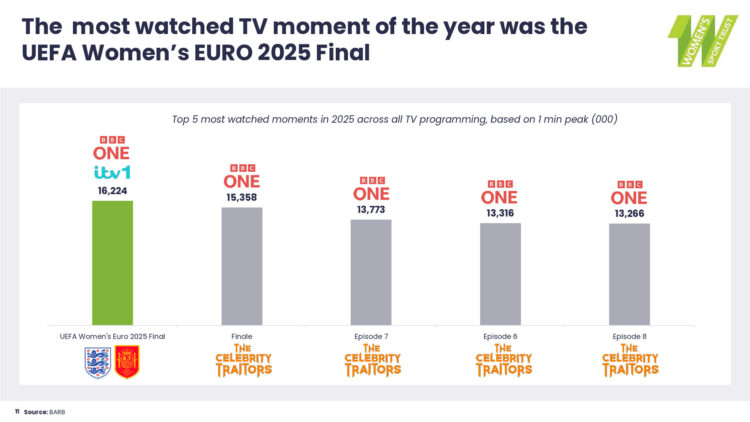
Standout moments like the UEFA Women’s EURO final drew a peak audience of 16.22m across BBC and ITV, the most-watched broadcast of the year across all UK television programming. Whilst overall reach for women’s sport climbed to a new high of 48m viewers.
These figures signal a shift in how women’s sport is performing in the media marketplace. The next challenge is converting that growing attention into greater measurable commercial value.
Visibility is high, but investment logic must keep pace
Record audience numbers point to growing commercial momentum in women’s sport. Developing audience habits, however, depends on factors such as high-quality production, an exciting on-field product and consistent, accessible scheduling.
Prime-time coverage of women’s sport is increasing, rising from 6% to 8% over the past year. That progress is encouraging, particularly as that 8% is already delivering 13% of prime-time sports viewer hours. In an already crowded sports calendar, expanding that premium visibility remains one of the sector’s key challenges.
For media owners and advertisers, the numbers signal something powerful: women’s sport can deliver disproportionate audience impact relative to the airtime it receives.
That gap highlights a clear commercial opportunity, where incremental investment in premium coverage can unlock additional audience scale and sponsorship value.
Done well, increased coverage builds repeat audiences rather than short‑term spikes in attention, strengthening long‑term commercial returns.
Audience behaviour is evolving and brands should take notice
The latest visibility report also suggests that women’s sport is increasingly consumed as part of broader viewing habits, rather than as a niche interest. Cross-sport engagement is growing, with more than half (55%) of Barclays Women’s Super League viewers also watching the Premier League, and similar crossover patterns happening across other sports.
At the same time, women’s sport continues to broaden the sports audience; it can also attract higher proportions of female fans and reach viewers who may engage with sport differently from traditional men’s sport audiences.
For brands and agencies, this combination is powerful. Women’s sport sits within mainstream sports consumption while also expanding the audience base, creating opportunities to reach both established sports fans and new demographics in ways that traditional sponsorship models have struggled to achieve.
Digital platforms: Expanding visibility beyond broadcast
Beyond traditional broadcast, digital engagement is surging. In 2025, top women’s sports leagues and properties saw faster growth in video views on platforms like Instagram, YouTube and TikTok than the top men’s equivalents.
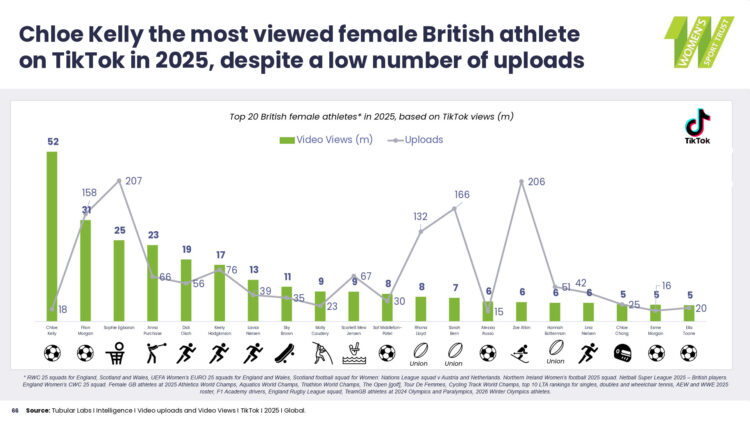
Arsenal Women, for example, became the most-viewed global women’s club on Instagram, while athletes like Chloe Kelly achieved tens of millions of views across social platforms.
These platforms are becoming an increasingly important layer of visibility around women’s sport. For sponsors, they offer opportunities not only to amplify brand exposure but also to build campaigns around athletes, communities and shareable content that can deepen fan connection over time.
The commercial case for sponsors is stronger than ever
In addition, data from Women’s Sport Trust’s Consumer Report in July 2025 shows that commercial returns on sponsorship are real and measurable:
* Roughly 30% of consumers view companies that sponsor women’s sport more favourably (versus 20% for men’s sport).
* Nearly 10m UK consumers say they are more likely to buy from brands that invest in women’s sport.
These metrics point directly to brand affinity and purchase intent, both of which matter to advertisers. At a time when emotional connection and purpose shape consumer choice, women’s sport offers brands a culturally relevant platform.
What this means for brands and media agencies
To capture the commercial potential emerging across women’s sport, several strategic themes are becoming clear:
Long-term presence matters: Audiences build habits when coverage extends beyond major events and into consistent domestic competition.
Digital content ecosystems are becoming central: Social platforms and athlete-led storytelling increasingly shape how fans engage with sport and brands.
Measurement is evolving: Alongside reach, indicators such as engagement, sentiment and purchase intent are becoming key measures of sponsorship impact.
Collaboration across the ecosystem is critical: Rights holders, broadcasters and brands all play a role in building visibility that strengthens audience connection over time.
Visibility is an invitation, not a finish line
Women’s sport is not only becoming more visible, but that visibility is increasingly translating into commercial value. Repeat audiences are forming, crossover viewing is growing, and digital engagement is accelerating alongside broadcast coverage.
However, this progress should be understood as an invitation rather than a conclusion.
For media owners, agencies and brands, the choice now is whether to convert that momentum into structured, long-term investment that strengthens audiences and builds sustainable markets.
For sponsors and advertisers looking to capitalise on the momentum behind women’s sport, the opportunity comes with a responsibility: not only to invest in standout moments, but to help build the systems that sustain them.
 Tammy Parlour MBE is the CEO & co-founder of the Women’s Sport Trust