



‘We’re trying to get away from campaign thinking’: Studio B’s Olly Lewis on how brands can go always-on in the microdrama era
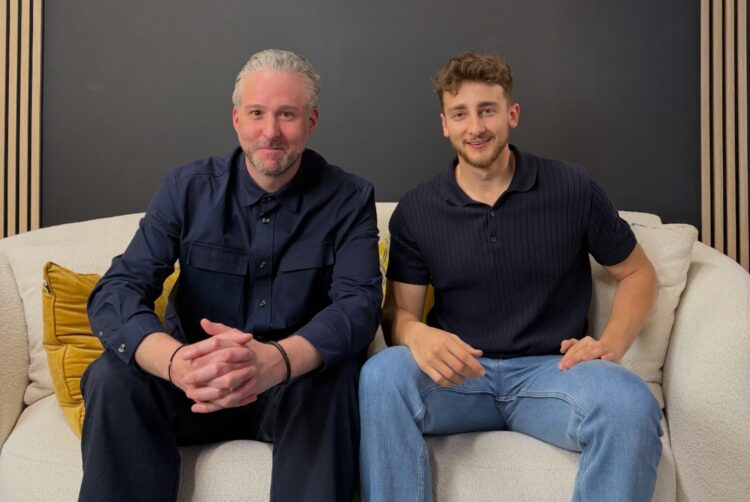
The Media Leader Interview
The independent creative studio’s SVP and head of agency discusses how microdramas are becoming the future of IP development, and why brands should get involved.
The next iteration of the creator economy is creator-owned and creator-backed businesses.”
In March 2019, before the pandemic and amid the initial rise in popularity of short-form video, first driven by TikTok, Oliver Lewis founded The Fifth, an influencer marketing company within News UK.
The firm billed itself as delivering “culturally fluent” influencer marketing and social strategy solutions for brands, including YouTube, UKTV, Fox Entertainment, and The Times. Late last year, the Murdoch-owned publisher sold the outfit to Brave Bison social agency SocialChain, where it was incorporated as its dedicated influencer division.
By January, Lewis, who also co-founded and co-chairs the UK’s Influencer Marketing Trade Body (IMTB), was looking for the next challenge. His bet: “The entrepreneurial flair that creators have to build businesses, the innate understanding they have of making that shift from advertising to entertainment, is the sweet spot.”
In April, he joined Studio B, the independent creative studio founded in 2022 by Brandon Baum, better known as Brandon B, a 27-year-old YouTube personality who specialises in visual effects.
Baum counts over 16m subscribers on the platform. One of his short-form videos — “POV: Everything is POV” — has received over 370m views, though most average a more modest 1m to 3m.
Speaking to The Media Leader, Lewis describes Brandon as a “typical young creator who has built and amassed a huge following” first on YouTube and later across other social media accounts (he has 4.9m followers on TikTok and 2.1m on Instagram).
The production studio began as a way to support VFX development on his channel, but as Lewis describes, it began attracting attention from brands at the C-suite level, many of whom have sought to learn how to “think like a creator” to improve brand activations in online spaces, particularly as the platforms transformed away from friends-and-followers social experiences to focus on algorithmically served snackable entertainment.
As Studio B’s SVP and head of agency, Lewis’s new role is to transition the studio from a production outfit to “a more holistic creative studio” that connects media strategy through creative and measures commercial impact.
“Our thesis on this is marketing will shift to not just be about campaigns that decay and expire, but about creative systems that build momentum,” he says. “We’re trying to get away from campaign thinking and into always-on thinking.
“We’re basically bottling what Brandon has done to build his own channel and taking it out to clients. […] You can call it branded entertainment, entertainment ecosystems, but ultimately, what we’re doing is helping clients build worlds and more of an always-on, sustained ecosystem for their content. And although it’s very much socially led and built around driving the algorithm and cultural relevance, I think over time we see it moving through channels and IRL even.”
‘Brandon’s North Star is to build a theme park’
Can IP that begins on social video become the next big cultural touchstone? If this month is anything to go by, then absolutely. Two acclaimed horror films, Obsession and Backrooms, are out in May (Obsession had its opening last weekend) and both are directed by YouTubers, based in part on web series they first developed on the platform.
This represents the ultimate entrepreneurial goal for creators and, Lewis argues, for brands. Popular shows on platforms can be sold to streaming services, broadcasters or film studios, growing further in popularity. This can then lend itself to merchandising and other opportunities; a new flywheel for a new era of media consumption, one in which brands can get in on the ground floor.
“Brandon’s North Star is to build a theme park,” Lewis says, chuckling at the audacity of the goal. “Now, it sounds crazy, but our studio is investing in original IP. Everything I’m doing is funding our original IP. I’m bringing the money in from clients, and we’re going to build our own franchises.
“We’re building IP for our brand partners as well, but our thesis is our modern IP will be built out of YouTube, it will be creator-owned, and we’ll bring it to the real world. The new Disney theme park will be a B theme park. That’s the idea. We’re on a 10-year journey to prove that.”
‘Misaligned expectations’ between brands and influencers hamper creator economy
The challenge is how to accomplish this when content creators do not own their audiences nor control how their content is distributed to them on platforms. When asked whether fickle algorithms create hurdles for creators trying to remain popular and build long-lasting IP, Lewis is nonchalant, electing to see concerns around discoverability as a skill issue.
“A lot of the reason that content gets lost is people aren’t creating channels and destinations [on YouTube] in the way they should,” he argues. “Brands and broadcast media channels are pushing too much content into a single destination, thinking they don’t want to fragment audiences, but that is the wrong approach, in our view. I think you can create more reliable closed communities around particular genres or around particular audiences, and you shouldn’t be afraid to fragment those [bigger] channels. It’ll help with discoverability, but it’ll also create destinations.”
For brands, Lewis advises this same approach can be followed for branded content. Having dedicated destinations for the content they’re helping to create would mean marketers can “start owning the entertainment franchises of the future instead of just trying to build everything off their brand narrative.”
When asked whether short-form branded content is a medium that all types of brands can thrive within, given its ephemerality, Lewis responds: “We need to stop buying attention and start earning it. The way in which we’re now consuming and expecting our brands to show up is not about interruption; it’s about adding value to that culture, that audience, that experience.
“We see brands as the future storytellers and actually the funding model for the film and broadcast industry more broadly.”
Current Studio B clients include Google, Snap, Virgin Media O2, Adobe, Netflix, Manchester City, and Lego, all of which are direct relationships. To produce original shows and branded work, Studio B has a 10,000-square-foot soundstage and production studio in Mill Hill East.
“We have our own workshop, our own crew, we’re building modular sets for always-on microdramas,” Lewis says. “It’s almost like a microdrama factory.”
Are microdramas the next entertainment frontier?
Microdramas first became popular in 2018 on ByteDance’s Chinese variant of TikTok, Douyin. The bite-sized serialised shows are typically designed like soap operas, with touch-and-go formats and sensationalist plotlines that are meant to be accessible to users even if they haven’t watched prior episodes.
While the short-lived short-form streaming service Quibi closed after failing to meet subscriber targets, the format, which remains more popular in China (nearly half of the country’s population has viewed a microdrama, according to a report by The New Yorker), is poised to become more common globally as more established media moguls have begun investing in specialist microdrama studios.
Last autumn, Fox Entertainment took an equity stake in microdrama company Holywater. Separately, former Miramax CEO Bill Block launched GammaTime, a microdrama app backed by Kim Kardashian, Kris Jenner, and Reddit co-founder Alexis Ohanian.
According to Lewis, platforms, too, are building out their capabilities to support microdrama productions. “The problem is the feed becomes interrupted by so much other content, you can’t follow the story,” he acknowledges. “The craft of it is that every one of those 90-second, two-minute episodes needs to have a story arc from hook to tension to resolution to cliffhanger, so you can pick it up from anywhere.”
Funding models have thus far come primarily via micropayments and subscription offerings rather than advertising, but Lewis believes an ad-funded model can be sustainable. Audiences responding positively to the microdrama format are beginning to diversify after early growth was generally driven by older female audiences.
“We’re getting to the point where, because of the hooks and the way it’s set up, you get a dopamine hit in such short bursts, and you’re doing it on your commute to work, and before you know it, you’ve sunk £50 to £60 into a feature,” Lewis says. “That’s why these studios are greenlighting pilots.”
Microdrama series typically comprise around 60 episodes, each lasting between 90 seconds and two minutes. Studios typically pilot the first five to 10 episodes of a given programme; Studio B can shoot this over the course of two days on its production lot.
Part of the appeal of this pilot process is that it’s cheaper than TV pilots, and audience reaction on platforms is more immediate, turning early fans into test audiences that drive more immediate feedback loops on story and character development.
For every 10 shows piloted, Lewis estimates that Studio B will greenlight development of three or four. “It can be fast, and it’s not that expensive,” he says. “You’re not talking about sinking seven-figure investments into these pilots. It’s in the hundreds of thousands. And therefore if there’s a brand backing it, even better.”
‘YouTube-out’ strategy
While Studio B’s ultimate goal is to create short-form IP that is ultimately a big enough cultural hit that it becomes a long-form product (one that you can build a new Magical Kingdom around), Lewis is clear that more than any other platform, the birth of that IP will be on YouTube.
“We think it’s YouTube-out,” he says. “YouTube is the platform from which you can build cultural resonance, pilot these shows.”
When asked what gives YouTube the upper hand relative to its social video competitors or other, more traditional players, Lewis points to YouTube’s audience scale and growing viewership on TV sets, giving creators the opportunity to “push into the living room.”
Creators, Lewis believes, are uniquely placed to develop microdramas because of their experience in the format relative to more traditional entertainment executives who have cut their teeth in streaming or linear broadcast. Baum is highly formulaic in how he scripts his videos, and that expertise in understanding what resonates not just with audiences but with algorithms has unique value, Lewis argues.
“Everyone talks about the first 10 seconds or 30 seconds,” he says, referencing a 45-minute conversation he had with marketers from Lego about how to optimise content for short-form video. “It needs to literally be the first frame. How do you set up all the different conflicts, resolutions, and questions you need to get answered?
“We A/B test so much, and [Instagram’s] Trial Reels have been really useful for doing that, but the team have crafted an idea of how the first frame works over the last five years. It literally is the difference between a complete flop and a viral hit.”
What YouTube sees that you don’t: The future of media is a system, not a bunch of channels
A blind spot, however, is how the success of these shows — including branded content — is measured. This year, YouTube moved to effectively block channel-level measurement efforts by the UK TV joint industry currency, Barb. But brands, Lewis says, haven’t yet raised concerns about the veracity of audience measurement on the platform.
“We are probably going to have to develop into that space,” he admits. “There isn’t a ratings system yet. Maybe it’s where we need to go. But we’re not being pushed on it.”
As for his own KPIs, Lewis declines to provide specific commercial goals for his first year at Studio B, though he states he has “double-digit growth ambitions” for the creative studio and wants to “prove the model” by evidencing length of engagement with Studio B-produced content.
He adds: “What we want to do is become the destination for scripted branded entertainment.”