



‘We are platform agnostic’: The company betting on creators as media businesses
The Media Leader Interview
Creators are starting to realise that they hold the cards because they hold the audience, and that’s the thing that ultimately turns on the taps for revenue.
For Everywhere, a commercial partner for creators that launched last week, success looks like one thing: becoming “the most trusted creator media company in the world”.
That is a bold ambition at a time when trust in advertising and social media is increasingly under pressure. The most recent IPA TouchPoints survey found that almost 80% of UK adults are concerned about misinformation on social media. The ASA meanwhile launched a public awareness campaign in August to improve trust in advertising.
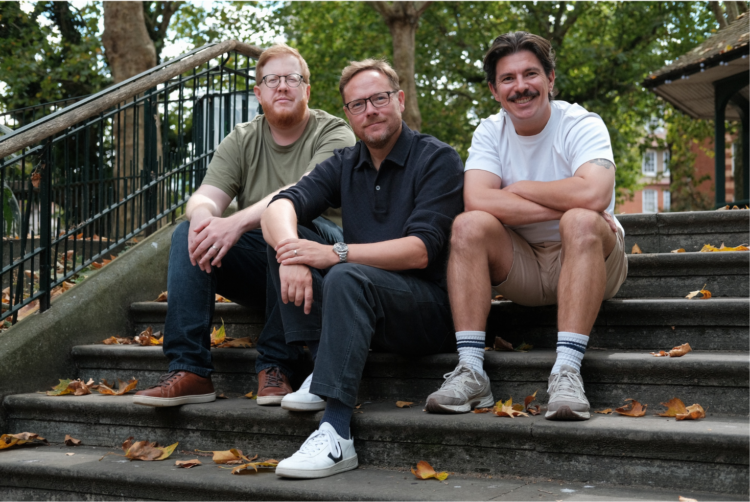
Yet that may be the gap Everywhere can fill. The company’s three co-founders, Andy Goldsmith, Craig Eastwood, and Mike Wooller, have watched the creator economy mature and believe a curated network of creators can offer brands a more trusted way of working with talent whose value comes, in part, from the parasocial relationships they have built with their audiences.
The company wants that trust to run through the entire process – from brands trusting creators, to audiences trusting the sponsored content that Everywhere hopes will feel “relevant, useful or, at the very least, entertaining”. It focuses on longer-term partnerships rather than one-off messages, aiming to make brand relationships feel more genuine.
Trust isn’t the only thing central to Everywhere’s proposition; it also focuses on representing creators across platforms, rather than restricting them to a single channel.
The company describes itself as a commercial partner for today’s multi-platform economy, with its three founders arguing media should approach creators as media businesses whose audiences move across YouTube, TikTok, podcasts, newsletters and live events.
“The media industry has always been obsessed with channels and channel buying,” says Goldsmith. “Our vision is to make that a very seamless process.”
Channel fragmentation
The idea behind Everywhere emerged partly from the founders’ experience of working in podcasting, where the relationship between content, talent and distribution has changed rapidly.
Goldsmith and Eastwood previously worked at podcast network Adelicious and Audioboom, while Wooller has held roles at the BBC, Acast, Global and DMG.
“What we’ve all seen over the last few years is that content now drifts between platforms,” Goldsmith explains. “More and more often, the creator doesn’t see themselves as just one thing. They’re making exceptional content, and it’s being pushed out and captured by audiences everywhere – hence the name.”
The agency’s proposition is built around a frustration that has become increasingly familiar across media: while agencies and publishers organise themselves around individual channels, audiences do not consume media the same way.
Gamechangers: Fragmentation is at the heart of the challenges facing the media industry
Goldsmith says he saw that frustration from both creators and brands, particularly as creators have started to move towards a media business model and viewing their content as part of a wider ecosystem rather than something confined to a single platform.
“[Creators] see these platforms as vehicles to put their content out and create amazing relationships with audiences,” he says.
“I think we’re now hitting that sweet spot. Creators are booming, and the opportunity for brands to step into this is becoming very real.”
Everywhere is looking to work with creators at the “tipping point of effectively becoming a small media business”, Wooller says. Its network will be invite-only, focusing on vetted, brand-safe creators with sizeable audiences and content “that does something for the world, rather than just posing”.
The company wants to work with creators who benefit from a sales function but don’t necessarily have the resources to bring one in-house.
“We’re not aiming to be the biggest network in the world. We want to work with quality creators who make amazing content that we can genuinely help,” he adds.
Creator authenticity
Commercialising the relationship creators have with their audiences can be challenging, as they must balance sponsored work with maintaining the authenticity that made those relationships so valuable in the first place. Eastwood argues it doesn’t help when an audience follows a creator across several platforms only to be “bombarded” with different sales messages from different advertisers.
Long-term, multi-platform campaigns, he argues, can make the relationship feel more sincere because audiences “can see that the creator is genuinely invested in that brand”.
While Everywhere will still offer the option for a one-off buy, the focus is on longer-term partnerships in which creators are perceived to be genuinely endorsing the brands they work with.
For these partnerships to last, Wooller also believes brands need to be less prescriptive about the content itself.
“The creator owns the relationship with their audience,” he says. “They often know how best to get your message across to that audience in a way that’s going to be most effective.”
For advertisers, that requires trust in the creator. While brands should be clear about their objective, Wooller argues they should allow creators greater freedom over how the message is communicated.
The challenge for creators remains in balancing the advertiser’s commercial objectives with the authenticity that makes their audiences trust them.
Measurement concerns
Measurement is another challenge facing the creator economy, particularly as campaigns are increasingly run across multiple platforms.
Each platform has its own definitions and metrics, and those standards can change, making it difficult for advertisers to determine success. YouTube, for example, recently redefined what it classifies as a view.
Fewer than one in 15 pieces of creator content delivers both audience engagement and ROI
For Everywhere, it isn’t necessarily about engagement or reach, but about impact.
Eastwood explains: “Our aim is to work with advertisers to look at actual delivered performance that connects back to business outcomes, rather than just what’s reported by the platforms.”
Goldsmith adds that Everywhere plans to work with partners on qualitative studies during its first few months, aiming to build case studies around cross-platform measurement and impact.
That evidence will be important if creator media is to compete more directly for budgets traditionally directed towards legacy media, like TV, radio, and OOH – something Goldsmith acknowledges will be inevitable.
The creator economy and traditional media
That competition between creators and traditional media does not necessarily mean the two will remain separate.
Eastwood points to two examples of where they are beginning to overlap. Radio 1 is increasingly turning to creator talent for its line-up, while The Grand Tour replaced its original presenters with YouTube creators Thomas Holland and James Engelsman, alongside TikTok personality Francis Bourgeois.
However, Wooller notes it’s not entirely new. He recalls Radio 1 hiring YouTubers Dan Howell and Phil Lester in 2013 to host a regular Sunday evening show, which ran for more than 18 months.
Nonetheless, the creator economy has grown hugely, with individual creators able to build audiences that rival or exceed those of established media brands. Traditional media is therefore beginning to look to creators to help reach younger audiences.
As a result, Eastwood says Everywhere will not rule out working across those legacy channels either.
“The core things for us are podcasts, YouTube, social, events, newsletters, and things like that. But we’re not ruling out TV, we’re not ruling out radio, we’re not ruling out whatever gets invented in three years’ time.
“We are platform agnostic in that sense. Where the creator goes, that’s where we want to help them monetise their audience.”
What’s next for the creator economy?
“I think the next thing is already happening,” argues Goldsmith. “A media brand used to start with the content, and then you’d find talent to sit around that content. Now, the creator sits at the very heart of it.”
He believes that shift is only set to accelerate, with established media brands increasingly using creator talent to strengthen their own relationships with audiences, and creators’ own media businesses becoming more valuable.
Disney+’s Overlap deal exemplifies creator-led football gold rush
Wooller also sees another development: professionalisation. He argues it will be more common to see creators building these media businesses, citing MrBeast as the most obvious example.
“It used to be that you needed Radio 1 to build an audience,” he says. “Now Radio 1 needs the audiences of these creators to bring younger audiences in. It’s completely flipped.”
That suggests a significant change in the balance of power between talent, platforms, publishers, agencies and advertisers.
“Creators are starting to realise that they hold the cards because they hold the audience, and that’s the thing that ultimately turns on the taps for revenue.”
Eastwood adds that the industry must remain adaptable to the possibility of a new platform or channel which could come along and “potentially dwarf everything”.
It reinforces the central argument behind Everywhere: if platforms and channels keep changing, the creator and their audience may become the biggest constant.