



A week is a long time in TV, let alone Donald Trump’s America
Opinion
From Jimmy Kimmel’s suspension to reinstatement, the US’s first amendment is under fire as business interests appear to take precedence.
Barely a week ago, things seemed bleak for media freedom and freedom of speech in Donald Trump’s America.
It was almost as if the first amendment of the constitution protecting such things has been secretly pensioned off.
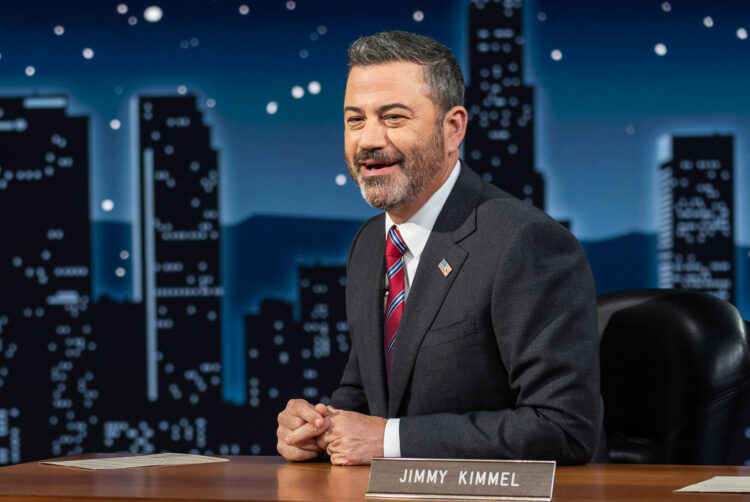
Of course, the big headline was Disney-owned ABC’s decision that Jimmy Kimmel Live! would be “pre-empted indefinitely”.
The reason given was Kimmel’s “ill-timed and thus insensitive” remarks about the murder of Charlie Kirk, most likely by Tyler Robinson.
Kimmel’s “pre-emption” followed CBS’s cancellation of its own late-night host Stephen Colbert, who called the suspension of Kimmel’s programme “a blatant assault on freedom of speech”.
The suspension had been accompanied by threats from Trump that broadcast licences could be at stake — a line echoed by the chairman of the Federal Communications Commission, which does indeed have the power to remove broadcast licences.
That organisation also has the task of approving or blocking media mergers. Just by chance, Disney is right now seeking regulatory approval for ESPN’s takeover of the NFL Network.
Notably, Nexstar, which operates a significant number of ABC stations across the US, had already announced that it was pre-empting the show. Nexstar is currently trying to acquire rival Tegna — a process that also requires regulatory approval.
News, analysis, comment and community — Join The Media Leader
UK perspectives
After the shooting of Kirk, a form of secular canonisation was rapidly under way. Many outsiders, while deploring his brutal killing, will find such hero worship strange.
Kirk has compared abortion to the Holocaust, argued that gun deaths in the US were worth it to protect the second amendment and said the Civil Rights Act of 1964 was a mistake.
Naturally, The Sun’s Harry Cole was of the opinion that the legacy of Kirk would keep the US free. He also attacked that country’s mainstream media because they “want you to remember who the real victim in all this was: left-wing multi-millionaire TV host Jimmy Kimmel”.
Obviously, the Daily Mail had its own unique perspective, saying that Kirk’s alleged killer may have been motivated by a misguided desire to win back his trans lover, who had apparently been flirting with another man.
It seems a bit obscure as motivations go, but at least the Mail did not jump on the Trump-Maga bandwagon that sought to blame the murder on left-wing conspiracies.
Certainly, Kimmel did not mince his words on the tragedy, accusing the Maga movement of “working very hard to capitalise on the murder” and desperately trying to characterise Robinson “as anything other than one of them”.
We now know Robinson was registered as an independent, although his parents and family were Trump supporters.
Kimmel went on to share that, when Trump was asked how he was holding up after the death of his friend, the president started talking about his White House ballroom project. Kimmel quipped that Trump was at the fourth stage of grief: construction.
The host may have been a tad insensitive, but his remarks were largely true.
And that is not even the point. The first amendment overtly protects speech that some may find insensitive or offensive.
Thoughtful conversations
Quite apart from threats to broadcasters, Trump is now regularly saying it should be illegal to publish things he disagrees with and has already launched mega-billion lawsuits against The New York Times and The Wall Street Journal.
Then, on Tuesday night, as if by magic, Kimmel was back — although Nexstar and Sinclair, the other major operator of ABC stations, are still not taking the show.
Disney said the decision had come after “thoughtful conversations” with Kimmel. That’s their story and they’re welcome to it.
Others might think there were other factors involved. The $5bn wiped off its share price as a result of the row may have had something to do with it.
Likewise, hundreds of condemnations from the entertainment sector, many saying they would not work for Disney again, may have caught executives’ attention.
The fact that customers have been queuing up to cancel their Disney streaming subscriptions and Disney chiefs have been publicly named and shamed might also have had something to do with it.
It would have been good if Disney executives had some thoughtful conversations of their own and apologised for kowtowing to an out-of-control president. They could also have said in the future they would defend the first amendment and see members of the Trump administration in court if they tried to abuse their powers.
In the absence of the above, all we can do is praise those who used their corporate, commercial and consumer power to hold Disney — and, by proxy, Trump — to account.
‘Does Donald Trump approve of my media plan?’ How advertising is getting politicised
Not all bad news
It could well be a turning point in the US’s defence of the first amendment — something that used to attract envy from journalists and media organisations in countries such as the UK.
Television rows can be blown up in a moment and, even in the Kimmel case, almost as rapidly resolved. The courts, unfortunately, take time.
But the signs are good this week. Trump’s case against NYT looks as if it is going nowhere and the lawsuit against WSJ over Trump’s bawdy birthday greetings for Jeffrey Epstein seems certain to be thrown out.
For now, there is more work for Kimmel and Colbert. They have to get their teeth into the latest Trump madness.
Is there anything more hilarious — if it wasn’t so potentially damaging — than the man who suggested injecting bleach as a cure for Covid now claiming to have found paracetamol causes autism?
The full power of the first amendment should be used to laugh such unscientific claims out of court.
 Raymond Snoddy is a media consultant, national newspaper columnist and former presenter of NewsWatch on BBC News. He writes for The Media Leader on Wednesdays — bookmark his column here.