



Five items in Andy Burnham’s media in-tray
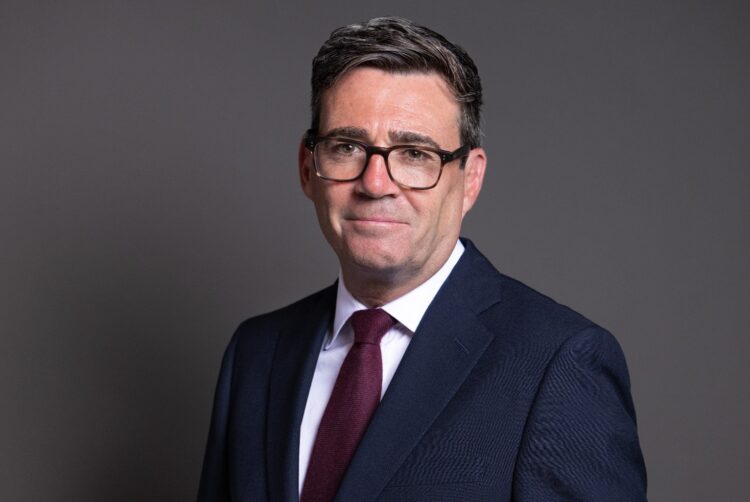
Andy Burnham has become the UK’s seventh prime minister since 2016. He inherits a UK media industry in flux, simultaneously challenged and bolstered by American tech giants that have grown to dominate British advertising expenditure.
Burnham is the UK’s first PM to have served as culture secretary, under Gordon Brown from January 2008 to June 2009. In the role, Burnham sought to “even up” the regulatory imbalance between the web and television, a concern that remains unresolved 17 years later, and launched the second inquiry into the Hillsborough disaster.
Burnham also has an additional connection to the media industry: his wife, Marie-France van Heel, is a marketing executive. She held roles at Sky, was involved with logo designs for the BBC and England Rugby, and previously worked as chief strategy officer at creative agency Heavenly. More recently, she has worked as chief marketing officer of Iduna, a firm that notably owns large parts of Manchester’s electric vehicle charging network.
Stephen Woodford, CEO of the Advertising Association (AA), congratulated Burnham on his appointment and expressed optimism over his résumé.
“Having previously served as culture secretary and championed advertising and the creative industries as Mayor of Greater Manchester, he has shown that he understands our sector is not just a cultural asset, but a powerful, nationwide engine of economic growth,” Woodford said.
He continued: “As Prime Minister Burnham begins his mission to deliver good growth across every postcode, we stand ready to partner with his government. Key to delivering our sector’s full potential is an evidence-based policy environment that drives competition and maintains the UK’s global position as an advertising superpower. To that end, we need government to promote innovation, protect our world-class self-regulatory system, and reform the Skills and Growth levy to fund apprentice salaries. When advertising thrives, the entire UK economy grows.”
Among Burnham’s cabinet appointments, Lisa Nandy has been retained as culture secretary.
Here are five media items on Burnham’s in-tray, several of which are likely to become hot-button national issues for the new PM amid rising public concern over online harms.
Watch this space
The Government is actively consulting on “a comprehensive set of proposals to ensure our media, and television in particular, can continue to play its vitally important role in our society and democracy.” The consultation closes at the end of August.
In a green paper published 10 July, the Government said it would “explore legislative options” to require social media platforms to give prominence to public-service media, such as national and local news broadcasters.
Audience shifts away from regulated TV content and toward online platforms have put “significant financial strain on our domestic public service media providers, the BBC, ITV, Channel 4, 5, STV and S4C” the green paper concluded. “Their advertising and licence fee revenues are declining, while competiton for high-end content is intense. While our domestic production sector is globally successful, it faces pressure from rising costs and challenges retaining intellectual property, shifting commercial value oversees.”
The paper outlined that government will support the traditional media sector in order to diversify funding, retail IP, and ensure public service media continues to produce “high-quality” and “distinctive” UK content.
Burnham’s premiership will ultimately be tasked with legislating ways to ensure public service broadcasters maintain prominence in UK culture and have the resources to produce trusted, premium content that reaches consumers wherever they are. Whether due prominence regulations are substantial enough to accomplish that, or if more drastic measures are needed, is likely to be revealed through the consultation process.
BBC charter renewal
The BBC’s current charter is set to end on 31 December 2027, and Burnham will be tasked with agreeing the next charter, including a potential reconsideration of its license fee.
Matt Brittin, the BBC’s director general, has warned the BBC faces “a moment of real jeopardy” with the license fee model “[tying] us to the past.” The BBC now counts 23.3m licensees, down by 539,000 from the year prior. While the BBC reaches 94% of people in the UK monthly, that means fewer than 80% of households contributed to the license fee.
Declining financing has placed pressure on the BBC in recent years, leading to substantial content cuts that risk the BBC’s role as a preeminent global news organisation. The Corporation currently plans to cut 10% of its cost base, which will result in up to 2,000 jobs losses across various departments over the next three years, in order to realise £500m in cost savings.
If the license fee is “no longer fit for purpose”, as Brittin has said, a new payment model must be developed. Brittin has declined to specify how he wants to replace the license fee, however.
Alternatives could include a compulsory household levy collected via utility bills, but the Government has previously ruled this option out.
Another option under consideration is to expand the services UK households would need a license to access. This could include requiring a license to watch global streaming platforms such as Amazon Prime Video, Apple TV+, Disney+, Netflix and YouTube.
British TV consolidation
Pressure in the TV market has not just affected the BBC, but the UK’s other public-service broadcasters. One of the major issues facing the UK’s Competition and Markets Authority (CMA) is Sky’s announced acquisition of ITV’s Media & Entertainment business.
While Sky and ITV have argued the combined entity would only comprise 20% of in-home viewing in the UK, strategic media advisory Madison & Wall has estimated the combined Sky-ITV entity represented roughly £2.3bn in advertising revenue in 2025, equivalent to 44% of the total TV ad market in the UK.
Given Sky Media also sell inventory for other TV networks such as Warner Bros Discovery, Paramount-owned 5, and GB News, the sales house may have a greater than 60% share of the market, potentially creating competition concerns for advertisers.
Is Sky’s acquisition of ITV necessary to compete with global platforms?
The deal is also notable given ITV and Sky would both be owned by a US corporation, Comcast, leading to concerns its productions could become less distinctively British over time.
Meanwhile, Brittin has said the BBC is in talks with Channel 4 to create a unified British “sovereign [streaming] platform” to compete with US-owned streamers in a Project Kangaroo redux.
It will be up to Burnham’s government to weigh whether either such moves are anti-competitive in the TV market, or whether they are necessary for British media entities to compete with American conglomerates.
Online harms and a social media ban for under-16s
Apart from changes in the TV industry, a Burnham premiership will be pushed to quickly address online harms.
A groundswell of political support has risen this year in favour of more stringent regulations on social media companies. In response, former Prime Minister Sir Keir Starmer expeditiously announced in June the Government would legislate a ban on social media platforms for under-16s, with a law coming into force by next spring.
However, many online safety advocates, including the Molly Rose Foundation, have stridently argued against bans, believing them to be unenforceable and urging ministers to instead focus on regulating addictive or harmful features of social platforms such as infinite scroll, algorithmic content recommendation, and a lack of transparency for advertisers over what content they are monetising.
‘Right diagnosis, wrong prescription’? Adland torn as Starmer announces under-16s social media ban
Whatever policy solution is ultimately confirmed, Burnham will have to walk a policy tightrope between building a new regulatory framework that addresses the concerns of parents while also balancing the concerns of data privacy advocates, many of whom have warned requiring users to hand over identity documentation or biometric data to prove their age as part of a ban could have severe downstream effects on freedom of expression online.
It will also be politically pertinent that Burnham’s government takes a more overt stance on X and its owner Elon Musk.
Musk has repeatedly interfered in British politics, whipping up support for far-right agitators, including spurning recent anti-immigrant riots in Southampton and Belfast, and calling for the “dissolution” of parliament at a rally supporting Stephen Yaxley-Lennon, better known as Tommy Robinson.
In recent weeks, both the culture secretary and the attorney general for England and Wales have stopped using the platform, alleging X is being used to incite violence and racism.
AI and copyright
It’s not just social media that online safety advocates warn has been underregulated, but also AI companies.
AI development is causing significant changes to the broader economy, with unclear implications. Entry level hiring is down in many industries, including advertising, with AI placing many careers in the creative industries at risk.
However, Starmer’s government pointed to AI as a kickstarter of potential growth, though a Guardian investigation later found the multibillion-pound drive was full of “phantom investments”.
Beyond that, concerns around AI are two-fold: first, AI companies are alleged by publishers and artists to have committed mass theft of intellectual property and undermined their business models by centralising content distribution via their own chatbots and AI search results.
Some publishers have recently seen referral traffic from Google drop over 60%, contributing to wider overall drops in traffic of up to 90%. For publishers reliant on digital advertising, a rapid decline in audience could spell financial disaster, with some independent publishers already being pushed out of business or instituting mass layoffs to offset declines in revenue.
The CMA has already taken action, including through Conduct Requirements for Google that compel the tech giant to allow publishers to opt out of their content being used to power AI features, as well as ensure that publisher content is “properly attributed, using clear links, in AI-generated results.”
However, the timeline for the intervention has left smaller publishers in the lurch, with Google having several months to comply. In the meantime, “a majority of independent publishers could be gone,” according to Movement for an Open Web co-founder Tim Cowen.
OpenAI wants $100bn of ad revenue. But it can’t ‘guarantee’ brand safety
Secondly, AI companies are also creating a brand new unregulated media environment, with OpenAI embracing an ad-funded model despite failing to “guarantee” brand safety, let alone user safety. Online safety advocates have warned AI companies may be incentivised to keep users talking to their chatbot in order to serve them more ads, leading to AI psychosis.
Several bereaved families have accused ChatGPT of encouraging their loved ones to commit suicide. Meanwhile, chatbots like xAI’s Grok have been used to create child sexual abuse material and other sexual deepfakes, raising severe safeguarding concerns over new technology.
In June, the Government said it would compel tech companies including Apple and Google to “activate built-in features or implement technical solutions on smartphones and tablets to detect and block nude images for children”, though it is yet unclear how this will be enforced.
Burnham’s premiership will be tasked with navigating both competition concerns for publishers and artists as well as safety concerns for parents, all while balancing the Government’s interest in using AI to spark economic growth without placing too many jobs at risk.
Editor’s note: This article has been updated since publication to reflect that Lisa Nandy has remained culture secretary under Burnham.