



Go woke, go broke? Brands on the front line of the culture war
Opinion
As ideals and identity become more important, brands must rediscover the meaning of commitment and dare to reclaim their values, writes mnstr’s senior creative strategist.
Social politics have become more polarised, and brands have found themselves, often unwillingly, drawn into this culture war. The words, imagery and representations they put out into the world are read through a more political and ideological lens than ever before. This increased tension has led many brands to think twice before making a statement, as boycotts and other forms of attacks lurk around the corner.
But brands are misreading the situation. As ideals and identity become more important to consumers, brands must rediscover the meaning of commitment and dare to reclaim their values.
Why brands got lost in the DEI regression
2025 saw a sharp backlash against DEI initiatives and broader forms of corporate social engagement that became ubiquitous since the end of the 2010s (simpler times, eh…).
Inclusivity and engagement lost momentum as brands were snared in a widening culture war, while the Trumpian slogan “go woke, go broke” gained traction. The UK is far from immune, with boycott attempts showing just how quickly brand engagement can become a flashpoint. Taking a stand seems a risky move.
And yet, public expectations of brands continue to rise, reflecting a growing loss of trust in political institutions and their ability to deliver a fairer, more tolerant and environmentally responsible society.
Brand engagement remains a driver of growth, and as major cultural actors, brands cannot afford to shy away. They must rediscover an appetite for engagement. When done right, commitment can become a genuine act of creativity that resonates with the issues of our time and with a brand’s values.
Here are three ways to reconnect with cultural engagement in 2026.
To find your purpose, look into the darkest corners
The old world is dying, the new one struggles to be born, and in this twilight, monsters emerge.”
The line comes from Antonio Gramsci, the founder of the Marxist theory of cultural hegemony (stay with me). Although written in the 1920s, these words feel painfully current as society grapples with rapid technological and social change.
For brands, defining their battle often means paying attention to weak signals hidden in emerging platforms, niche communities or digital blind spots.
Although less scrutinised, these environments are often highly active and influential. And it’s precisely because they evolve faster than regulation that they frequently become breeding grounds for harmful narratives and despicable behaviours.
Look at how Grok treats young women. Look at what surfaces on teenagers’ TikTok feeds or in online games. These are the shadow zones where tomorrow’s cultural battles are taking shape.
For example, French telecommunications company Orange declared war on digital harm with its Safer Phone campaign, which advertised refurbished phones with built-in online safety features for parents to buy their teens at Christmas.
Here’s a chance for brands to act as sentinels: shed light on these risks, sound the alarm, and help ensure these “monsters” disappear into the darkness.
New narratives, new voices
The right cause can be powerful, but not without the proper delivery. Consumers are developing a resistance, or perhaps even apathy, towards the constant battle for their attention. Even environmental warnings from scientists and experts are struggling to catch our attention. Could you name one of their recent conclusions? Me neither…
Expertise alone cannot break through our feeds. You’ll need the help of relatable narratives and voices, co-constructing discourses with beloved figures that are deeply moved or involved in the cause – not as experts but as human beings.
AXA and Hartbeat illustrated the power of this approach with Group Therapy, a documentary featuring a group of six well-known stand-up comedians who unpack their struggles with mental health.
The cast embrace the cause, learn about it, make mistakes and get back on their feet with enthusiasm. Such heartfelt approaches help bridge the gap and bring distant or global problems closer to our daily lives and realm of action.
Feel the story
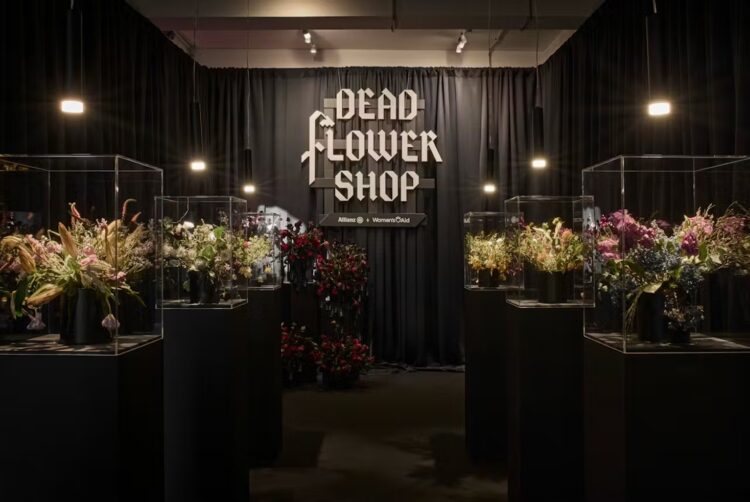
In our performative era, abstract ideas require tangible experiences. The narratives that stick with us are the ones we can feel. Experiences are the accurate way to convey the urgency and fragility of our world. They allow us to play with matter, show its imperfections, let it crack, break, bleed, melt, vanish … to leave a lasting impression.
Allianz Ireland and Women’s Aid used this principle to strong effect with The Dead Flower Shop (pictured).
As Irish men entered flower shops on Valentine’s Day to buy bouquets, they were greeted by an exhibition of dead flowers representing women in Ireland who have been killed by their male partners. The campaign used emotion as a vessel to the mind, rather than simply appealing to reason.
Inarguably, it is an unnecessary activation for an insurance company. Yet, almost in spite of that, it clearly articulates a brand value that consumers can get behind and connect with emotionally.
Brands that avoid taking a position or speaking out will ultimately be defined by others. They can look to niche communities for emerging cultural battles and, as society’s innovators, can earn credibility by helping guide people through them.
Retreat, cynicism and cultural inertia are not sustainable foundations for brands, let alone a society. When institutional trust erodes, brands can act as a form of lifeboat: imperfect, but legitimate, and capable of contributing to a better shared future.
 Martin Friedrich is a senior creative strategist at mnstr