



‘Odd fit’ leading the field for BBC boss
Opinion
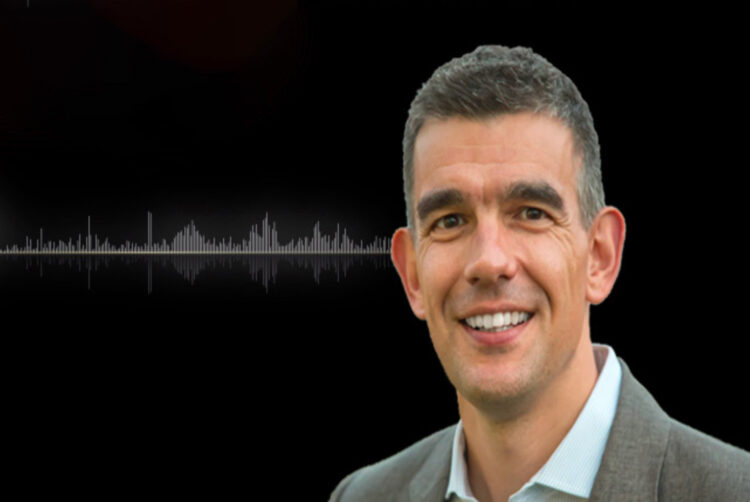
If ex-Google man Matt Brittin becomes the BBC’s next director-general, he’ll be the first in more than 80 years to run the Corporation without any experience of journalism, broadcasting, or programme-making.
It is a truly remarkable turn of events that Matt Brittin, Google’s former president for Europe, Middle East and Africa, should have emerged as favourite to be the next director-general of the BBC.
It may only be so because two other very plausible and accomplished candidates, Jay Hunt, the former BBC and Channel 4 executive now Apple TV’s creative director, and Alex Mahon, former chief executive of Channel 4, have apparently dropped out.
We also may not have a complete list of those under consideration. A secret dark horse may linger. But it is still remarkable that Brittin is in this race at all.
When you look down the list of former DGs since the end of the Second World War, the vast majority were either national newspaper editors, journalists or programme makers.
There were only two exceptions, but both had worked at the BBC for many years.
The first was accountant Sir Michael Checkland, who made a decent fist of a difficult job despite having no background in programme making.
The second, Tim Davie, now leaving the BBC under a small cloud, was, many people believe, undone by mistakes caused by a lack of journalistic instincts – even though he had run all of BBC radio and music with a reasonable degree of success.
To put the possible appointment of Matt Brittin into historic perspective, he would be the first in more than 80 years to run the BBC without any experience of journalism, broadcasting, programme making or indeed working for the Corporation for a single day.
As The Times put it with a degree of understatement: ‘Odd Fit’ leading the field for BBC boss.
Perhaps the most remarkable thing of all about the Brittin candidature is why, at the age of 57, after a reasonable degree of success in his career and sitting on multi-millions of Google wonga.
Why would he want to do it?
Why would he want to take on the ultimate bed of nails, apparently without any relevant experience, to meet the never-ending crises that come at the BBC like swarms of aggressive drones?
Perhaps he really does want to give something back, or more cynically, that he might, in the back of his mind, want something that Google money cannot buy, such as a knighthood or a peerage.
As things stand, many fear the job is near impossible, combining as it does the roles of editor-in-chief while at the same time being responsible for all the output of the world’s most famous and probably largest public service broadcaster.
All of that is before you get to the often poisonous political dimension of the job and the fact that the next BBC director-general will be thrust straight into the negotiations with the Government over the Corporation’s next 10-year Royal Charter with little obvious agreement on what the BBC is actually for, or how it should be financed in future.
Certainly, his CV would scrub up very nicely. The Cambridge degree, the MBA from the London Business School, followed by a spell at the consultancy McKinsey & Co, before becoming commercial director at Trinity Mirror, the then owner of the Daily Mirror.
That seems to be the closest that Brittin has come to the media, although advertising revenue is a big part of the life of a newspaper commercial director, while the BBC doesn’t take advertising, at least for now.
An obvious embellishment is that Brittin rowed for Cambridge three times in the Boat Race from 1987 to 89. Alas, Oxford won all three.
Even more unfortunate, although Brittin could do nothing about it, he would be arriving just in time for Channel 4 to take over the rights to broadcast the Boat Race for the next five years, from the BBC.
It is not, however, an inconsiderable achievement to run Google’s EMEA business and operations for more than a decade.
Little in common with the average BBC licence payer
Brittin would also bring considerable experience in dealing with Parliamentary Select Committees to the table.
When managing Google’s UK operations, Brittin was repeatedly called before the UK Public Accounts Committee to explain how Google apparently generated billions of pounds of profit from its UK operations but paid almost no corporation tax.
The Committee chair, Margaret Hodge, criticised Google UK as being “calculated and unethical” and even “evil” in using highly contrived and artificial distinctions to avoid paying its “fair amount of tax.”
Brittin also caused outrage when he refused to tell the Committee how much he was paid, claiming implausibly that he did not know.
The Guardian speculated that it could have been as high as £137m, and even if that was an exaggeration, financially, he would have little in common with the average BBC licence payer.
Public service it wasn’t, and, overall, played its part, along with the other high-tech billionaire owners, in hollowing out traditional British media.
The positive spin will be that Brittin, to an unusual degree, is across the digital world and the AI storm that is coming and would be well-equipped to take radical action to reshape the BBC for future survival.
His could indeed be a radical programme, and it’s not impossible for an outsider without historic baggage to come in and find a creative way forward.
We shall see.
Brittin’s near-namesake, Sir Samuel Brittan, the legendary Financial Times financial commentator who served on the Peacock Committee on the financing of the BBC, had views about the BBC executives he met.
He was fond of saying that they were not nearly as clever as they thought they were.
So maybe, just maybe, there is a case for a new look at how the BBC is run.
But if something so remarkable were to happen, there would be an absolute need for a strong deputy director general with extensive experience in journalism.
If the BBC board, a body that has hardly distinguished itself in recent years and seems part of the problem, were to decide to appoint Brittin, it would not just be a remarkable decision.
It would also be “brave” and even “courageous“ in the parlance of Prime Minister Jim Hacker’s mandarins.
But at least, this time, we would find out how much Matt Brittin is being paid.
Podcast: Google’s Matt Brittin on AI’s impact on advertising, media, and talent
 Raymond Snoddy is a media consultant, national newspaper columnist and former presenter of NewsWatch on BBC News. He writes for The Media Leader on Wednesdays — bookmark his column here.