



Upfronts 2026: Amazon, Disney, Mail Metro Media, Netflix kick off season of pomp and circumstance
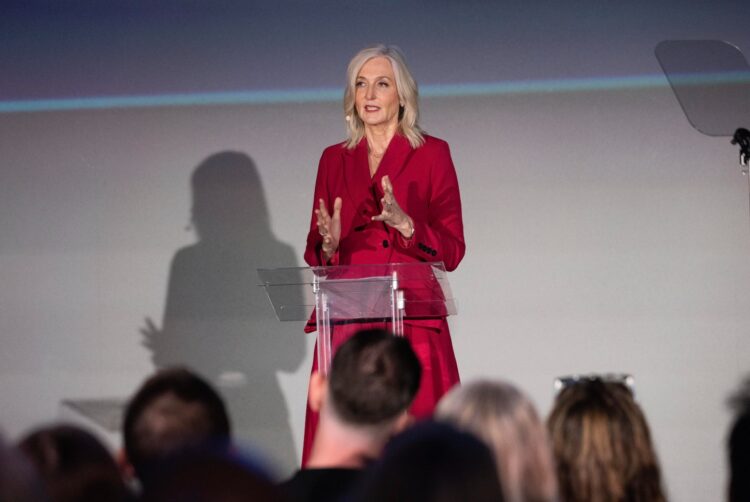
If you work in the media industry, you know autumn is coming around when upfront invites start landing in your inbox.
At these annual events, major broadcasters, streaming services, publishers, and tech companies make a hard sell to advertisers and their agencies. Commercial leads set out their wares, show off what’s coming next, unveil new ad products, and schmooze, wine, and canapé their clients to lock in long-term spending deals for the year ahead.
The Media Leader is attending several upfront events hosted by media owners this autumn and winter. This article will be updated with further coverage over the coming weeks.
Here are takeaways from some of the industry’s biggest upfront events of the season so far:
Amazon
Disney
Mail Metro Media
Netflix
Amazon Ads: Amazon joins Barb’s CFlight, launches new location-based ad capabilities
Amazon hosted its annual upfront at London’s Outernet on 7 October, where it unveiled it will join Barb’s CFlight post-campaign evaluation service within the Barb Ads Hub. In doing so, Amazon Prime Video will become the first non-broadcaster streaming service available on CFlight, with advertisers able to measure campaigns alongside ITV, Sky and Channel 4.
Amazon Prime Video is expected to become part of CFlight “next year”. It has been part of Barb’s pre-campaign planner since June 2024; Netflix and Discovery+ joined in September 2024 and Disney+ followed in March 2025.
Amazon also announced a pair of location-based ad tools for advertisers.
The first, Geographic Insights and Activation (GIA), is aimed at helping brands find regional opportunities and act on them “with just a click”. GIA uses Amazon’s retail data, combined with brands’ data, to create interactive maps showing how a brand performs by region against category benchmarks. It is available from today.
The second, Location-based Interactive Video Ads, is a format that aims to deliver national campaigns with “local relevance” by allowing a single national campaign to feature “hundreds” of ads tailored to local offers, store locations, or promotions by region, without the need to buy separate campaigns. The format, which will launch “by the end of the year”, targets brands in automotive, hospitality and retail services to help drive foot traffic.
The announcements come the same day new research from Lumen, in partnership with Amazon Ads, found that cumulative attention drives brand outcomes.
“Our latest innovations will help brands localise national interactive ad campaigns, act on regional growth opportunities, and access industry-standard measurement for Prime Video in the UK,” Phil Christer, Amazon Ads UK’s managing director, summarised. “With more reach across premium streaming video and audio than ever before, powered by AI expertise at every step, we’re enabling brands to connect with audiences alongside the entertainment and live sport they love.”
Christer added that joining CFlight will give advertisers “the transparency to invest with confidence”.
He repeated several times that Amazon’s offer to advertisers is based around “simplicity, impact, and connection”. Another common buzzword of the night: “obsession”, with Amazon VP and head of international studios Nicole Clemens arguing that Prime Video programming, including its £5bn investment in UK programming, taps into young adult culture.
The upfront also showcased Amazon Ads Agent, a merger of Amazon DSP (now known as DVA, for Display, Video and Audio) with the Amazon Ads console.
This week, both Bauer Media and Sky Media partnered with Amazon Ads to bring their respective UK audio and streaming inventory to Amazon Ads Agent. They joined the likes of Global, Spotify, Netflix, Disney and Roku, which had earlier integrated their inventory into the demand-side platform.
Among the big names in attendance, Katherine Ryan, fresh off her hosting duties at Mail Metro Media’s upfront and an appearance at Radiocentre’s Tuning In the week prior, returned to the Outernet to host the event. Ryan will star in the third series of Last One Laughing UK, slated for release in 2027.
Other celebrity appearances included a live performance from Lily Allen of songs from West End Girl. (Allen will release a documentary on Prime Video next year.) There were also presentations by Fleabag creator Phoebe Waller-Bridge, who was promoting her forthcoming show Tomb Raider, and Samantha Morton and Phoebe Dynevor, who were promoting the 2028 series Dirty.
Disney: An emphasis on fandom and growth
Disney held its annual upfront event at Frameless in London on 6 October. At the event, the company said revenue for its UK advertising business increased 80% year-on-year, including the activation of 50 sponsorships, though it was unclear what base the growth is from.
It comes as Barb data has shown Disney+’s ad tier has grown reach by 58% year-on-year, with monthly viewing hours up 49% in the same period, driven primarily by Disney+ being added for free to eligible Sky packages in March.
Deborah Armstrong, Disney Advertising’s EMEA SVP and UK and Ireland country manager, attributed the growth instead to “the power and strength of our storytelling and fandom.”
“Audiences are actively choosing to spend time with our series, characters and the franchises they love,” she said, adding Disney’s audience is “highly relevant for advertisers”, with 43% of viewing hours on Disney+ in the UK watched by the 16-34 cohort.
Like other TV companies, Disney’s leadership highlighted how it is working to make its inventory easier to plan and buy by “unify[ing] planning, buying and measurement”. This includes Disney’s Audience Graph and Compass planning, measurement and data collaboration tools.
Disney is also working to expand brand integrations for premium content. The first such integration launched in the UK earlier this year, tying Waitrose to series two of Rivals.
The event included previews of upcoming titles, including Count My Lies, All’s Fair, Rivals, and forthcoming Marvel releases. It concluded with an appearance by actor and gourmand Stanley Tucci, who offered a sneak peek of his upcoming National Geographic series, Tucci in Great Britain.
Mail Metro Media: New branding, an in-house agency for Metro, and becoming a ‘broadcast publisher’
Mail Metro Media hosted its upfront at the Outernet in London on 30 September. At the event, the sales house debuted new, understated branding (pictured below) and sought to position itself as “the UK’s broadcast publisher”, a mouthful that more than one presenter struggled to pronounce.
“Being a modern broadcast publisher isn’t an ambition anymore, it’s what we are,” declared then-chief revenue officer (now CEO) Dominic Williams, describing the Mail‘s embrace of social video and 50% reduced ad clutter on its website as part of a “glow up” that is resulting in “better outcomes for you and your brands.”
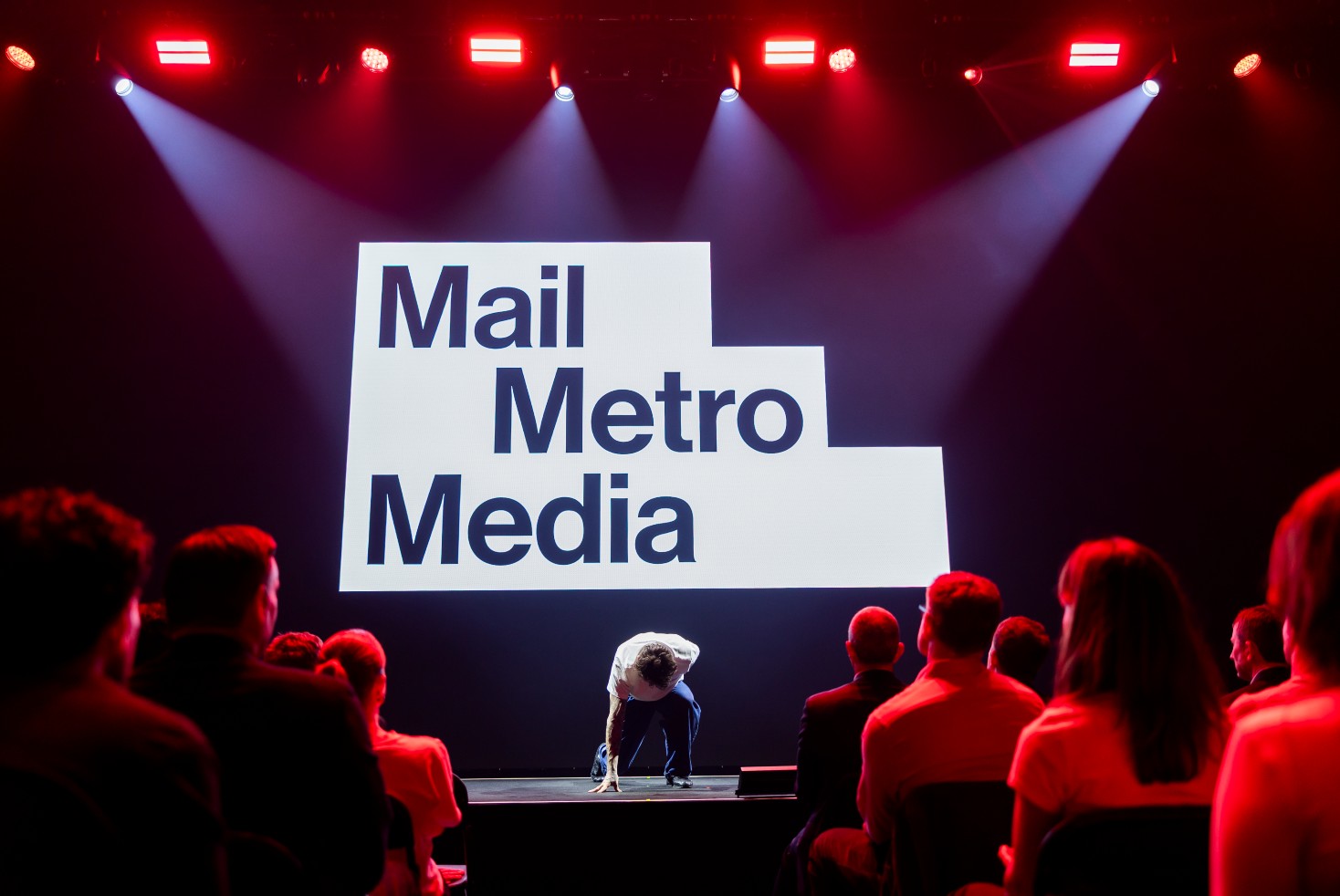
Mimi Yates, a multimedia reporter for the Mail, acknowledged that publishers “have to genuinely be social first now” in order to reach audiences within her younger cohort. “It’s a myth that young people aren’t interested in news,” she said, “we just consume it differently.” Yates added that, editorially, publishers must be careful to “adapt” rather than “dilute” journalism for social media audiences. Merging creators’ “authenticity” with newsrooms’ trust and resources, she argued, is a winning combination.
DMG Newmedia, the group’s one-year-old social publisher led by Eliza co-founder Hannah Blake, now employs more than 25 in-house content creators who make content that is “designed for high engagement rates and high watch times”.
“We are thinking more and more like a talent agency, commissioning like a broadcaster, and co-creating shows from scratch with our advertisers,” Blake said.
During the event, Blake also announced the launch of MetroWorks, an in-house agency within Mail Metro Media dedicated to Metro, including providing advertisers with insights about city-dwelling commuters.
The renewed commercial push for Metro comes weeks after editor-in-chief Deborah Arthurs and executive editors Richard Hartley-Parkison both stepped down, with staff reportedly told “radical change” was needed to get the title on sustainable footing. The Media Leader interviewed Arthurs and Metro commercial director Jo Mazenko a month prior, both of whom acknowledged that post-pandemic changes to commuting habits, as well as a decline in referral traffic due to AI search, have required a reconsideration of the outlet’s distribution strategy.
The upfront also included appearances from celebrities Ross Kemp and Katherine Ryan.
The Media Leader caught up with Mail Metro Media’s new-look commercial team in July to discuss its new positioning and how it is staying nimble, focusing less on volume and more on driving attention and time spent amid an “existential” period for the publishing industry.
Netflix: UK upfront debut focuses on film and TV slate
Netflix hosted its first-ever UK upfront event on 24 September at Town Hall King’s Cross. The evening focused primarily on content previews, with hard sells from Netflix’s advertising team sprinkled in between.
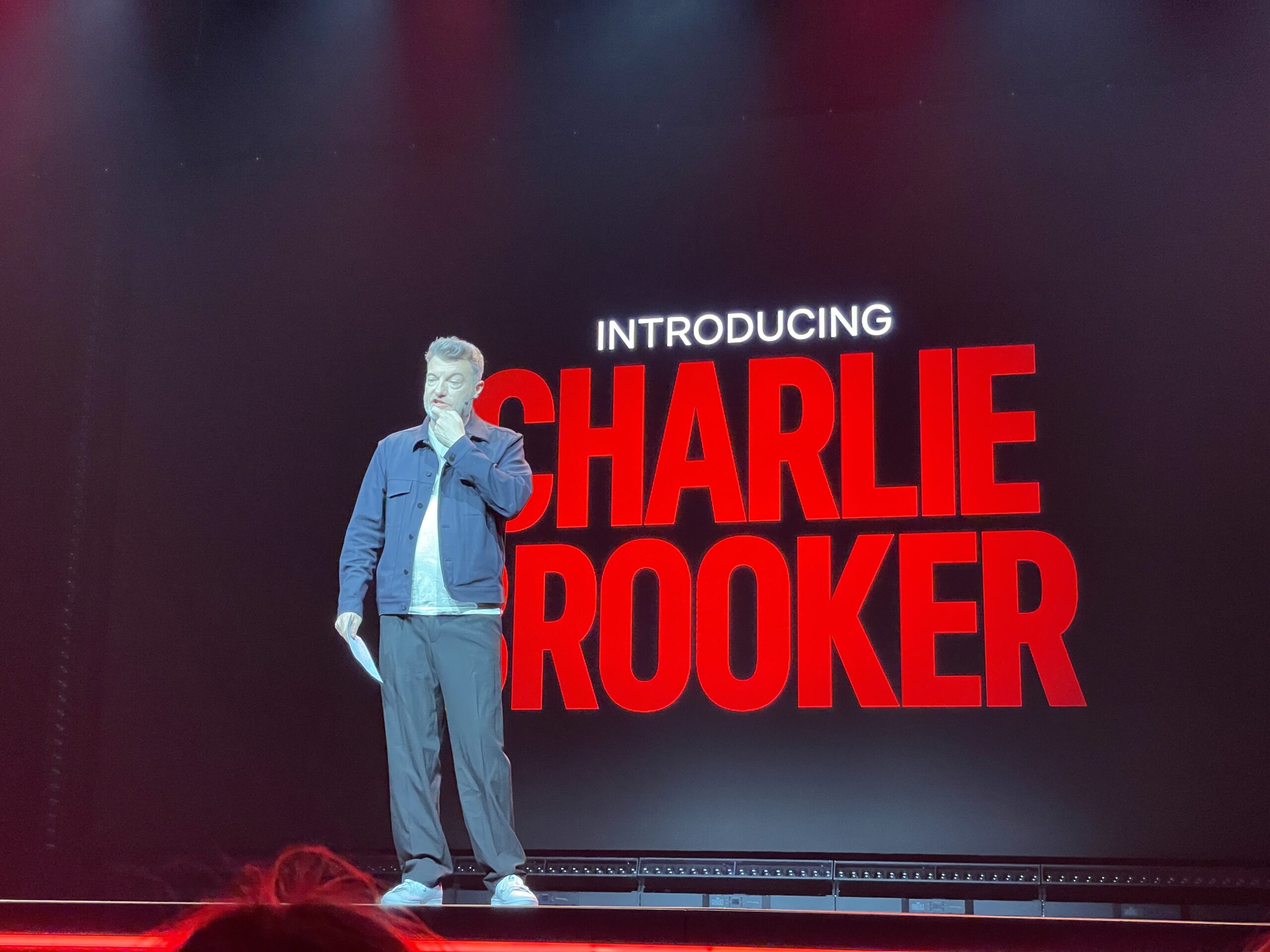
Celebrity appearances included Florence Pugh (East of Eden), Dolly Alderton and Emma Corrin (Pride & Prejudice), Tosin Cole (Supacell), Hannah Todd and Masali Baduza (Bridgerton), and, perhaps most notably, the show was kicked off by none other than Black Mirror creator Charlie Brooker.
Brooker was there to promote his new crime comedy Blackmere while also taking potshots at the advertising industry. “Nobody gets you closer than Netflix. What does that mean? Fuck knows,” he said, jabbing at Netflix’s tagline for the evening. “Netflix gets you closer to your audience… by interrupting their viewing.”
The irony of Brooker presenting at an advertising event was not lost on him. He briefly likened targeted advertising practices to something he’d cook up on Black Mirror, but reeled himself in by saying he’s “not here to criticise, but to advertise” his own show.
The whole affair was not unlike one of his own characters, Bing Madsen (Daniel Kaluuya) in “Fifteen Million Merits”, benefitting financially from the very system he rails against.
Netflix global ads VP Amy Reinhard appeared to tout Netflix’s ad tier audience (250m viewers globally and 7.3m households in the UK, according to Barb — equivalent to 24.6% of UK homes and, according to Reinhard, 14m individuals). She insisted ad-tier viewers are “super engaged”, with three-quarters (74%) watching Netflix weekly. She also noted more than half (52%) of ads on the streamer get “exclusive reach”, meaning they reach TV audiences that otherwise do not see ads from the same campaign elsewhere.
Reinhard announced that Netflix’s ad tier will expand to nine new countries in EMEA on 1 March 2027: Austria, Belgium, Denmark, Ireland, the Netherlands, Norway, Poland, Sweden and Switzerland. She also revealed pause ads will be available to buy programmatically across partner DSPs from October, with expanded demographic targeting capabilities to include income and household composition.
While the upfront was otherwise light on new announcements, the streaming giant is testing a number of ad innovations, including new brand lift measurement, new ad loads, new interactive ad formats, generative AI integrations for creative, and a “send to phone” shopping capability.
The rest of the night was a mix of programming announcements, pledges that Netflix “understands” the UK and its unique local audiences, and a commitment to “tell more British stories” and “create more British jobs”. Netflix UK head of ad sales Ed Couchman concluded the event with a direct call to action asking brands to call their agencies and “ask how much they’re spending on Netflix”, implying whatever the number is, it likely isn’t enough.
“At some point, your customers changed the way they watched. We know because they came to us, and you should too,” he said. “Come on in, the water is lovely.”
One senior media agency executive was overheard by The Media Leader joking that ITV’s deputy managing director of commercial, Simon “Dags” Daglish, would be giving them a call to shore up their own investment after that competitive display.
In his independent Substack, Media Leader columnist Omar Oakes likened the event to Netflix crowning itself the new king of UK TV, even if most of the (non-Barb) viewing figures it cited were akin to “self-portraiture” or otherwise heavily qualified.
Recent Barb figures seen by The Media Leader showed that Netflix’s top programme in the UK so far this year is Run Away. Compared with audiences for the top 400 programmes across ITV, Channel 4 and Five, however, it would rank 306th.
Nevertheless, in conversation with The Media Leader after the event concluded, media analyst and Media Leader columnist Ian Whittaker said it was all but certain Netflix would begin taking substantial ad market share from the UK’s own public-service broadcasters. Whether it would help grow the total TV ad market, however, is another question.
Despite the air of confidence at its first UK upfront, Netflix is facing negative sentiment from investors this year amid greater scrutiny of the company’s viewership. Shares of Netflix have fallen more than 20% year-to-date as data show the streaming giant is struggling to retain viewers for shows past their first season.
The week after the upfront, Netflix’s co-CEO Ted Sarandos acknowledged in an interview with Bloomberg that Netflix is “not growing as fast as I want us to”.