



OpenAI’s ad model conundrum
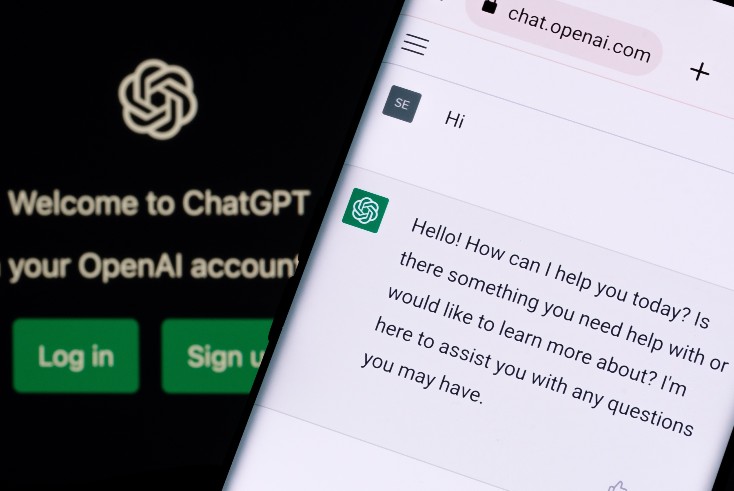
OpenAI is actively testing ads on ChatGPT, but will its nascent ad model succeed at the scale required to help the business stave off mounting debt concerns?
On this week’s episode of the AI Haven’t A Clue podcast, The Media Leader’s Jack Benjamin joined Bauer Media’s George Butler and IAB UK’s James Chandler to discuss OpenAI’s ad model, including its potential pitfalls, within the wider context of the company’s history.
OpenAI first announced it intended to develop an advertising model for the platform in January. Less than a month later, OpenAI formally began testing ads on the chatbot in the US market, with clients including brands working with major global agency groups Publicis, WPP, Omnicom and Dentsu.
Select advertisers were required to commit to spending at least $200,000 for beta testing. In the meantime, OpenAI has also held “early talks” with The Trade Desk to integrate ChatGPT ad inventory into its demand-side platform (DSP).
But, as Chandler and Benjamin note, the ad model could undermine OpenAI’s market positioning.
Anthropic’s Claude, which has promised to maintain an ad-free user experience, saw US app downloads jump 32% after its Super Bowl ad campaign criticised OpenAI for integrating ads into ChatGPT.
Anthropic has also been a major beneficiary of an ongoing push to boycott the chatbot, following OpenAI’s deal with the US Pentagon to deploy its AI systems in classified environments. (Anthropic declined to work with the Pentagon, leading the US Department of Defence to designate the AI company a “supply chain risk”, a label which Anthropic is challenging in court.)
Listen to a clip of the conversation
George Butler: OpenAI has announced in recent months that it will be accepting advertisements on [ChatGPT]. Is this the answer to their issues, or is it really just a drop in the ocean in terms of their financial situation?
James Chandler: I think it really depends. You can look through the last decade, lots of businesses said they would never do it. Netflix said they would never have ads. Buzzfeed, Jonah Peretti, the founder there was very critical of advertising, never thought they needed it. It came to a point where, if you want to scale, then the ad model’s not a bad one to do it. It’s proven. Advertisers want to spend money, they want to reach people. There’s kind of no surprise.
You top out on subscribers; there’s only so many people in this world who are gonna pay you £20 a month to subscribe. Once you hit that ceiling, where are you gonna go from there? So maybe the ad model is inevitable.
You have to be careful, though. Because you can’t just bung a load of ads in there very quickly to make lots and lots of money, seductive as it might be. You need to be careful. This is a brand new space for ads, we’ve not seen it here before. The things people are telling AI, the types of data that it’s sucking in, the money that it knows about you, means the ad bit has to be incredibly in-tune, and almost has to take baby steps to get it right.
Jack Benjamin: And they don’t have a whole lot of experience, in terms of their staff, that have ad experience. The company has reportedly struggled to value its advertising inventory, apparently asking for around $60 CPMs (the cost per one thousand views). That’s triple what it costs to advertise on Meta, which is widely seen as the premiere digital ad platform by a lot of especially smaller businesses.
And OpenAI is not offering the same level of detailed information about its users. They’ve said they need to protect a lot of information, and frankly I should say that’s probably the right move, given how much detailed information they would have about a user. Whether or not OpenAI would subsequently roll that back… there’s a whole privacy implication issue. Is OpenAI going to be regulated [on this]? I mean, there are some serious problems with its ad model.
It is fledgling, so I don’t want to write it off. They’ve built out an ads integrity team to apparently work on some of these issues. But I think the perception in the market at the moment is negative, and the one thing I would add is they have so many competitors in the market, so what’s to stop any user from saying, ‘Eff that, I don’t want to have ads in my AI. I don’t trust an AI that’s going to maybe sell me a product. Psychologically, it could recommend something underhand. I’m just going to go to Anthropic. And that’s why they paid several million dollars for Super Bowl ads.
Part of the issue is there are so many competitors in the space. If OpenAI collapses, or if people don’t want to use it anymore, if they don’t like the product anymore because it’s been enshittified, there are so many options to move to.
Listen to the full episode of AI Haven’t A Clue here.