



Campaign ROI is maximised when audio gets 25% of spend, finds Radiocentre report

Multiplatform audio has a positive impact on total campaign ROI, according to a Radiocentre report.
The industry body for commercial radio’s High Gain Audio report is an analysis of audio advertising effectiveness conducted by WPP Media. It demonstrates the ROI impact of both broadcast radio and digital audio (individually and combined) relative to other media and makes the case for reallocating budget from other media to augment overall media campaign ROI.
The analysis shows that brands achieve higher returns as audio investment increases, with the opportunity to maximise short-term campaign ROI when multiplatform audio is allocated 25% of total media spend.
At this point, the overall campaign ROI is 9% higher than the same campaign spend with audio excluded.
WPP Media Analytics’ managing partner, Ffion Turner, said: “Audio remains one of the most effective – yet often untapped – channels for driving advertiser profit.
“Our High Gain Audio analysis shows that both broadcast radio and digital audio consistently outperform the all-media average, delivering substantially higher profit ROI of up to 21% full term and 32% short term.
“In an increasingly fragmented media landscape, audio offers advertisers a clear and proven way to amplify overall campaign effectiveness.”
The report also finds that, when broken out individually, both broadcast radio and digital audio each significantly outperform the all-media profit ROI average in both the short-term and long-term. This is the first time this respective data has been made available.
For Radiocentre, a significant implication of the study is discovering that when the budget is reallocated from other media to multiplatform audio, overall media campaign ROI can be boosted at no additional media cost.
In the report, Radiocentre provides three recommendations to maximise these effects.
The first is to reallocate budget from other media to incorporate broadcast and digital (multiplatform audio) in the mix, suggesting this budget allocation needs to be “more ambitious”.
The second recommendation is to use digital audio formats to supplement, rather than substitute, broadcast radio.
It suggests increasing the share of the total audio budget allocated to digital audio formats to c. 30% (with the remaining 70% to broadcast radio) when the headline audio budget reaches 10% or more of total media spend.
Lastly, the industry body notes that brands should evolve Media Mix Modelling to dissect the effects of both broadcast radio and digital audio.
From an audio perspective, it suggests using post-campaign reports from J-ET and J-ET Digital to ensure modelling is built on the most accurate, granular audience-delivery data currently available.
Audio content is now considered truly multiplatform following the launch of the Amazon Echo in late 2016, which can be found in around half of UK homes. This, combined with a significant increase in smartphone penetration, has meant audio content is more seamlessly accessible both in and out of the home.
The impact of this increased accessibility can be observed in record commercial audio audiences, buoyed by 23% growth in listening since 2018.
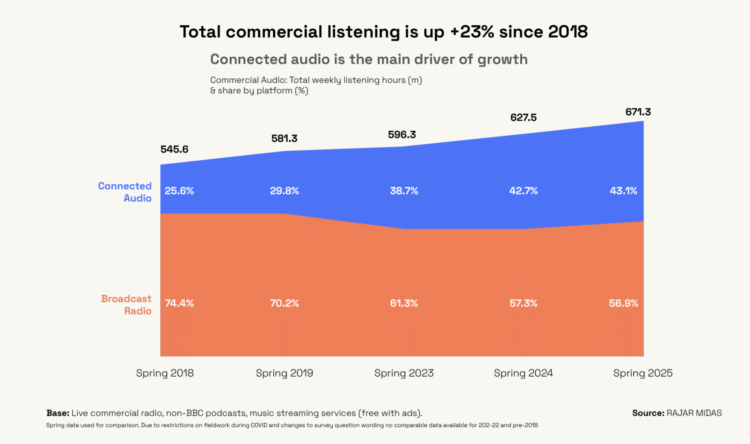
Broadcast remains the predominant listening platform, but the primary driver of audience growth in recent years has been listening through IP-connected devices, which now accounts for almost half of all time spent listening to commercial audio.
As such, Radiocentre notes that advertisers can boost overall campaign outcomes by leveraging digital audio to build on the effective bedrock of broadcast radio.