



‘Be careful who you put in your bed’: Broadcasters urged to partner with platforms cautiously

Connected TV World Summit 2026
“We are now in the new partnerships era.”
Maria Rua Aguete, senior research director for media and entertainment at business analysis firm Omdia, told a crowd at this year’s Connected TV World Summit that the TV business has moved past the streaming wars and entered a new phase defined by partnerships between local broadcasters and global streaming platforms.
“Partners, don’t fight,” Aguete advised. “Saying this, you need to be careful about who you put in your bed.”
Broadcasters are in a tough spot. According to Omdia’s analysis, as they transition from linear operations to digital streaming, total revenues are expected to decline by 4% by 2030.

Conceding that broadcasters rightly feel pressure to partner in order to reach incremental, scaled online audiences, Aguete nevertheless questioned the wisdom of European broadcasters partnering with US technology companies that are already boxing out their growth prospects.
Indeed, Omdia predicts that “traditional broadcasters” will account for only 67% of global TV advertising revenue by 2030, down from 100% in 2015. The biggest beneficiaries? YouTube (Google), Amazon Prime Video, and Netflix.
“Yes, you need to partner,” Aguete said. “But at the same time, you don’t want to make these players bigger.”
Seeking ‘fair value’
This tension is already animating distribution strategies at major UK broadcasters. Channel 4 and ITV have both embraced YouTube, with the former also partnering with Spotify on full-length video programming distribution.
Speaking to The Media Leader at the Connected TV World Summit, Grace Boswood, Channel 4’s technology and distribution director, outlined that the broadcaster looks for a “fair value exchange” with its distribution partners, prioritising partnerships like YouTube that allow Channel 4 autonomy over its own ad sales. Ensuring prominence is also a key factor.
Yesterday at the conference, BBC iPlayer general manager Kerensa Samanidis told The Media Leader that while platforms like YouTube are helping extend the reach of news and kids’ content globally, the BBC is cautious about partnerships that don’t align with its public-service remit.
Samanidis also said a potential distribution deal with Netflix is not something currently being pursued by the Corporation. Netflix co-CEO Greg Peters told The Telegraph this month the streaming giant would be “eager” to play host to more BBC content than it already licenses.
Churn and bundling
While global streamers may have an advantage in global scale and — in the case of platforms that can use streaming services as loss leaders for other products, like Amazon Prime Video and Apple TV+ — more flexible commercial strategies, partnerships are a two-way street, and there are reasons why streamers are looking to bring local broadcasters into the fold.
Chiefly, as Omdia’s consumer research lead Max Signorelli outlined, global streamers are universally facing a “churn problem” as overall subscriptions remain at a plateau. One-fifth of UK subscription video-on-demand (SVOD) subscribers admitted to subscription cycling last year, with a further 42% “open” to the practice. This is likely to be exacerbated by any downturn in the economy.
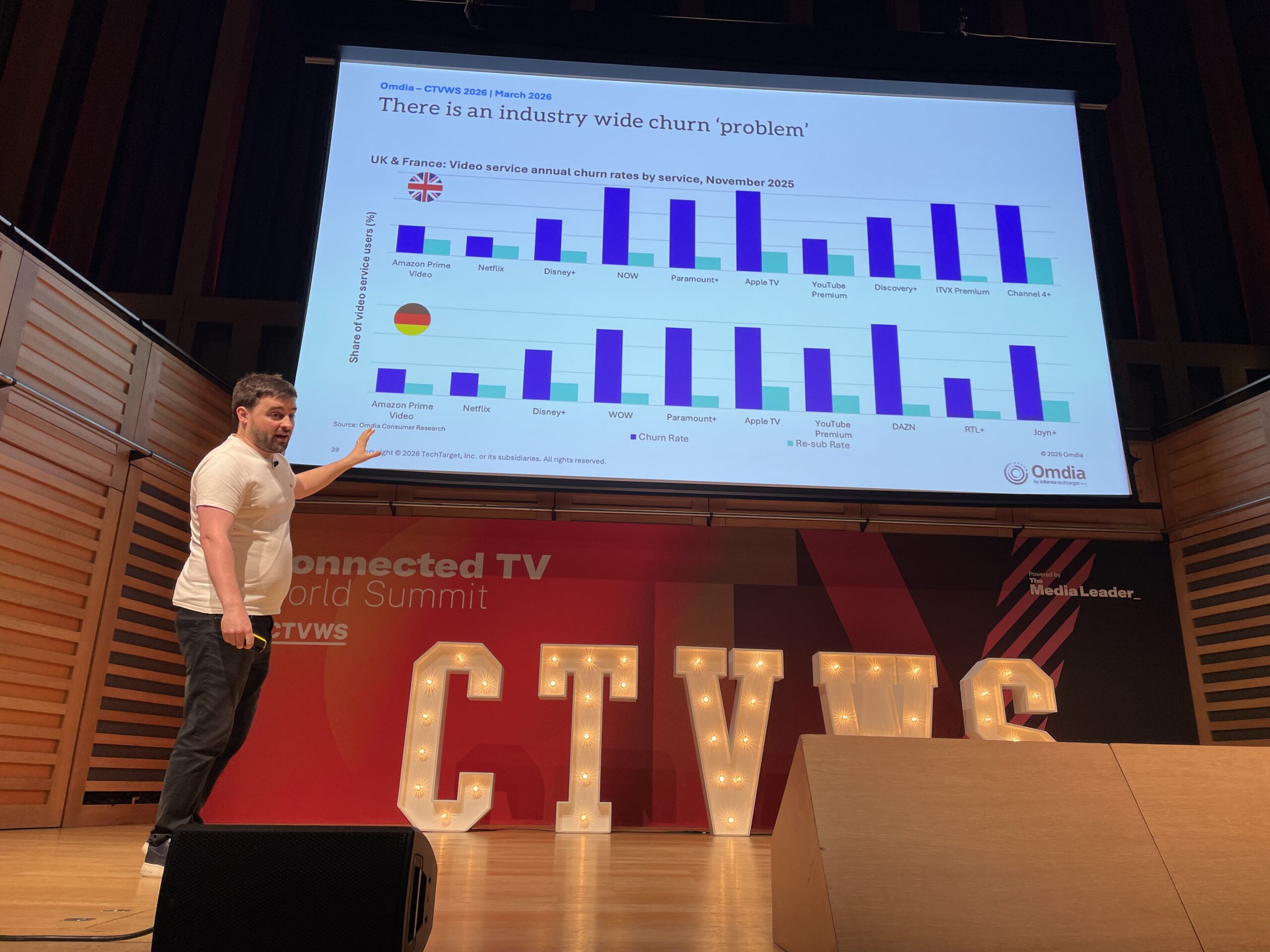
Hence, a greater willingness to bundle, as demonstrated by Sky, Netflix, Disney+ and HBO Max.
Streaming giants are also not immune to the gravity of YouTube, with many streamers likewise looking to platform for incremental audiences or marketing purposes.
“Partnering with YouTube just makes sense,” Signorelli concluded. “It’s hard to say no to what is categorically the largest video player in almost every single country.”