



How publishers are fighting to protect their copyright from AI companies
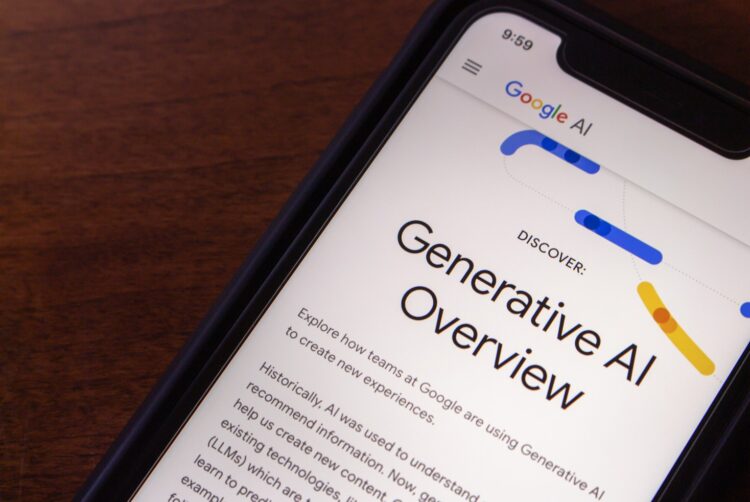
Publishers are taking a wide variety of actions to both challenge AI companies’ alleged theft of their copyright for use in AI training and adapt to changes in AI search that have resulted in rises of zero-click search results.
Some publishers have recently seen referral traffic from Google drop over 60%, contributing to wider overall drops in traffic of up to 90%.
The fall in traffic has had a negative impact on publishers’ ad revenue, particularly from the programmatic open market. According to benchmarking data from Ozone, ad supply fell 40% year-on-year in Q2. In response, Digiday reports UK publishers have increased eCPMs (effective cost per mille) an average of 30% to soften the blow on publishers’ bottom line.
Danny Spears, Ozone’s COO, says the data reflects the market “beginning to find a new equilibrium,” with publishers “recalibrating their content strategies towards less commoditised, higher-engagement journalism that commands stronger advertising demand.”
Spears believes there is “some runway” for higher eCPMs to offset reduced ad supply, particularly if publishers create “scarce, differentiated inventory.”
Still, the pressure on publishers has come largely due to no fault of their own: AI companies have scraped their sites, generally without permission, and created new search tools using that material that no longer incentivise clicking on links.
As Lexie Kirkconnell-Kawana, CEO of UK press regulator Impress, argues: “It is entirely fair that these creative professionals should have the right to say how or whether multi-billion-dollar tech firms can use their work.”
She says: “Silicon Valley should be accountable for the extraction inflicted on this industry through fair and enforceable value exchange.”
The stakes: ‘The majority of independent publishers could be gone’
Regulators are beginning to take action. In June, the UK’s Competition and Markets Authority (CMA) announced Conduct Requirements for Google. They compel the tech giant to allow publishers to opt out of their content being used to power AI features, as well as ensure that publisher content is “properly attributed, using clear links, in AI-generated results.”
However, the changes don’t come into force for another six months, after which Google has nine months to comply. Tim Cowen, the co-founder of Movement for an Open Web (MOW), an organisation which filed a legal complaint against Google’s AI Overviews last July, expressed disappointment over the timeline, calling the remedy “likely ineffective” and three years too late to begin with.
“In a year the majority of independent publishers could be gone,” Cowen warns. “Regulation needs to move at the speed of digital and this decision is not fit for purpose.”
Chris Dicker, a board member of the Independent Publishers Alliance and CEO of Candr Media Group, which operates titles like Trusted Reviews, Wareable, and The Ambient, told The Media Leader the alliance has already “had a couple of members go under” due to a severe drop in referral traffic.
CMA requires Google to let publishers opt out of AI search results
Not only has the CMA’s intervention come too late, but in Dicker’s view, it also gallingly suggests a fair value exchange between publishers and Google can be found in requiring Google to attribute certain AI-generated answers to publisher material.
For Dicker, a fair value exchange has always required Google to provide traffic back to publisher websites in exchange for surfacing their material. Publishers, he notes, are unable to monetise “attribution” in AI search.
Dicker further warns Google is not sharing enough data with publishers to allow them to even make a determination on whether it is in their best interest to opt out of AI features. Google will also need to prove that publishers are not negatively impacted in its standard Search product by opting out of AI Overviews, lest it run awry of the CMA.
In any case, Dicker and other publishing advocates argue it should not be incumbent on publishers to opt out, but rather that publishers should be able to choose to opt in, with the default relationship being one that protects publishers’ copyrighted material under existing law.
In the meantime, publishers have not been sitting still, but rather have embraced a host of potential solutions to attempt to claw back power over their own IP from tech companies.
“It’s encouraging that publishers are far more aware of the value of their content than they were during, say, the early years of programmatic advertising,” says Spears. “We can avoid repeating a period where publisher IP was often undervalued, but we need the right commercial frameworks now.”
SPUR Coalition
In February, UK news publisher The Guardian, Financial Times, Telegraph, BBC and Sky News created a coalition with the aim of developing shared AI licensing rights.
The Standards for Publisher Usage Rights coalition, or SPUR, was described by FT CEO Jon Slade as a “NATO for news”. The goal? Find “transparent and scalable” ways to formalise how journalism can be used by AI tools in a way that protects publishers’ intellectual property.
This could include recommended pricing structures between publishers and AI companies, such as on a ‘pay-per-crawl’ or a ‘pay-per-inference’ basis.
The coalition has evolved rapidly since its founding. Benelux, Irish and German publishing giant Mediahuis joined in May, followed by 20 more publishers in June.
Joiners included UK trade bodies the Association of Online Publishers (AOP), Independent Media Association (IMA), Professional Publishers Association (PPA) and Newsworks, as well as a raft of Canadian, French, Swiss, Austrian, Nordics, and Dutch publishers. Other members now include WAN-IFRA and the US News/Media Alliance.
In July, The Associated Press also joined as a founding member.
Last month, SPUR published a draft Content Telemetry standard. The standard is a technical foundation that enables publishers and other content owners to directly understand how AI systems are using their content, knowledge which is necessary to develop licensing deals.
“Our aim is to develop a common language for measuring and reporting on content usage, one that licensing and compensation frameworks can build on,” says SPUR’s technical lead Alex Springer.
The standard defines five events that occur as publisher content is used by an AI system: content retrieval, content grounded, content cited, content displayed, and content engaged.
SPUR’s telemetry profile, which it also published, then sets out proposed terms for licensing based on those events that can be enacted in real time, at the event level, to an endpoint declared by the publisher.
Revised versions of both specifications will be published on 10 August after a public comment and review period occured in June and July.
Lawsuits
A large swath of publishers have sought legal action against AI companies, alleging copyright theft for using publishers’ IP to train their AI models.
Press Gazette’s list of active lawsuits currently stands at 24. Among them, 400 local US newspapers sued OpenAI and Microsoft; Penske sued Google; CNN sued Perplexity.
Legal action is prohibitively expensive, and likely beyond the reach of all but the largest publishers. AG Sulzberger, the publisher of The New York Times, shared at June’s WAN-IFRA World News Media Congress the company has spent more than $20m over the past two-and-a-half years in its lawsuits against OpenAI, Microsoft and Perplexity.
New York Times publisher warns journalism faces its ‘Napster moment’
The legal effort has not been entirely joined up, either. Some publishers have opted to strike licensing deals with AI companies in lieu of a lawsuit, while many have sued certain AI companies while striking deals with others. The New York Times, for example, announced an AI licensing deal with Amazon last spring.
Publishers have also struck licensing deals with the likes of Meta, Microsoft, OpenAI and Anthropic. On the other hand, Google has not struck such deals with any publishers, the sole exception being wire service The Associated Press.
Search Only Contract
In June, Movement for an Open Web (MOW) created a new, free-to-use website contract for publishers to use to assert their content ownership rights over content used by AI companies.
The “Search Only Contract” (SOC) includes web usage terms that specify that bots may index for search and human non-commercial use, while all other access requires a deal or attracts a fee. As such, publishers can invoice for payment on their own terms, making debt claims to any AI companies that have scraped and used content.
Non-payment by AI companies can lead to enforcement options via County Court in the UK.
More than 31 websites had already deployed the contract ahead of its official launch, including Trusted Reviews, Recombu, Road.cc, CaughtOffSide, and FootballItalia. The SOC also received backing from UK trade bodies including the AOP, Thinkbox, the PPA, Impress and the Football Writers’ Association.
MOW co-founder James Rosewell has facilitated the sending of invoices in traches to AI companies on behalf of publishers, with payments coming due in the coming weeks. If payment is still not made, a further letter will be sent seeking payment, with a 30-day notice period before beginning proceedings on debt collection efforts.
“Blocking bots is a part of the solution, but it can only ever be a partial one,” Rosewell tells The Media Leader. “There are simply too many bots, concealed in too many different ways, to have a hope of completely preventing your site from being harvested.
“What you need is a multi-layered approach that covers off technical, legal and procedural approaches to preventing bots from misusing your content. MOW’s Search Only Contract is a key part of that combination, creating a legal infrastructure that allows you to charge AI companies from unpermitted content usage.”
He continues: “Whatever approach you choose, website owners should not be forced to make a choice between accepting bots or coming off Google search completely. Search Only Contract is a no-brainer for publishers that don’t want to play the opt-in/opt-out game.”
Cloudflare set to block multi-purpose crawlers
Earlier this month, content delivery network Cloudflare said that websites signing up for its services would have the default settings in their bot management protocol set to block “multi-purpose crawlers” on any webpage that has ads.
That includes Google’s crawler, which scrapes sites for both search indexing and AI training. That has meant that, barring the UK CMA’s forthcoming requirement that publishers be able to opt out of AI training scraping, publishers have been unable to disallow Google to train its AI on their content without also leaving Google Search.
Cloudflare is set to shut this tracker off by default for its clients beginning in September, effectively opting them out of appearing in Google Search.
Meanwhile, newsletter service Beehiiv last month struck a deal with Cloudflare to grant its independent writers access to AI bot traffic management tools, as well as options for optimising AI search discovery.
At Cannes this year, Cloudflare CEO Matthew Prince said publishers are facing an “existential” crisis because Google’s ratio of pages crawled per visitor sent to a publisher fell from 6:1 six months ago to 18:1 now. For OpenAI, that ratio went from 250:1 to 1,500:1 in the same period.
Prince has said Cloudflare is “dedicated to protecting and enabling content creators, from independent bloggers to the world’s largest publishers.”
Given its scale, leaving Google Search was seen as unthinkable until recently. But with referral traffic from Google collapsing, the value exchange between publishers and the tech giant has come undone.
USA Today Inc, which publishes USA Today and other local US news websites, told Adweek this month it was prepared to delist from Google in the next six to 12 months.
Going direct, embracing print, outsourcing content production
In the meantime, Dicker tells The Media Leader independent publishers are embracing a number of tactics in an attempt to stop the bleeding caused by a reduction in site traffic.
Some independent publishers have opted to take all programmatic ads off their sites, reducing clutter from ad inventory they were struggling to fill anyway and moving to a solely direct advertising model.
“People are innovating to try and keep the content,” Dicker says. That even includes a return to print; as Dicker explained, at least with a physical product there is a clear value exchange between publisher, consumer and advertiser.
Online, many publishers had become overly reliant on that type of relatively low-effort content that did well via search engine optimisation tactics, even if it didn’t necessarily help build the publication loyal audiences. Publishers, Dicker says, fell into a habit of “writing for search rather than for humans”, with Google’s changes ironically forcing a return to quality.
Publishers advised to be ‘niche at scale’ amid the winding road to Google Zero
Unfortunately, faced with declining ad revenues, many publishers — indies especially — will be unable to invest in the editorial expertise required to produce high-quality content. Indeed, many Independent Publisher Alliance members have had to make deep editorial staff cuts this year.
In lieu of professional journalists, some have taken to outsourcing content production to content farms from the Philippines or other markets, or publishing AI-written material in hopes of still attracting an audience.
As Spears warns: “If publishers aren’t fairly compensated for the value they create, the commercial incentive to continue investing in that reporting inevitably comes under pressure.”
Site owners, Dicker predicts, may rationally decide to slash editorial staff. A reduction in costs of, say, 90% would keep an outlet profitable even if its traffic fell 70%.
But the result would be a poorer quality open web, with premium editorial increasingly locked behind paywalls, a strategy that only works for a relatively small handful of publishers compared to the long-tail of the internet.
Google, Dicker says, therefore risks creating a worse web to its own detriment.
“It’ll come to a point where Google becomes the Temu of recommendations.”