



Meet the Media Owner: Channel 4 adopts a platform mindset
Meet the Media Owner
To mark the launch of our new feature series, The Media Leader sits down with Channel 4’s commercial team to understand why it’s taking a platform mindset while going on the offensive against ‘toxic’ online advertising environments.
To compete with tech platforms, one needs to act like tech platforms.
At least, in some respects.
As Channel 4 looks to go to market with a renewed senior commercial team, it has its sights set not only on building on existing relationships with large advertisers and their agencies but also on the long tail of smaller businesses.
Ahead of an “imminent” alpha launch of the UK SME marketplace, The Media Leader sat down with Channel 4’s senior commercial leadership team last month to discuss its sales philosophy, innovation efforts, and how its new leadership is focused on taking the right lessons from platforms and applying them to a TV market in need of commercial innovation.
In the days after the discussion, The Media Leader reported Channel 4 Sales proposed to cut and outsource 51 sales operations, part of a continuation of the broadcaster’s future-facing commercial strategy.
The broadcaster also has a new CEO: Priya Dogra started this month, while interim CEO Jonathan Allan departed the company after 14 years.
People and culture
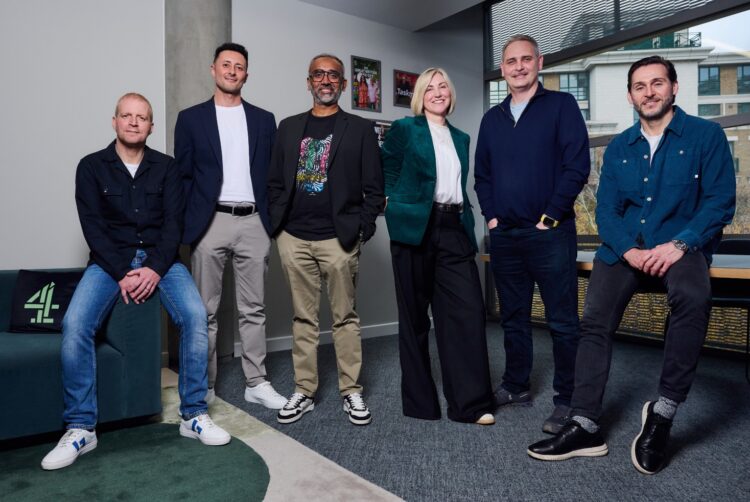
Channel 4’s commercial leadership team was formally announced in December. It consists of the chief commercial officer, Rak Patel; head of advertiser strategy, Sam Hicks; head of trading, Ed Chalmers; head of advertising operations, Barry John; head of sales, David Amodio; and head of business operations and revenue innovation, Jay Kassam.
Speaking to The Media Leader in front of the team, Patel outlines that his top priority is ensuring the team has the resources it needs to flourish. He acknowledges that the new-look leadership consists of a mixture of tenured Channel 4 employees and those, like himself, with a background working for tech platforms.
Channel 4 debuts new-look commercial team following reshuffle
Patel previously worked with Hicks and Kassam at Spotify. Kassam most recently worked for nearly three years at Reddit. Amodio spent over 17 years with Channel 4, then had a two-year stint at Amazon before returning at the beginning of the year.
“What I really like here is you have Ed [Chalmers] and Baz [Barry John], who do have a lot of TV experience, which we do really need — and it’s not a matter of it diminishing away, absolutely not,” says Patel. “And then what you have with Sam [Hicks] and Jay [Kassam] is, yeah, they’ve come from the sort of platform world, and David [Amodio] straddles both. You put all that together, it becomes quite a comprehensive approach to where we’re going.”
As Amodio outlines, the new team is seeking greater accountability from staff, with the goal of “constantly improving”. This includes “benchmarking people in terms of their competency” to identify areas of need.
Patel adds that their goal is “to have the most progressive and most talked-about commercial team in the land”. When asked to define “progressive”, he points to the importance of “trust and truth”, including Channel 4’s accountability to its government remit, as well as how the media owner is working to future-proof its business through its Fast Forward strategy.
“Turn down the toxic becomes key, and turn up the trust — we’re keen on,” he says.
A diversified commercial strategy
Future-proofing efforts include developing an “advertiser-led, agency-aligned” commercial approach, as well as developing key important commercial innovations, such as an evolved trading model and the forthcoming small- and medium-enterprise (SME) marketplace, in collaboration with Comcast, Sky and ITV.
For Hicks, an imperative is ensuring advertisers understand the breadth of the “Channel 4 ecosystem”, inclusive of its linear, streaming, digital and social footprint.
To Patel’s point about being “progressive”, Hicks adds: “How are we making sure that we’re agile? We’re competing against many social publishers and creators as well. Making sure we’re agile in taking that to market and creating branded entertainment that really is driving change” is core to the broadcaster’s future success.
According to Hicks, Channel 4’s social video efforts are currently profitable, thanks to a mix of branded content and ad revenue, though she declines to provide detailed earnings figures.
“Diversifying our revenues is really critical,” Patel adds. Revenue from social video will supplement revenue generation from its linear and streaming businesses, with the “incrementality” of social video being a critical component of the effort.
How can Channel 4 bash tech platforms as “toxic” while simultaneously growing its own social media strategy on those very same platforms, without coming across as hypocritical? Patel insists there isn’t a dissonance.
“Our social strategy is hunkered and focused on YouTube,” he explains. “When we look at the imbalance in the media mix, we really want to go after the breadth of Meta’s business and what they’re driving. That makes it very clear for us where we’re looking to take incremental spend.”
Amodio notes that Channel 4 retains control over the commercial relationship with its content on YouTube; the sales team sells the ads against its content on the platform, with YouTube taking a cut of revenue. “We’re giving you that environment, that trust and that framework to deliver your message within,” he says.
Channel 4 appoints Priya Dogra CEO amid revenue diversity push
This is an important distinction, particularly as YouTube has come under strong criticism from TV industry leaders for declining to adopt TV industry measurement standards and for sending a cease-and-desist letter to TV joint industry currency Barb to halt its initiative to measure a cross-section of YouTube audiences on TV sets.
Hicks further argues that Channel 4’s “creative canvas” is a point of distinction from global platforms; Channel 4, she says, offers advertisers a UK creative lens that can drive change in UK society.
Another point of distinction, Patel argues: platforms are “advertiser-first and only advertiser-first, pretty much. They have lovely agency development teams and so on, but I’ve been blown away by the relationships we have in media agencies.”
Go-to-market
Patel is keen not to throw the agency baby out with the bathwater as Channel 4 looks to adapt its go-to-market strategy to attract more advertisers in the long tail.
“You have your white glove service at one end, and that’s not going to change,” he describes. “In fact, what David and the team will do is crank that up. And then we’ll build out this way to make it as scalable as possible to get to tens of thousands of advertisers onto the Channel 4 ecosystem.”
Amodio tells The Media Leader he wants his sales team to be “really customer-centric” by better understanding client needs and objectives. “We’re moving from just selling them our solutions and our products to actually delivering what they need to deliver their objectives. That’s a real mindset shift”.
Amodio is also looking to expand Channel 4’s customer coverage by making it more efficient for existing clients to work with the broadcaster, freeing up time for sales people to chase new leads.
Channel 4 Sales plans to cut and outsource 51 sales operations roles
Perhaps the biggest change Channel 4 will make to its go-to-market strategy will be in the long tail. Kassam, a true “newbie” to the TV business after spending more than a decade at tech platforms, describes how he hopes to emulate the successes of the platforms. “There’s a lot that we can do quite quickly that can probably add a lot of value even in year one,” he says.
“What the platforms do well is there’s a sort of centralised approach to the way that they think about the go-to-market. They’re very advetiser-led,” he describes. “They segment their business into large customers, mid-market customers and SME customers. For the very end of that long tail, it’s about scalability and repeatability, and that’s probably some of the behaviours we need to start introducing.”
Driving innovation
What are the innovations that will enable Channel 4 to take both a “white glove” and “scalable” approach to different market segments?
As Chalmers describes, “continuing to evolve trading mechanics” by making it “more simplistic” requires “leaning more into automation”.
Collaborating on the UK SME marketplace, Patel outlines, will help Channel 4 test and learn how it can apply similar automated trading practices “across the whole book” of its available inventory.
Barry John is leading the charge in making sales operations more efficient through technological development. “Ed needs a platform that can execute, and he can transact on,” he describes. “There are a lot of limitations in TV that are born out of the past 50 years, and my objective here is to work in a way that removes some of those challenges.”
John tells The Media Leader the UK SME marketplace is “on track for launching in an alpha phase fairly imminently.”
Apart from making trading simpler for SMEs, Channel 4’s generative AI tools are likewise aimed at making creative easier and cheaper to develop.
“I get very excited about the fact that there are 1.5m advertisers that are out there, who will be ready,” Patel adds. “It’s about phasing it. The critical bit here is not to have a publisher mindset, but to have a platform mindset.”
Rather than waiting until new innovations are “perfect”, Channel 4 will take an approach of testing and learning — launching new tools via a phased rollout, testing, learning, and improving as they are brought to new clients.
John notes that the benefits of such efforts won’t merely apply to SMEs, however.
“It doesn’t matter if you’re a big agency or a big brand, you’re benefiting from a better, more efficient way of working with us.”
In addition, John is focusing on improving Channel 4’s data infrastructure. The aim is to ensure the broadcaster’s first-party data is “easy, safe and compliant” for advertisers to work with as part of their wider campaign efforts.
Channel 4’s place in a competitive market
As the new-look Channel 4 Sales looks to go on the offensive to grow the TV pie, the UK TV market has changed substantially, with more consolidation seemingly on the horizon.
Sky is in discussions to acquire ITV’s Media & Entertainment business and recently announced an attractive new streaming bundle with the soon-to-launch HBO Max, Netflix, Disney+ and Hayu. In the meantime, global streaming giants, all of which are now pushing ad tiers, could squeeze regional broadcasters’ ad revenue prospects.
When asked what a Sky-ITV acquisition could mean for Channel 4’s place in the market, Patel responds: “It’s a significant announcement, so we obviously take that very seriously.
“I think the big thing for us is plurality. Everyone has a lot of questions around it. These are big questions. We need some time to analyse and figure out what the right answers are. And also, nothing’s been announced formally yet either.”
Rather than focusing on streaming competitors, Patel is steadfast in his view that Meta represents its core competition for ad budgets. When pressed whether he is less worried with the likes of Netflix, Disney or Amazon taking market share from Channel 4, he responds: “I don’t worry about anyone, to be quite honest.
“I think we can carve out our own future, and we’re coming from a really strong place. The key for us is continually evolving, meeting customer demand, building up demand from new advertisers. There will always be those that compete. I think that’s great because it makes sure that we are continually evolving. And if all boats rise, brilliant. Netflix or Amazon, that’s helping video, the whole landscape.”
He continues: “We shouldn’t obsess on what we don’t have or what’s happening around us. There’s enough within the Channel 4 ecosystem for us to continually drive sustainable business growth for years to come.
“What we can’t have is inertia.”
Channel 4, ITV and Sky commercial chiefs ask advertisers to ‘turn down the toxic’