



Spotify touts agentic, voice-interface future in a bid to prevent AI slop
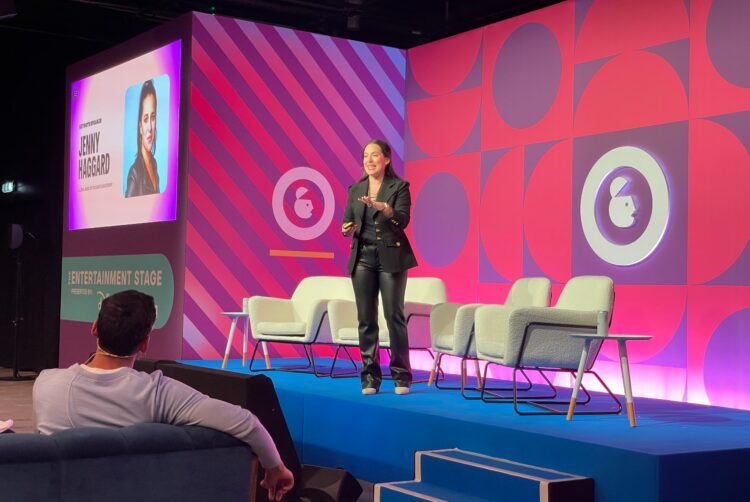
Spotify has launched a number of new ad formats and tools in Spotify Ads Manager as the streaming giant seeks to push an AI-driven future that is nevertheless marketed as human-centred.
Sponsored Playlists have been updated so brands can now own 100% share of voice on some of the platform’s most popular playlists, such as Today’s Top Hits and New Music Friday.
Spotify is also testing a carousel ad format in Spotify’s Now Playing view. Meanwhile, the streamer is adding a tool to allow advertisers to A/B test different creatie elements and has introduced automated bidding to Ads Manager.
‘Voice is the new click’
The news follows a TED-like presentation at Advertising Week Europe last week by Jenny Haggard, Spotify’s global brand strategy and thought leadership lead, who outlined the direction the streaming giant is looking to take in what the company is dubbing the “sound-on era”.
“Streaming, AI, audio, it is all restoring something fundamental: sound and voice as our primary interface,” she said, adding that she believes “voice is the new click”.
According to Haggard, the global market for voice agents is forecast to reach $50bn by 2034, with consumers “ready for this future”. Citing new research of Spotify users, Haggard said 87% of UK consumers said they want a verbal response from AI assistants, while 70% said they used voice commands to engage with an ad even if their screen is off.
“This means the passivity myth of audio is dead,” she declared. “This idea that audio is passive? Not gonna matter.”
Voice-driven interfaces, Haggard further claimed, will “unlock the next billion users” by allowing people in markets with low literacy rates to more easily use its platform.
The presentation aligned with a recent reframing of business goals driven by CEO Gustav Söderström. The streaming giant wants to “become the world’s most intelligent agentic media platforms, one that you can literally talk to, that fully understands each individual and puts them in the driver’s seat,” Söderström commented recently.
Between grand statements about the power of audio as a media channel (“Audio is woven into the fabric of our culture”; “People are leaving sound-off platforms and looking for sound-on environments”; “Audio is the connective thread of modern media — it turns passive consumption into emotional engagement and action.”) Haggard argued that, even in an AI-led future, the channel will stand out for its human elements.
“In a world of AI slop and as scrolling fatigue sets in, audio has emerged as the last intentional frontier for fans,” she said.
Spotify woos video podcasters with greater autonomy and lower entry threshold to its Partner Program
Analysis: Wanting its cake and eating it too
Haggard was walking a tightrope between praising the opportunities AI creates for Spotify while also denigrating AI as a technology that has eroded trust.
“This is the big conundrum in our industry right now,” she said. “In a world of AI slop, how do I build trust?”
Haggard argued that trust and taste will become the two most important “currencies” in the AI era.
On the former, Haggard said “sound has the advantage”, citing that 80% of advertisers they interviewed said audio ads “build greater listener trust than other digital media”.
However, Spotify has come under criticism from artists over AI audio content on its platform. Such content is often created as spam that mimics actual artists, and since every play on Spotify generates royalties so long as a user listens more than 30 seconds, the AI tracks are being programmatically monetised, diluting revenues for actual artists even as Spotify’s business model benefits.
The company has acknowledged the issue. Last September, it announced it had removed 75m spam tracks over the year prior. That same month, Spotify announced new policies aimed at reducing three related issues: AI slop, artist impersonation, and disclosure of AI use.
The goal, as outlined by its global head of music product to reporters, is to “protect authentic artists from spam and impersonation and deception” and ensure listeners don’t feel “duped” by unknowingly listening to AI-generated content.
To further combat the AI issue, Spotify recently announced it had begun beta testing a new Artist Profile Protection feature, which gives artists the ability to review releases before they go live.
But as Spotify acknowledges it has an AI-related trust issue with both consumers and artists that it is seeking to correct, Haggard’s promotion of sound as inherently trustworthy rings hollow, even as advertisers may offer general appreciations for the medium and its capacity for building trust.
Likewise is Haggard’s message on the growing importance of “human taste”, which she warned is “becoming a scarcer asset and a more valuable currency”.
Spotify has built its business off of AI-driven listening recommendations, funelling users to curated playlists whereby it subtly influences personal taste and all but automates music discovery.
One such effort, AI DJ, has been used by 90m accounts, while another, Prompted Playlists, allows users to ask AI to generate playlists based on a prompt like “Put me in a Thirsty Thursday mood on a Tuesday”.
As aforementioned, the aim of the business is to become more AI-centred by integrating agents that users can speak to in order to control listening habits. AI DJ has been able to take voice requests since last year, which Haggard noted has led to a 45% increase in streams via the function. Meanwhile, Söderström admitted on Spotify’s Q4 earnings call that its developers “have not written a single line of code since December,” as the company has embraced vibe coding using Claude Code.
And yet Haggard argued that AI does not lead to positive consumer experiences unless humans retain control over how it might be used to shape their tastes.
“You can tell AI your preferences, your intent, your emotions, [but] it does not understand human taste. It doesn’t understand it,” she said.
She went on to claim that Spotify “[doesn’t] think AI is a good replacement for creativity”.
Now, after nearly two decades of promoting its recommendation algorithm, Spotify is betting that granting users the option for greater control over their listening habits is the way forward. Taste Profile, a new AI-generated feature announced at SXSW this month, allows users some level of transparency into how the platform “understands your taste” based on your listening data. It then gives users the ability to “refine your algorithm”.
“We are giving power back to the people,” claimed Haggard. “We are giving the algorithm back to you, so you can exercise your taste in your Spotify experience.
“And I think if more platforms did this, the world would be a healthier place.”