



The win-win rationale behind broadcaster and global SVOD partnerships
“We had the feeling that a lot of Netflix subscribers are captured by the service – they come home at night, go to Netflix, and choose their next programme.
“That is the strength of Netflix. There are people there who are not aware of TF1’s content, and we want to reach them.
“To ensure they discover our content, we had to be on Netflix.”
This is how Laurence Pera, head of strategic partnerships at Groupe TF1, explains the rationale behind the French broadcaster’s agreement to have its linear channels and on-demand catalogue carried within the global streaming service in France.
That deal moves Netflix closer to being a platform distribution partner than a ‘simple’ streaming content curator.
This is part of a trend for broadcasters to partner with global SVOD services, with France Télévisions and Amazon Prime Video being another notable example.
“We wanted to harness the massive reach Netflix has,” Pera continues, speaking to a London audience at Connected TV World Summit in March.
“It is a win-win partnership, giving Netflix access to our premium content.
Richard Broughton, executive director and co-founder at Ampere Analysis, gave his analysis on the new broadcaster-SVOD partnerships.
“Many commercial broadcasters, like TF1, have been losing audiences to streaming platforms, especially among younger age groups, and this kind of deal puts their content in front of those consumers,” he notes.
Broughton agreed these partnerships are a win-win. “Both players have something the other wants, serving slightly different audience demographics.
“Netflix skews younger, which suits broadcasters. The streaming platform gets local content that resonates a little more with older age groups.”
Broughton explained how increased subscription streaming service penetration means there is now less headroom for growth.
Compounding this, international streamers do not have such a powerful consumer proposition in Europe as they do in the US. That is because European viewers like local content, which is still controlled by local broadcasters, he continued.
“The [global] streamers must think about how they accelerate growth, and one way is partnership deals with those local broadcasters.”
Maria Rua Aguete, head of media and entertainment at analyst firm Omdia, also outlined the value of broadcaster-SVOD partnerships and suggested they could be more beneficial than distributing content on YouTube.
“In France and the UK, consumers go to Netflix first, not YouTube, and that is why the TF1 deal will be successful.
“People do stay in Netflix [once there], so it is a win to have your linear channels and other content there [for broadcasters].”
She pointed to a greater willingness among broadcasters to seek new digital distribution partnerships, as with the BBC and YouTube [where the BBC is making content for the video-sharing platform].
Rua Aguete stressed that reach is the big driver. “The BBC has very good coverage, but it is low compared to Netflix, YouTube and Amazon.
Broadcasters love reach
“Broadcasters love reach, and that is what these companies have.”
Aguete asks: “Why do the SVODs and YouTube need broadcasters and traditional media? Because they want engagement, they don’t want consumers to leave their platforms once they are there.
“Having premium content from broadcasters is a way to make people stay.”
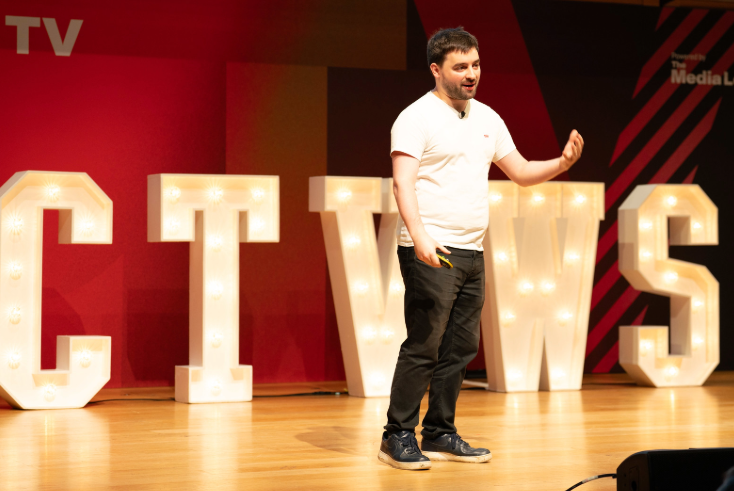
Max Signorelli (pictured), who also works for Omdia as consumer research lead, media & entertainment, argued that the presence of broadcaster content in global SVOD services can help reduce churn rates, including seasonal cancellations.
Broadcaster and global SVOD deals are proliferating.
France Télévisions made its france.tv streaming content, including live programming from its France 2, France 3, France 4 and France 5 channels, available within Prime Video France last year.
The broadcaster’s content can be viewed through a dedicated section of the Prime Video homepage.
Delphine Ernotte Cunci, president and CEO at France Télévisions, described it as a historic step to strengthen the visibility of its public service offering.
Rediscovering broadcaster content
Echoing what Pera told the Connected TV World Summit audience, Ernotte Cunci added: “It will allow all audiences to rediscover and discover the unique richness of france.tv in new environments.”
Spain’s Atresmedia has a partnership with Disney+ that’s more like a standard licensing deal, except the content also has its own branded hub. That covers 300+ hours of Atresmedia-produced content a year (in Spanish).
Analysing this agreement last year, Ampere Analysis says the broadcaster will benefit from exposure to Disney+ users.
Using figures from last September, it states: “12% of Spanish consumers use Disney+ without watching Atresmedia channels or Atresplayer [the broadcaster’s streaming service.]
“Many of them will likely be new to Atresmedia content.
“This audience segment skews young, with 44% under the age of 34, a priority demographic for a commercial broadcaster.”
Sam Khoury, senior analyst at Ampere, believes it was particularly important for Atresmedia to encourage consumers to use its digital platform.
At that point, Atresplayer reached only 9% of Spanish consumers.
“Ideally, its content will benefit from increased engagement as a result of its exposure on Disney+, which could encourage consumers to seek out similar content through Atresplayer in future,” he suggests.
For Disney, this deal is seen as a way to grow market share in Spain versus Netflix, Amazon Prime Video and HBO Max.
“As a generally family-oriented service offering mostly US-produced titles, Disney+ is seeking to leverage Atresmedia’s local content to increase its appeal to Spanish consumers,” he explained.
Khoury also noted that this kind of deal can help global SVOD services meet EU content quotas for European-produced content. “That reduces the need to invest as heavily in local productions,” he suggests.
In a modest yet notable collaboration between a broadcaster and a global SVOD service, a selection of ITVX titles (from UK commercial broadcaster ITV) is promoted on Disney+ in the UK, with Disney+ titles promoted on ITVX in return.
Last year in Germany, Austria and Switzerland, Disney+ introduced a curated collection titled ‘ZDF Films and Series’ featuring 3,000 episodes and films from the German studio, which is owned by broadcaster ZDF.
That deal was pitched by Disney as a clear commitment to local content, and Karl Holmes, general manager for Disney+ EMEA, says it marked “an exciting new milestone built on our collaboration with leading European broadcasters.”