



‘Consultative, not transactional’: The Observer’s Studio 1791 wants brands to value trust
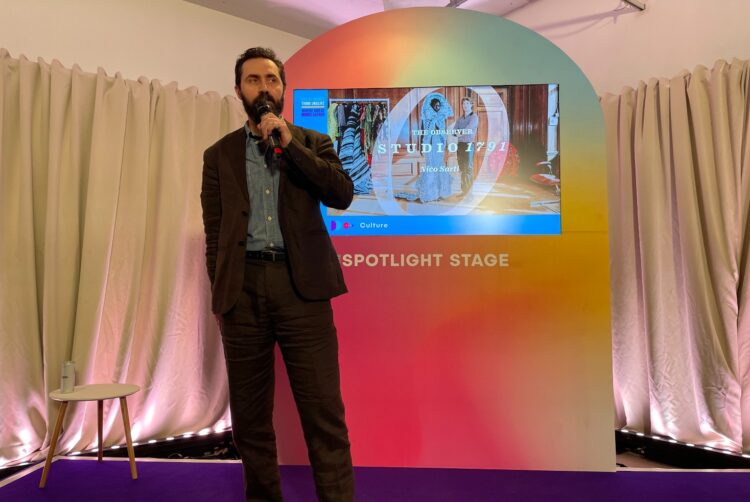
“People spend time everywhere, but they trust few places.”
Publishers have increasingly leaned into branded multimedia production as part of their wider commercial strategies, and The Observer, under Tortoise Media’s ownership, is no different.
In January, the title launched Studio 1791, a branded content studio created to “seamlessly work with the ad agencies’ trading teams that could then work across all the creative briefs,” according to chief commercial officer Mike Duffy.
Nico Sarti, who joined the publisher at the beginning of the year, is leading the effort. He has spent the past decade working in similar roles for The Economist, Politico and Condé Nast.
Sarti has been on a sales push in recent weeks, with pop-ups at last week’s Advertising Week Europe and, earlier this month, at SXSW in Austin, the latter of which demonstrated that The Observer sees its target audience — both commercially and editorially — as not limited to Britain.
During his Advertising Week Europe session, Sarti explained Studio 1791 wants to provide “not just your classic branded content play”, but instead a more consultative, rather than a transactional, relationship with brands.
Trust and context
Sarti acknowledged that brands today commonly want to play a role in culture, but too often do so by trying to create culture themselves rather than aligning with extant cultural contexts, leading to consumer pushback.
“15 years ago, we ruined culture a bit by utilising it,” he said. “Culture became the brief. […] Culture became a shortcut to accrue an audience to buy and support a message.”
But culture, Sarti said, does not exist in isolation. It is shaped by social context and communities, both of which are supported by a trusted information ecosystem that news publishers support.
‘We want to do different things’: Inside The Observer’s ‘luxury’ commercial strategy
While advertisers can easily achieve scale by working with platforms, Sarti argued that rarely, if ever, can brands guarantee the message received by consumers in those environments is trusted.
Studio 1791, he explained, aims to offer brands insight into relevant context and a trusted environment in which to produce content. Its early “formula” for working with brands consists of identifying a “societal truth” relevant to a client, framing their brand’s place within an editorial context, and carrying out a brief through trusted storytelling.
“Everything has to ladder up to the editorial story,” said Sarti.
Looking long-term
Sarti sees the branded content studio and his role within it as something of an envoy between clients and The Observer’s editorial team.
While he insists upon the importance of maintaining the separation of church and state, Sarti’s remit enables him to receive insights from editorial leaders that he can then relay to inform brands.
What of the eventual output? Sarti told The Media Leader “short wins” for the branded content studio could include as-yet-to-be-launched native article opportunities or partner video series, but he reiterated that building long-term multimedia partnerships with brands is the studio’s goal.
One example of a successful partnership that Sarti is looking to echo is The Observer’s Making Sense of Social Housing podcast series, produced in partnership with Lloyds Bank.
The tie-up came about due to an overlap of interest between the publisher’s audience and Lloyds customers. Season three of the podcast, founded by Tortoise, launched this month.
Observer launches digital subscription service with new website and app
According to Duffy, the new-look Observer is courting a wider array of commercial clients than had previously been thought to partner with The Guardian, with a particular focus on luxury brands such as Porsche, Chanel, Rolex, Omega, Le Chameau, Bank of America and Santander.
The title is focused entirely on direct relationships with brands and agencies and does not currently accept programmatic advertising on its website, aiming to provide a “premium” feel for both readers and advertisers.
How much runway?
Sarti’s B2B marketing push comes as The Observer has offered a new round of voluntary redundancy just a year after its ownership was transferred from Guardian Media Group to Tortoise Media.
Staff at the paper were also offered voluntary redundancy amid that transition last year, with around one-third of Observer staff reportedly accepting the buyout.
The latest round, however, reportedly applies to both staff who joined from The Observer and those who were working at Tortoise at the time of the acquisition.
In a conversation with The Media Leader, Sarti acknowledged the news of the voluntary redundancy round but declined to comment. His own Studio 1791 team is in the process of hiring for two new positions as the title looks to expand the commercial effort.
Tortoise Media has never been profitable, posting a loss of £2.9m in 2023 (the most recent publicly available account).
In 2024, its last full year under Guardian Media Group, The Observer reportedly generated revenue of £16.4m, though the title was ultimately sold amid declining revenue and rising costs. The sale has allowed The Guardian to focus on developing its singular brand in new markets, namely the US.
At the time of the sale, Tortoise committed to investing £25m into The Observer with an aim to developing its digital brand. In its first year under new ownership, the title launched its own website and app, a new weekly print edition, and began requiring a digital subscription for access to stories.
In an interview with The Media Leader in January, Duffy said The Observer has “a solid set of investors behind us” and “decent runway” to turn the title profitable.
Richard Furness on building a new Observer that’s ‘proudly a second read’